



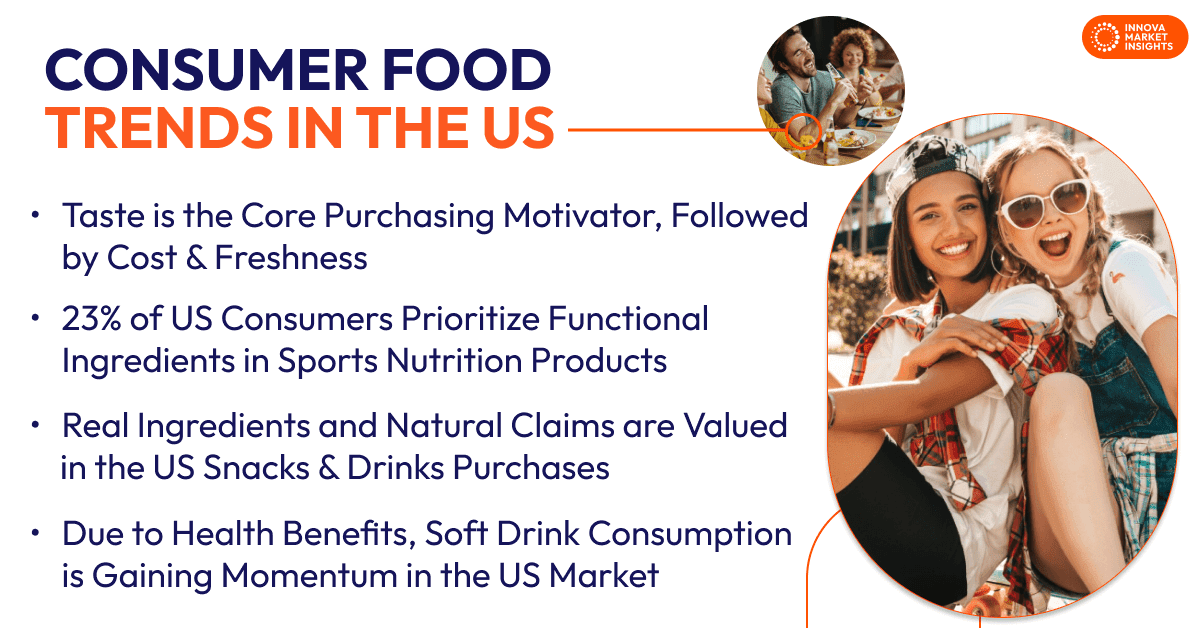
January 21, 2026 – Consumers in the US food and beverage market are being influenced by a variety of factors. From a complex global macro context to country-specific preferences and priorities, consumers’ purchases and behaviors are shifting. Taste and cost are leading factors, but health, clean label, authenticity, and convenience also drive important categories. Innova’s “Category Growth Drivers in the US” report goes beyond the current global climate to analyze what is driving core categories in the US market.
The Global Macro Context: Challenges for US Consumers
The current macro context is posing challenges for many global consumers. From environmental concerns to economics, consumers around the world are faced with uncertainty. Physical and mental health issues are also top of mind and influence US food trends, as populations continue to age and grow. Furthermore, US consumer trends show that consumers are increasingly concerned about their ability to access affordable, nutritious food and healthcare for themselves and their families. Technology is another major player, as it has simultaneously created uneasiness around privacy and job security and also empowered consumers in new ways. US consumer trends are also being impacted by these global concerns, driving their core purchase motivators and preferences when they enter the grocery store.
Beverage Revolution: Mindful Drinking & Non-Alcoholic Growth
The US market is seeing a decline in the demand, purchase, and consumption of alcoholic beverages, excluding cider and premixed cocktails. The mindful drinking movement, budget constraints, and health concerns are responsible for this trend. Health benefits and the search for novelty and variety are also driving non-alcoholic beverage consumption, which has seen a 17% increase over the last twelve months. In this category, real ingredients and traditionally crafted are among the claims that consumers are most interested in when making purchases.
The soft drinks category is also gaining momentum, with taste driving preferences. Soft drink choices focus on sugar reduction, real ingredients, and the elimination of artificial flavors and colors. Moreover, the intake of juices, juice drinks, and smoothies among US consumers has also risen and can be attributed to promoted health benefits.
Everyday Staples: Taste, Cost, and Clean Label Priorities
When choosing staple foods, consumers place great importance on taste, cost, and convenience. For bread and breakfast cereal purchases, US consumers value fiber, protein, and clean label claims. US consumers purchase less bread products than their global counterparts. However, the purchasing penetration of cereals exceeds the global average. Both categories have also experienced growth over the last year.
US consumption of dairy ranks higher than the global average, and consumers consider taste and cost as significant attributes. Clean label and protein claims also lead dairy product choices, with real ingredients, reduced fat, and no artificial flavor or color claims also garnering consumer interest.
US consumers base meat and fish choices predominantly on taste, cost, and freshness, as cited by over 40% of consumers across both categories. Protein, natural, organic, and reduced fat as also key influencers. For fish in particular, a high source of omega-3 or 6 is favored as a key claim.
US Consumer Insights: Meal Preparation Categories
US food trends indicate the rising consumption of meal preparation products, driven by evolving lifestyle needs, the desire for greater variety, and changing taste preferences. Similar to everyday staples, taste and cost are leading attributes that are shaping consumers’ purchases of meal preparation choices. US consumer trends include the preference for clean label and premium ingredient claims in both savory and sweet spreads, while real ingredients, traditionally crafted, indulgence, and reduced fat impact bouillons, table and cooking sauces, and dips. For ready meals, convenience is also essential, and natural, protein, and indulgence resonate with consumers.
Clean Label, Taste, and Cost Influence Snacks and Treats
Snacks and treats with real ingredients or natural claims are greatly influencing US food trends, surpassing global averages in all categories except for cakes, pastries, and sweet goods. For consumers, taste and cost are significant and influence their snack and treat purchases, with clean label claims holding importance. In addition, indulgence claims and premium quality are favored by consumers. Within snacks and treats, the chocolate category has experienced growth, driven by evolving taste preferences and enhanced novelty.
Plant-Based & Special Diets: The Shift to Functional Nutrition
Nutrient and ingredient claims are influencing plant-based and special diets. Beyond taste and cost, health benefits lead preferences across plant-based meat substitutes, non-dairy cheese, and non-dairy milk categories in the US market. Specifically, high source of protein, natural ingredients and no artificial flavors claims are favored, according to Innova’s US food trends research. These claims are also impactful in sports nutrition, with the addition of sugar reduction and functional ingredients, with 23% of US consumers prioritizing the latter. Overall, there is growing demand within the sports and functional nutrition space, fueled by health considerations and exercise habits.
The Future of the US Food Market: Convenience Meets Health
When considering future US food trends, brands can expect a few key elements to resonate with consumers. Ready meals, snacks, and plant-based options are currently experiencing growth, as they meet consumers’ lifestyle needs and blend convenience with indulgence and ethics. As a result, brands can leverage portability, sustainability, and new flavors in these categories to deliver the benefits that consumers favor. Health-driven claims also resonate, so offering fortified options aligned with wellness goals can capture growth in the functional nutrition space.
This article is based on Innova’s Category Growth Drivers in the US report. This report is available to purchase or with an Innova Reports subscription. Reach out to learn more.