



February 5, 2026 – Innova Market Insights highlights how upcycled ingredients can go beyond sustainability goals, enhancing eating enjoyment, and their health benefits. We share consumer insights, address challenges faced by upcycled ingredients on their path to mainstream acceptance, and explore opportunities like natural processing methods, such as koji fermentation, and the rise of protein upcycling, which will reshape the plant protein category.
How Does Climate Change Influence Global Consumer Concerns About Food Waste?
Climate change and food waste are among the top three concerns for consumers globally about the world they live in. 1 in 2 consumers regard the activities of recycling and upcycling as doing their bit to help the environment, making it global consumers’ favorite pro-environmental actions. More than half of consumers are willing to pay a premium for companies implementing food waste reduction measures such as upcycled ingredients.
Environmental Sustainability Trends in Protein Choices
When choosing food and drinks for protein, 1 in 4 consumers worldwide said that environmental sustainability mattered most to them. Additionally, 1 in 5 preferred plant-based protein options. Sustainable proteins derived from plant-based waste streams, known as upcycled plant proteins, represent a step forward on the sustainability path. Upcycled barley protein is leading the way, and other options like potato protein are growing in popularity.
Why Is Natural Positioning Critical for Consumer Acceptance of Upcycled Ingredients?
For consumers, the concept of waste streams being converted into premium ingredients that augment flavor and/or provide health benefits still needs some getting used to. In terms of obstacles to consumer acceptance, besides quality concerns, 1 in 4 consumers globally are also trying to cut processed food from their diet. Therefore, leveraging a natural positioning platform and employing familiar ingredient sources are key strategies for boosting consumer receptiveness. Fermenting and pickling, which are widely regarded as traditional and natural, will be key strategies in the processing of upcycled food and beverages.
In What Ways Can Consumers Reduce Food Waste Through Upcycling at Home?
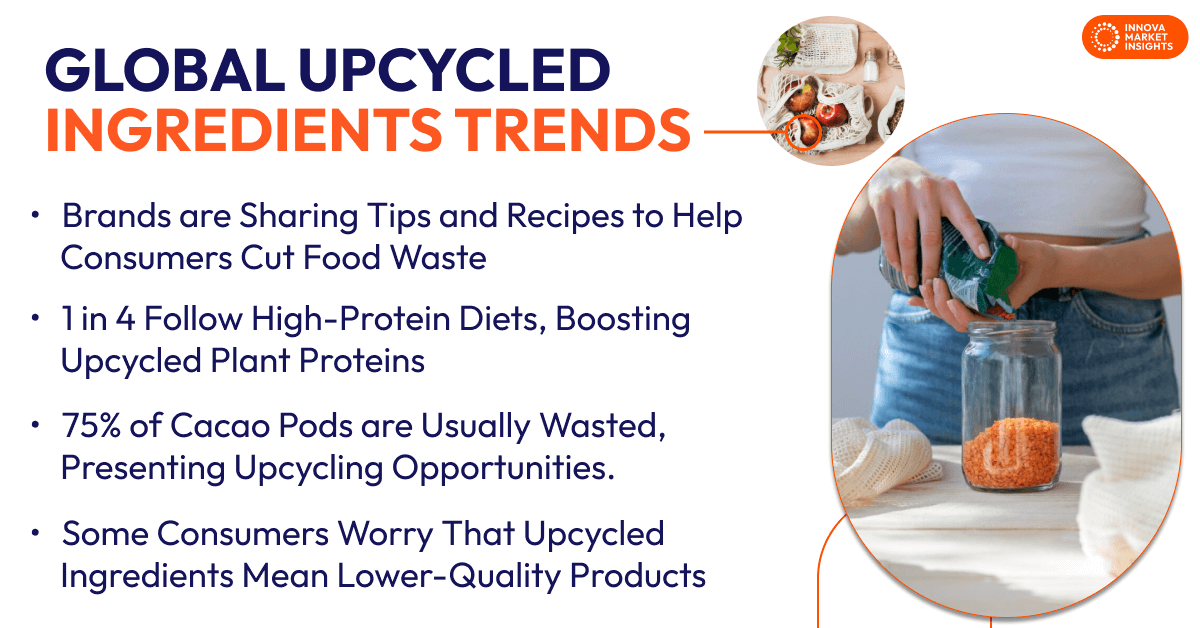
Half of consumers globally said they were engaging in food waste reduction to help the environment, so the industry may want to step up to support consumers in this endeavor by promoting in-home upcycling. Upcycled ingredient trends indicate that approaches can range from simple on-pack suggestions for reusing pickling liquids in salads to creatively rehashing leftovers, leveraging celebrity chef involvement. Social media will continue to play its part in the cross-cultural popularization of upcycled food trends like traditional leftover recipes, just as it did with egg fried rice and banana bread. Staying right on the pulse of these upcycled ingredient trends will give brands plenty of material to fuel their NPD efforts and promotional strategies.
How Do Quality Concerns Impact the Perception of Upcycled Food Products?
Putting trendiness to one side, it’s not all smooth sailing for the upcycling revolution. There are numerous obstacles still to overcome, one of which being the perception that using upcycled ingredients may result in a low-quality end product. Such concerns are not entirely unfounded. Inferior components, sometimes unfit for human consumption, have kept on entering the human food chain. Even the fact that strawberry flavor can be quite safely made from sawdust is unlikely to make consumers celebrate the ingenuity of upcycling. Hence, the concept of converting waste streams into premium ingredients that augment flavor and/or provide health benefits needs some getting used to.
Which Natural and Traditional Methods Offer the Best Upcycling Opportunities?
Traditional food preservation methods like pickling and fermenting are natural ways to reuse ingredients by highlighting their nutritional or flavor benefits. Examples include chutneys made with watermelon rind or citrus peel, rich in bioflavonoids that promote heart health and reduce inflammation. Fermentation of grains with Aspergillus oryzae (koji), common in Asia, especially in Japan, is key to making miso, soy sauce, mirin, shoyu, and sake. This process enhances flavor, produces beneficial compounds like B-vitamins and enzymes, and increases mineral bioavailability. Brands like Reduced Foods use koji fermentation and enzymatic hydrolysis to create flavorful stocks and sauces rich in umami and complexity without artificial additives.
Why Are Upcycled Plant Proteins Considered the Next Level of Sustainable Nutrition?
About 1 in 4 people follow a high-protein diet, and 58% are including more protein in their daily meals. Additionally, the demand for sustainable protein is driving a rise in plant options, especially upcycled options like barley protein, which has good solubility. This trend is notable in sports nutrition. For example, MyveganMarvel Superblend Plant Protein Powder with Cinnamon Bark Flavor is made from upcycled barley leftover from beer brewing.
Extracting proteins from low-value biomass presents technological challenges for upcycled ingredients. These challenges are now being addressed using physical, enzymatic, and microbial processes along with improved filtration. However, such complicated methods may worry consumers who prefer a natural diet. Therefore, focusing on consumer priorities beyond sustainability will shape marketing strategies. For example, 1 in 3 people care about how well the body absorbs protein, and 28% value familiarity.
How Can Cacao Waste Reduction Lead to New Innovations in Indulgent Foods?
In conventional chocolate production, 75% of the cacao pod goes to waste. In the face of dwindling supplies, there is a movement toward food waste reduction, using the whole fruit in sustainable chocolate production. The entire cacao pod, in fact, has superfood characteristics that can be used across a wide variety of food and beverage categories beyond confectionery. One example is cacao water made from the cacao fruit pulp, which shows promise of following in coconut water’s footsteps. On the indulgence front, upcycled foods, such as grains and fruit, can form the basis of a new generation of delectable treats such as cakes, cookies, gummies and bars to be enjoyed with a clean conscience. A product launch example is Brewers Cookies Chocolate Chip Sea Salt; chocolate cookies made with upcycled grains.
What Are the Future Directions for Upcycled Ingredient Trends?
The upcoming upcycled ingredient trends will focus on maximizing raw materials and transforming side streams into high-value products. Whole cacao fruit and cacao water will highlight how discarded pulp and juice can become healthier, sustainable options, mimicking coconut water’s success. Proteins from non-traditional plant sources and by-products will drive a new wave of sustainable ingredients. Koji fermentation will help turn spent grains and vegetable waste into condiments, sauces, stocks, and snacks. Cross-industry collaborations will enable waste stream exchanges, supporting seasonal, local, and upcycled ingredients in pickled and fermented foods. Furthermore, manufacturers will promote upcycling at home via websites, social media, and packaging, sharing ideas and recipes to help reduce household food waste.
This article is based on Innova’s Adding Value With Upcycled Ingredients – Global report. This report is available to purchase or with an Innova Reports subscription. Reach out to learn more.