


February 10, 2026 – In the US market, factors like the high cost of living and technological transformations are creating uncertainty and impacting lifestyle and behavioral choices. US consumers are anxious about the world around them, and in response to these challenges, notable consumer trends are emerging. From proactive health measures to solo living, Innova’s Consumer Trends 2026 for Food and Beverage – US Edition” report takes a look at the major consumer food trends in the US and opportunities for food companies.
What are the Major Concerns and Macro Drivers for US Consumers?
US consumers are faced with uncertainty from multiple angles. Political tensions are manifesting in the form of division and polarization, with tariffs presenting another challenge. 54% of US consumers are anxious about the world around them. Of these, Boomers are the most anxious. Other issues like economic uncertainty, job insecurity, and access to food are also top of mind for many, with many communicating that their financial situation has worsened over the past year. Additionally, health ranks as the second cause of stress behind financial worries.
How are Consumers’ Lifestyles Evolving in the US Market?
Demographic and social shifts are impacting trends in the US market. For example, more and more consumers are aged 65 plus, signaling a growing aging population. Younger consumers are also coming of age in more urban and multicultural settings than before, and solo, child-free living is the norm for a larger percentage of Americans. Additionally, technology is driving more flexible lives and empowering consumers to become more self-sufficient in the marketplace. For example, 59% of consumers are engaging with AI platforms to learn new things. US consumers are also increasingly taking a more proactive approach to health, being more mindful of how they feel and engage in exercise or stay healthy, both mentally and physically.
Relaxed Sociability: How Does This Top Global Consumer Trend Influence the US Food and Beverage Market?
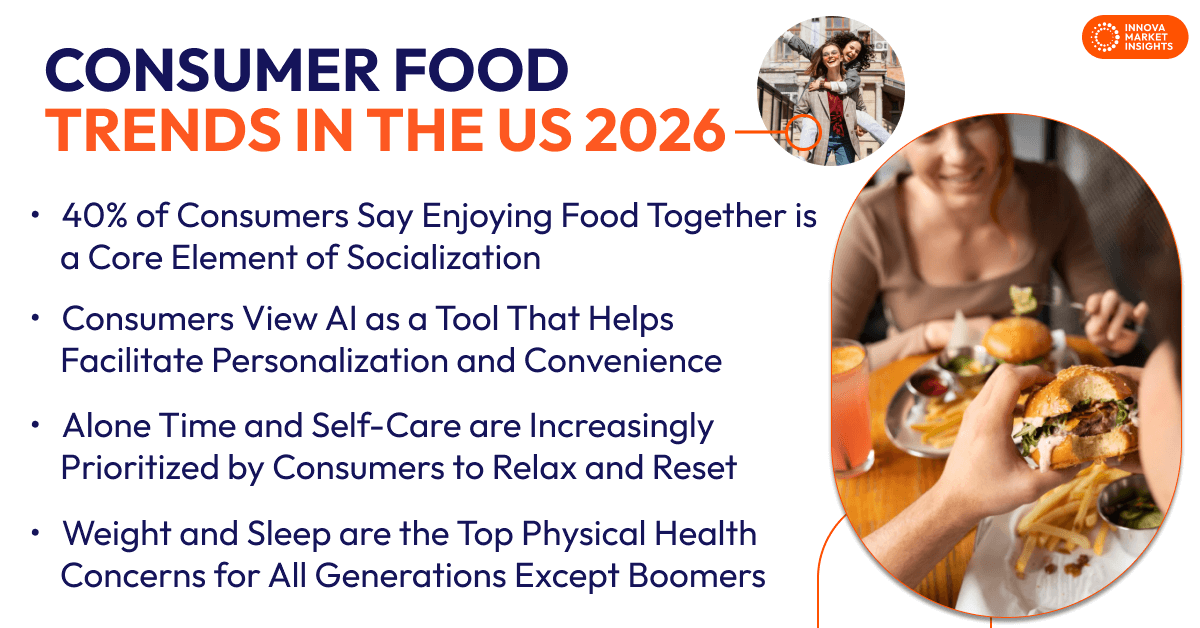
Consumers are looking for more casual occasions for socialization. Alcohol-centered locations are becoming less important, while relaxed and flexible settings are favored. For example, consumers’ homes and nature have experienced net growth in terms of consumer preferences in socialization. As at-home gatherings are a growing consumer trend, there is a greater opportunity for food and drink brands, since 40% of consumers say enjoying food together is a core element of connection during socializing occasions. Despite the more casual settings, drinks remain a part of social gatherings, and brands are responding with innovations that enable sharing. For example, Walmart is selling a portable party pitcher for those interested in bringing ready-mixed drinks to hangouts. However, alcohol is also being substituted in many cases for alternatives like THC-infused beverages.
Gen Z is driving many of the relaxed socializing and food trends in the US, as they are inspired by social media like Tik Tok. Gaming is also popular with this generation and provides a source of social connection that can be accessed from one’s home. Gen Z and Millennials are also more likely to try something new when socializing, and coffee shops are becoming daytime socialization hubs for many. Therefore, brands can lean into these casual social trends to capture younger consumers.
Time for Me: Why is Solitude a Growing Trend?
Consumers are intentionally prioritizing moments alone, focusing on self-care to lift their moods and restore both mentally and physically. Solitude is empowering from solo dining to entertainment, and 35% of US consumers point to alone time as a strategy they employ when faced with stress. For younger consumers, media is used for pleasure. Cooking is also a rewarding solo activity, and nearly half of consumers cook or bake for fun.
US food trends also indicate that consumers say indulgent food and beverage experiences are linked to “me-time” or comforting moments. Specific sensory characteristics like crispy or creamy textures are a part of US food trends and enhance indulgence for consumers, highlighting potential innovation strategies for US manufacturers. Moreover, calming and relaxing benefits can also have strong consumer appeal. Chocolate launches are also promoting mindful moments, and the evening wind down is an opportunity for soft drinks. Gen Z and Millennials are increasing their soft drink consumption, while more consumers are also indulging in carbonates during dinner and evening occasions like watching TV.
Vitality & Longevity: How are Consumers Addressing Longevity Nutrition Concerns?
Aging populations aim to stay healthy and active for longer, leaving consumers interested in opportunities around optimizing their health for the future. More than ever, consumers are more in touch and aware of their health needs, and technology is also helping to educate consumers. Weight and sleep are the top physical health concerns for all generations except Boomers, with diet being a key factor for health management.
To support longevity, supplementation, traditional ingredients sources like Ayurveda, and local recipes are strategies consumers are turning to. For example, wellness elixirs with natural ingredients, such as turmeric and honey, can be an approach beverage brands can take to target the longevity-seeking consumer. Holistic health, such as microbiome support, will be another important food trend in the US to support vitality, and longevity nutrition will become an emerging space for innovation.
My Tech Mate: How is AI Personalizing the US Food and Beverage Experience?
Technology is increasingly integrated into the lives of consumers in the US market, from meal preparation purposes to entertainment. Nevertheless, concerns about privacy and environmental impact continue to exist. Younger consumers are the primary users of generative AI, but overall, consumers of all ages are seeking more ways to use AI as a companion at work and at home. In regard to the US food and beverage market, technology can serve as a practical companion, making shopping easier and effortless with AI. It is also an innovative tool that can help facilitate creativity. For example, ChefGPT is an AI-powered tool that provides recipe suggestions based on ingredients in consumers’ pantries. AI can also be leveraged for greater levels of personalization when it comes to nutrition or even personalized consumption experiences. For example, Heinz has used consumer-created ketchup AI scenarios for marketing purposes.
Simplified Life: What are the Best Strategies for Achieving Simplicity and Balance?
As financial stressors, health concerns, and technology can lead to information overload, US consumers are looking for balance and simplification in their lives. 28% of US consumers use food and drink as a means to disconnect, a strategy that is especially popular among Millennials. Spending time outdoors is another strategy that is valued by consumers. Therefore, brands are leveraging the benefits and potency of nature for health and well-being. This also extends to imagery and formats fit for outdoor lifestyles and occasions.
Consumers can also feel stressed about their food and drink choices, especially regarding high food costs and unhealthy eating habits. Affordable, straightforward, and healthy choices will be popular in the US food and beverage market, and there is an opportunity for brands to provide options for time-pressed consumers, including through smart meal solution tools. The Dietary Guidelines for Americans 2025-2030 also promotes a shift to consuming more real, whole foods like milk and dairy. The movement towards eliminating processed ingredients and sugar is integrated into these guidelines, highlighting how brands in the category could benefit from the simple, natural, and affordable consumer food trend. According to one of Innova’s global trendspotters in the US, traditional, local, and homemade are still important food trends in the US and facilitate a simplified approach to food.
What’s Next for Consumer Trends in the US?
As consumer lifestyles and expectations are evolving, brands in the US market have numerous opportunities for innovation, rooted in Innova’s consumer food trends. Brands who will be successful in the coming year will get inspired by the new ways that consumers are socializing and acknowledge the growing role that increased flexibility plays in consumers’ gatherings, chosen spaces, and US food trends. Fostering intentionality and emotional connections will continue to be an avenue for growth, regarding the growing “me-time” trend, and understanding the nuances for targeting older versus younger consumers in their journeys toward health and longevity. Additionally, the use of AI can be expected to expand within consumer food trends, from both practical and enjoyable perspectives, inspiring new ways to personalize, entertain, and problem solve issues for consumers in the US food and beverage market. Offering simplified and trusted solutions serves as an extension of this, though technological detoxes are also a facet of simplicity that consumers are increasingly searching for.
This article is based on Innova’s Consumer Trends 2026 for Food and Beverage – US Edition report. This report is available to purchase or with an Innova Reports subscription. Reach out to learn more.