


February 16, 2026 – The global bread market is expanding, driven by population growth and increased consumption under economic pressures. Bread’s convenience also lends to its popularity, as it is ready to eat and suitable for any meal. Sharing bread fosters nostalgia and connection, which brands often highlight in their marketing. Taste and flavor remain important, with bread reflecting regional culinary traditions such as tortillas in Latin America, sweet breads in Japan, and bagels in New York. Local and regional flavors are valued domestically and are gaining international appeal as consumers seek new taste experiences. Innova Market Insights looks at these evolving trends in the global bread market.
How is Affordability Driving Global Bread Consumption?
Bread industry trends show that most consumers increasing their bread intake say affordability is the main reason, making cost the top purchase driver for both fresh and preserved bread. Rising costs, notably in Western countries due to the pandemic and conflicts, are influencing bread purchasing habits, with some consumers buying premium bread less frequently and seeking more affordable options as budgets tighten.
Taste and Food Heritage
Taste and convenience are the main reasons consumers choose both fresh and preserved bread in the global bread market. As a staple, bread also represents regional cultural heritage, appealing to global consumers seeking both familiar and new experiences. Brands are innovating with healthier options, new formats, and products that address unmet needs, such as allergen-free or enhanced nutrition options.
Why are Health and Wellness Central to Bread Innovation?
Personal health is the second most important concern after environmental health, influencing many food choices. Global consumers increasingly seek bread with health benefits, such as no additives, cleaner ingredients, or added fiber and protein.
Globally, 27% of people who are eating less bread say it is because there are not enough healthy options. Brands can do more to tackle these concerns and improve bread’s health image. Sharing clear, simple health benefits instead of detailed nutrition facts can help. Using basic, familiar ingredients also appeals to many consumers.
Environmental, Sustainability, and Digital Trends in Bread
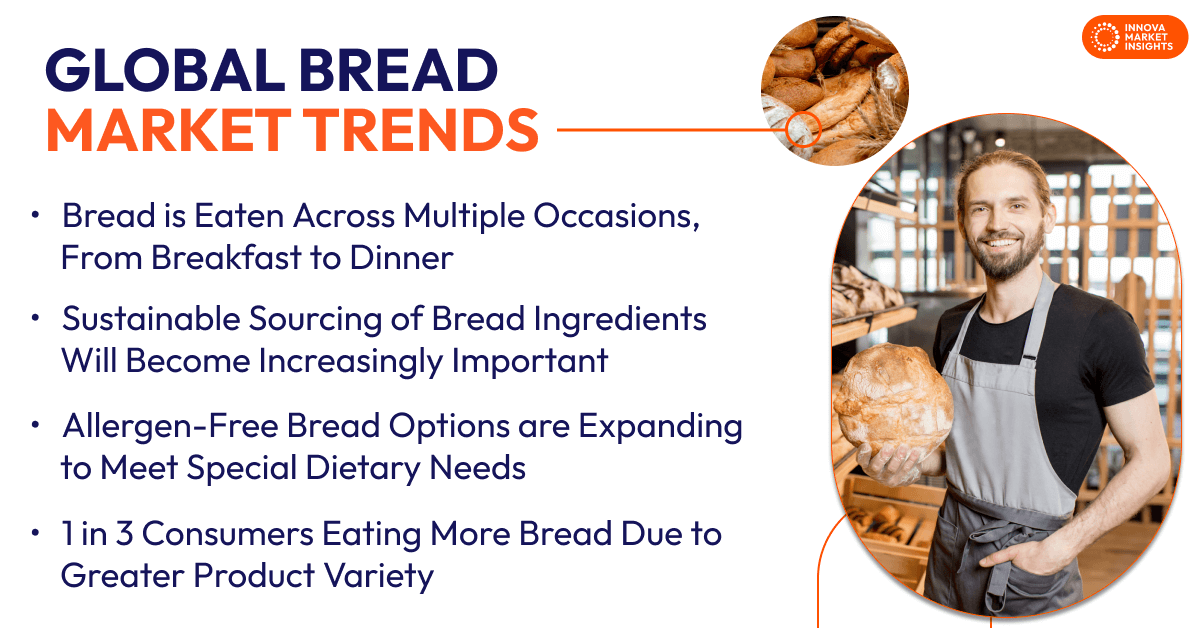
Environmental health is now consumers’ top concern, strongly influencing future demand in the global bread market. Sustainable sourcing of bread ingredients and sustainable bread packaging will become increasingly important. At the same time, new technologies are addressing global challenges and empowering consumers. Digital tools are becoming essential for brands to connect with customers, while viral trends on social media increasingly influence bread product choices.
How Do Dietary Restrictions Influence The Bread Market?
Dietary restrictions need not prevent the consumption of bread. Bread industry trends reveal that nearly 1 in 5 consumers worldwide limit gluten intake, impacting bread sales. While gluten-free options have recently gained popularity, the overall trend is declining. Brands should offer a variety of free-from options to retain these consumers.
Everyday Experiences and Treats
With rising living expenses, consumers are opting for small treats and everyday pleasures rather than larger purchases. Bread meets this need as an accessible comfort, combining fresh ingredients, rich flavor, good value, and nutrition for affordable indulgence and daily satisfaction.
Breakfast and Main Meal Occasions
Main meal occasions, especially breakfast, drive bread consumption globally, reflecting current bread industry trends. Brands should consider consumer motivations and behaviors at breakfast, ensuring new product development addresses convenience, on-the-go needs, and preferred flavor profiles.
More consumers are eating at home, and dinner is the primary occasion where this trend can be observed. Bread can be a key component of many meals, from sociable breakfasts and brunches to informal lunches with sandwiches. With more consumers eating at home, dinner has become a key occasion for bread consumption. Bread features in a variety of meals, from breakfast and brunch to lunch, and as a side at dinner. becomes a core strategy.
Sustainable Bread Packaging Innovation
In Australia, Amcor is partnering with Tip Top Bakeries to launch new bread bags that are made with 30% recycled plastic. It is claimed that “this industry-first initiative for the Australian sliced packaged bread aisle will help remove 160 tons of virgin plastic. In the UK, Aldi has repackaged its Specially Selected sourdough range. The company claims the new paper-based packaging removes 67 tons of plastic each year. Amcor is also partnering with Woolworths, Australia’s largest supermarket chain, to supply bags containing 30% recycled plastic for its Own Brand sliced bread. It is claimed that Woolworths will save 50,000kg of virgin plastic annually, highlighting the growing importance of sustainable bread packaging.
Protein, Functional Bread, and Gluten-Free Claims
Claims related to indulgence and protein are gaining popularity. Vegetarian is the leading special diet claim on bread. Premium and traditional claims emphasize heritage and emotional connections. Many brands in the global bread market, now highlight protein content, such as Grupo Bimbo’s Protein Bread in the US, which contains 20g of protein in two slices. Innovators are also expanding gluten-free, lactose-free, and other options, as seen with Venerdi’s Gluten Freedom sourdough baps in New Zealand, which are also dairy-free and soy-free, reflecting the growth of functional bread.
What Role Do Regional Differences Play in Bread Preferences?
Regional differences in product claims are significant, so brands with international interests must understand local preferences. In Latin America, traditional claims and stories about heritage and family are most valued. In Europe, vegan claims are influential, even for bread that is already free from animal products.
What is The Future of Global Bread Market Innovation?
In 2024 – 2025, new product development for bread grew by just over 6%. Brands are increasingly confident in pursuing new ideas and trends. Bread industry trends reveal that 1 in 3 consumers eating more bread attributes this to greater product variety. Brands that expand their ranges to include both niche and mainstream products are likely to attract consumer interest. Recent innovations focus on clean-label claims, health benefits, and special dietary needs, while traditional claims using classic methods and familiar flavors appeal to nostalgia as well as emotion.
What’s Next in the Global Bread Market Trend?
Going forward, the global bread market will evolve as consumers place greater emphasis on health, value, and changing lifestyles. Lower sugar and improved carbohydrate options will become standard, while convenient packaging will support quick meals and snacks. Co-branding and digital tools will help brands reach out to customers and emphasize different eating occasions. Unique local styles, such as sweet Japanese breads, will gain global popularity. As budgets tighten and expectations rise, successful brands will offer affordable, accessible, and healthy bread without sacrificing taste, comfort, or cultural meaning.
This article is based on Innova’s Bread & Bread Products – Global report. This report is available to purchase or with an Innova Reports subscription. Reach out to learn more.