



March 3, 2026 – In response to ongoing economic pressures, many consumers globally are choosing home-cooked meals over dining out. Convenience remains important, with online shopping and fast delivery now an expectation for consumers worldwide. If consumers do decide to eat out, they look for value, memorable experiences, and high-quality service. For grocers and online retailers, this means earning trust and consistently providing quality are essential. Innova Market Insights explores the consumer trends in the evolving foodservice industry.
Omnichannel Foodservice: Blending Meals, Groceries & Delivery
The lines between grocery shopping, meals, and digital convenience are blurring. Consumers now want to buy groceries online, pick up prepared meals, and try new flavors. Therefore, restaurants need to provide unique flavors and great service to draw in more diners. Delivery platforms should focus on speed, value, and smart suggestions. The main opportunity lies in combining meals and grocery solutions, reflecting current consumer trends. This includes bundling ready-to-cook kits, drinks, and snacks, as well as creating loyalty programs that reward customers across all platforms.
Health-Conscious Consumption in Restaurants & Grocery
Consumers globally are becoming more health-conscious, yet they still want value and enjoyable experiences. While most consumers stick to their usual habits, earning their loyalty relies on consistently providing health, value, and a positive experience. For grocery stores, showing product quality, freshness, transparency, and everyday value is key. Additionally, affordable organic and eco-friendly options, like mix-and-match produce bundles, refill stations, and private label organics, help grocery stores stay relevant to conscious consumers. Top retailers in the foodservice industry simplify health claims, emphasize freshness, and provide smaller, more accessible formats so consumers can enjoy premium options without overspending. Still, experiences should balance health and indulgence, appealing to consumer demand for both wellbeing and pleasure.
Digital Transformation in Foodservice & Restaurant Technology
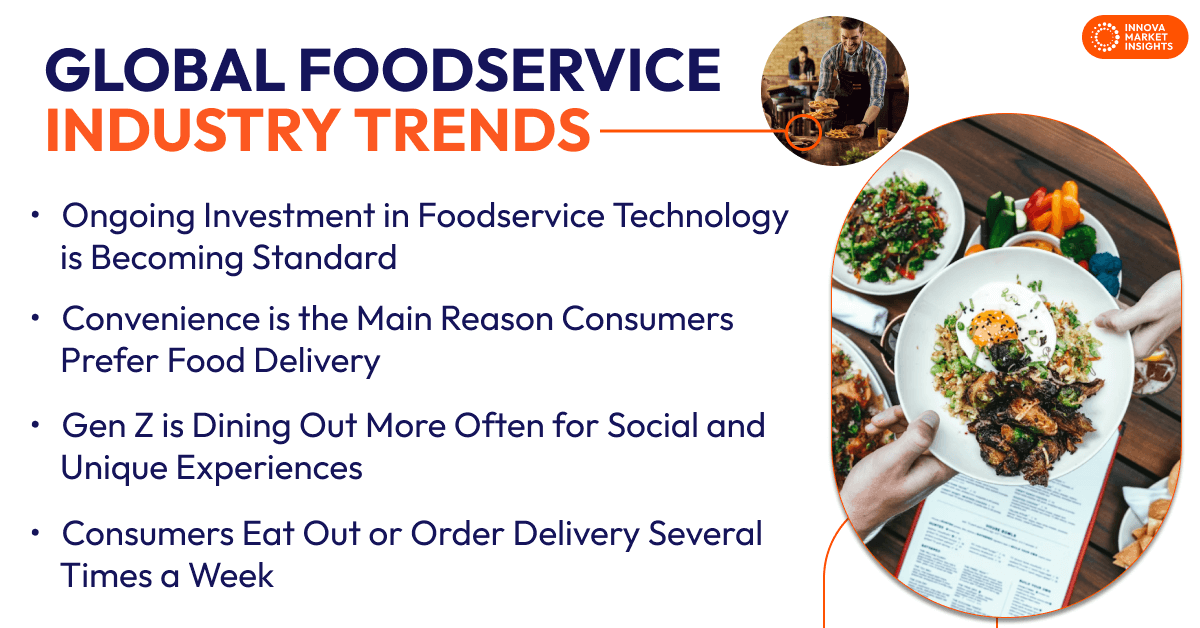
Ongoing investment in technology for both stores and online platforms is becoming standard. Hybrid incentives, like online-only deals, real-time order tracking, and digital shopping list apps, help build trust and encourage regular digital engagement. Fast grocery apps, in-store coupon kiosks, and AI-driven personalization are making the shopping experience smoother. For example, Stop & Shop is adding kiosks that allow shoppers to access digital coupons. This connects online savings with in-store purchases. Leading brands will focus on quick product ranges, compact packaging, and seamless app experiences that meet consumer needs. The goal of technological investment and digitalization in the foodservice industry is to make shopping and dining smoother for consumers.
Online Food Delivery Trends
Convenience is the main reason consumers prefer online food delivery, but high costs are still a barrier. At the same time, quality is also an important factor when choosing to order food delivery. Platforms should focus on freshness, reliability, and restaurant-quality taste instead of just discounts.
AI-driven personalization, eco-friendly packaging, and clear pricing are changing delivery into “smart food.” Successful platforms combine meals with loyalty perks, use flexible pricing, and promote limited-time offers to attract budget-conscious consumers. Innovations like Swiggy’s Eatlists, which recommend dishes and restaurants, improve the discovery experience for consumers. As delivery becomes a regular choice for more consumers globally, operators must find a balance between speed and value while also offering emotional rewards. This helps make each order feel like a smart, satisfying decision for the consumer.
Sustainable Foodservice Trends & Ethical Sourcing
Consumers expect restaurants to focus on sustainability, particularly by reducing food waste. While this doesn’t always directly influence where consumers eat, it does affect how they view brands and their loyalty in the foodservice industry. In grocery stores, consumers prioritize quality and freshness when choosing sustainable options. Retailers need to demonstrate that “better” doesn’t always mean pricier by highlighting transparency, sourcing integrity, and everyday value. In a cautious economy with consumers facing higher costs of living, retailers offering easy access to good-value, high-quality food with sustainability benefits will be the preferred choice.
Personalization, Customization & Functional Food Trends
Consumer trends reveal that personalization is changing foodservice. Specifically, generational differences are driving personalization trends in the foodservice industry. Gen Z is dining out more often for social and unique experiences. In contrast, older generations dine out less, focusing on health and value. Younger consumers prefer food delivery for its speed and convenience, while older consumers are using it less due to financial and health concerns. Retailers and operators are moving towards curated, functional, and customizable options. These include immune-boosting meals and meal kits to cater to specific needs and lifestyles. Brands that make consumers feel appreciated, valued, and in control will garner consumer loyalty.
Experiential Dining & Restaurant Experience Trends
The dining landscape is evolving in the foodservice industry. Pubs, restaurants, and street carts are seeing fewer customers, while cafes, canteens, and fast-food restaurants remain steady, offering speed and low prices. Sit-down venues need to improve their value and attractiveness to draw more consumers. They should focus on quality, creativity, clear pricing, loyalty rewards, and portion sizes that fit consumers’ needs. Operators like Haidilao, known for their entertaining dining experience, are transforming how we eat out by making meals engaging and memorable. Options like chef-curated menus, family meal bundles, and loyalty rewards can make each visit both smart for the wallet and fulfilling emotionally.
Regional Consumer Insights: Global Foodservice Trends
Consumer trends show that foodservice and grocery preferences differ by region globally. In Latin America, consumers prefer shopping in stores and using local retailers. They value familiar routines. In contrast, urban markets in Asia lead in online grocery shopping, with many consumers using digital services, convenience apps, and quick delivery. Urban Asian consumers also dine out and order delivery more often, indicating a strong demand for convenience and experience. Worldwide, more consumers are eating out or ordering delivery several times a week. Brands should adapt their foodservice strategies to fit local cultures, blending traditions with technology to stay relevant across different markets.
What’s Next in Foodservice Industry Trends?
Brands can succeed in food service by offering value, quality, and convenience along with engaging experiences. These brands can take advantage of technology and AI to provide smooth journeys across all channels and redefine value beyond just price. As consumers demand flexibility, personalization, and trust at every interaction, from quick delivery to immersive dining, brands creating memorable moments will build loyalty in the foodservice industry. Top brands will make foodservice both smart and enjoyable, meeting growing expectations with creativity, care, and a strong understanding of consumer needs.
This article is based on Innova’s Omnichannel Eating & Foodservice Trends – Global report. This report is available to purchase or with an Innova Reports subscription. Reach out to find out more.