


March 26, 2026 – Every year, Innova Market Insights unveils the ingredient trends that will shape the global market for the year to follow. Grounded in consumer and trends research, this overview equips brands with the knowledge they need to inform innovation strategy and formulations. Thus year, consumers are increasingly becoming more self-sufficient and are engineering their own approaches to health. Living healthier is becoming more and more important. Ingredients play a principal role in this journey, and there are three trends that are driving the market. Consumers value products with functional ingredients that add something positive, such as functional solutions. Naturalness will also be key, alongside products with fewer “negative” ingredients. Innova’s “Top Global Ingredient Trends 2026” report explores these growing trends and what this means for your brand.
What is the New Health Paradigm for Global Consumers in 2026?
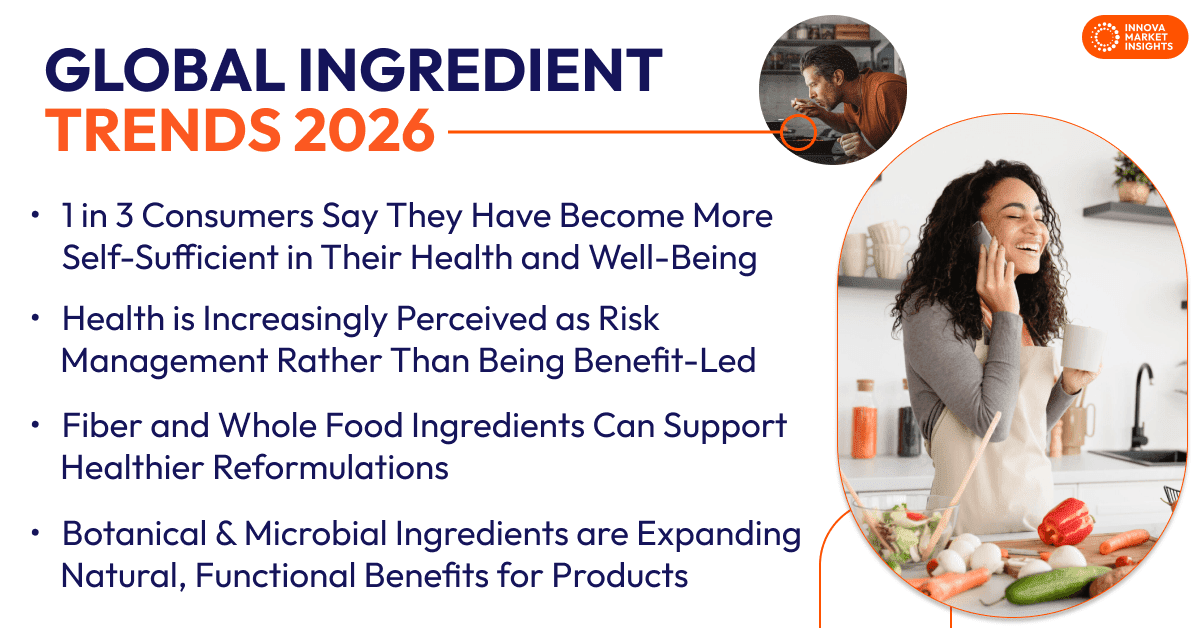
In 2026, consumers in the global food and beverage market are increasingly taking ownership of their health journeys. 1 in 3 consumers say they have become more self-sufficient in their health and well-being, and a majority are recognizing the importance of eating healthy foods. In fact, Innova’s consumer research shows that naturalness, reduction, and enhanced nutrition are the key eating approaches that consumers employ.
Add the Good: How are Consumers Reapproaching Ingredients?
Consumers are no longer solely eating food for nutrients. They are designing their own health, with ingredients acting as functional building blocks. 60% of global consumers say they always look at ingredient lists when purchasing products, and transparency around these ingredients is significant. In line with Innova’s Top Ten Trends of 2026, “Powerhouse Protein” and “Gut Health Hub,” protein and fiber are key nutrients consumers are embracing. The former is expanding into targeted health benefits, with new product launches reflecting the trend towards featuring protein and at least one accompanying health claim. Fermentation is also unlocking new protein solutions.
In regard to gut health, innovation is largely centered around fiber and prebiotics, and specific ingredients are driving the next wave. Oat fiber and inulin chicory are two of the fastest growing fiber sources tracked in launches featuring digestive or gut health claims. Consumers are also looking for ingredients that target longevity across both the body and mind, begging the question of whether ingredients will be the future of health innovation and replace traditional nutrition claims.
Keep It Natural: How can Brands Leverage this Trend to Bolster Consumer Trust?
Complexity may be the downfall of food and beverage brands, as consumer trust in elaborate ingredients is waning. In reality, consumers are more trusting of ingredients that feel natural or recognizable, with naturalness ultimately reshaping formulation. 1 in 3 global consumers point to “made with natural ingredients” claims as making indulgent food or beverages feel healthier, and as a result, natural ingredients are expanding across core formulations. This includes everything from colors to flavors and sources of protein. Botanical and microbial ingredients are also expanding natural functionality for products on the market. For example, cannabis, adaptogens, and floral ingredients enable brands to promote natural mental well-being solutions. Fungi and algae species are also driving innovation and are increasingly adopted to enhance texture, mouthfeel, and nutritional value.
Cut the Bad: How are Perceptions of Health Changing and Shifting which Products Consumers Seek?
Health is increasingly perceived as risk management rather than being benefit-led, and global consumers are seeking products with fewer negatives. For instance, consumers are limiting ingredients like salt and added sugars, but this is not synonymous with less desire for indulgence. A majority are limiting both natural and artificial sweeteners, but 52% still say they don’t care about healthiness when they want to indulge, signaling to manufacturers that taste and indulgence are still a priority.
Ingredient reduction, such as sugar, also necessitates formulation shifts, so there are opportunities for brands to implement smarter ingredient systems. Natural ingredients can deliver authentic and familiar tastes. Fiber and whole food ingredients can also support healthier reformulations, and the global food and beverage market has seen a growth of launches with low or reduced GI claims.
What’s Next for Global Ingredient Trends?
Brands who succeed in the global ingredients market will spotlight performance, trust, and experience. As food is becoming a functional delivery system for health, innovation will move towards ingredient systems that combine multiple functionalities into single solutions. Naturalness will also be the foundation of trust moving forward, with innovation balancing science-backed functionality with natural credibility. Furthermore, health approaches will increasingly fall under risk management versus optimization, and the challenge for manufacturers will lie in the ability to replace removed ingredients without compromising sensory elements.
This article is based on Innova’s Top Global Ingredient Trends 2026 report. This report is available to purchase or with an Innova Reports subscription. Reach out to learn more.