



April 9, 2026 – In this article, Innova Market Insights looks at how consumers around the world see and consume plant-based products. What drives their motivations, expectations, and the barriers that affect their choices in plant-based foods? We share key insights about plant-based consumers and identify ways brands can improve relevance, increase acceptance, and support growth in the plant-based market.
Who are Plant-Based Consumers?
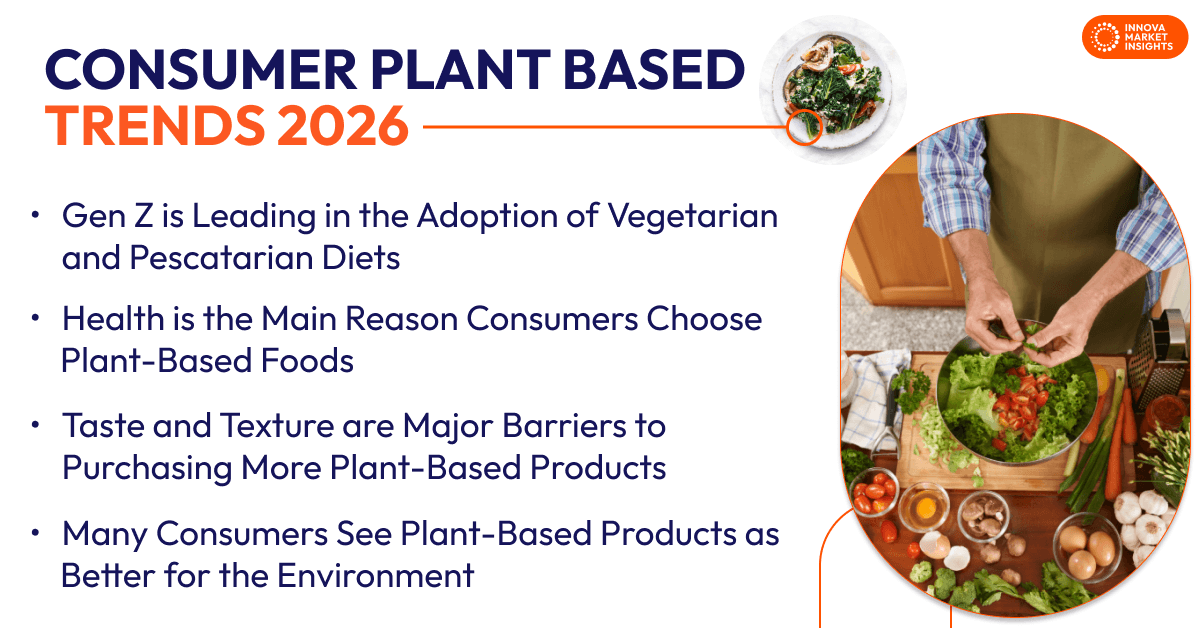
While many consumers know about plant-based products around the world, only a small number actually follow completely plant-based diets. However, Gen Z is leading in the adoption of vegetarian and pescatarian diets, with 8% and 10%, respectively. Otherwise, many consumers add plant-based alternatives to their meals each week rather than fully replacing traditional options. Plant-based innovation shows the need to present plant-based choices as accessible and part of everyday life rather than as a niche or limiting lifestyle.
What is Driving Plant-Based Consumption?
Health is the main reason consumers choose plant-based foods, especially plant-based proteins. Naturalness plays a dual role. Plant-based products attract consumers when they contain simple, familiar ingredients (i.e. clean label), but they raise concerns for consumers when products appear overly processed or filled with additives. For brands in the global plant-based market, clear communication about ingredients, processing methods, and benefits is essential for building trust. To succeed, brands must find a balance among taste, price, and perceived naturalness by using clear messages like “no artificial additives” and showing simple ingredients and natural visuals. These elements help assure consumers of the product’s authenticity and benefits. For example, the recent launch in Belgium of Naked Raspberry Berry Delight Raw Fruit and Nut Bars features 100% natural ingredients and no preservatives. Regarding generational differences in attitudes toward plant-based products, younger generations, such as Gen Z and Millennials, are more receptive, while Boomers are more skeptical.
How do Consumers Perceive Plant-Based Products Globally?
Consumers associate plant-based products with several positive characteristics, such as healthy, animal-friendly, and good for the environment. Regions vary widely in what positive characteristics they associate with plant-based products. For example, in LATAM, the associations are related to health, while in APAC, it is about affordability and innovation. In NOAM and Europe, we see that animal-friendliness and trendiness are over-indexed. For these two regions, we also see indications that some consumers don’t associate any positive characteristics at all with plant-based.
How are Dairy Alternatives Performing?
Dairy alternatives have grown, especially in LATAM, but they have dropped more than expected in MEA. Globally, plant-based trends reveal that younger generations are more likely to have increased their consumption of alternative dairy products compared to older generations.
How are Meat Alternatives Performing?
Younger consumers consume more meat substitutes than older consumers do. The biggest increases are in regions like MEA and APAC. Meat substitutes are particularly popular among younger generations, with over 1 in 5 of both Gen Z and Millennials using them for protein. In contrast, older generations mostly consume legumes, another plant-based protein. About 58% of Boomers eat legumes, while only 38% of Generation Z do, reflecting current plant-based trends.
Plant-Based and Gut Health
Many consumers consume plant-based protein for health benefits like fiber, antioxidants, and easy digestion. This aligns with the gut health trend, as brands provide more gut-friendly plant-based foods. For example, Biomel Love Your Gut Pure Vanilla, introduced in the Netherlands, is 100% plant-based and natural. It also contains Vitamin B6, D, and calcium to support immunity and digestion.
Consumer Want Plant-Based Products That Standalone and Don’t Imitate
Over 55% of people think plant-based products should be their own foods, rather than just imitating meat or dairy. Plant-based trends highlight that many consumers prefer products that highlight natural ingredients and great taste instead of those that try to mimic animal-based items. This change is reflected in the recent rebrand of Beyond Meat, which removed “meat” from its name in a bid to reach more consumers. In the UK, Clive’s Purely Plants introduced a 100% plant-based Cheesy Broccoli Quiche with familiar ingredients, meeting the demand for clean labels and rich flavors.
Taste Still Rules When Buying Plant-Based Choices
Taste and texture are major barriers to purchasing more plant-based products, especially among Boomers and consumers in Europe and North America. Improved taste is the most valued factor for dairy alternatives, with LATAM showing the highest demand. This highlights taste as both the main obstacle and the solution. In the plant-based market, brands must offer good flavor to succeed, which is why some brands focus on taste in their packaging. For example, Alpro’s recent launch in Germany, the Smooth and Creamy Oat Drink, features words like “smooth” and “creamy” to align taste expectations with those for dairy milk.
Consumers are Seeking Tradition, Culture and Familiarity in Plant-Based
Traditional and culturally rooted foods are becoming essential to consumers’ diets and values around the world. Plant-based trends show that consumers are increasingly valuing local recipes, childhood favorites, and regional ingredients as central to “traditional” food. They want plant-based products that maintain these familiar flavors, methods, and emotional ties. Examples from APAC, LATAM, North America, and Europe showcase plant-based versions of nostalgic dishes, such as chicken nuggets, dulce de leche, cordon bleu, and barbecue jerky. These alternatives imitate the taste and experience of the originals while meeting modern preferences, such as being vegan, preservative-free, and having lower carbon footprints.
How is Sustainability Playing a Role in Plant-Based Adoption?
Sustainability has a supportive role in the choice of plant-based foods. Consumers mainly consume plant-based foods because of health benefits like better digestion and their natural qualities, while sustainability adds to those motivations. Many consumers see plant-based products as better for the environment. This perspective is especially strong among younger generations, particularly Generation Z, who focus on environmental and ethical issues. For them, choosing plant-based options is a way to show their values, supported by plant-based innovation.
What’s Next in Global Plant-Based Consumer Trends?
Future plant-based launches will likely focus on consumer acceptance through familiar formats and clear health benefits, such as fiber and digestive support, while avoiding complex claims. Success for plant-based brands lies in using traditional flavors and textures while promoting sustainability with upcycled ingredients and regenerative sourcing. Going forward, brands highlighting rich textures, bold flavors, and real sustainability will lead in the growing plant-based market.
This article is based on Innova’s Consumer Attitudes About Plant-Based – Global report. This report is available to purchase or with an Innova Reports subscription. Reach out to find out more.