


April 23, 2026 – Innova Market Insights looks at the key trends shaping supplement packaging worldwide. It focuses on how innovators are balancing the need to protect supplement potency while responding to the growing demand for convenience, consumer appeal, and sustainability. Supplement packaging is no longer seen as just functional; it now plays an important role in building trust, communicating quality, and supporting modern lifestyles through portable, easy-to-use formats. As user expectations continue to change, brands are reconsidering materials, recyclability, and design to better meet environmental concerns and evolving usage occasions. Innova also explores the consumer factors driving future innovation in the supplement packaging market. This includes new product launch trends and examples of emerging innovation throughout the category.
Why is Supplement Packaging Important?
Supplement packaging needs to drive interest on many levels, not just functional. Shoppers are attracted to something that is visually appealing, but fundamentally, innovators need packaging to build trust, loyalty, and consistency of uptake to help drive sales. As consumer lifestyles change, we can expect ease of consumption to become increasingly important in packaging design. Particularly, buyers want to be able to safely and effectively use supplements on the move (at work, for example) and when travelling, so individual, dosage-controlled packs and convenient packaging features are becoming key. At the same time, brands are coming under increasing scrutiny for their sustainability activity and claims. New advances in packaging materials and recyclable formats are being balanced with protection, convenience, and shelf appeal.
Protecting Potency is the Top Packaging Priority
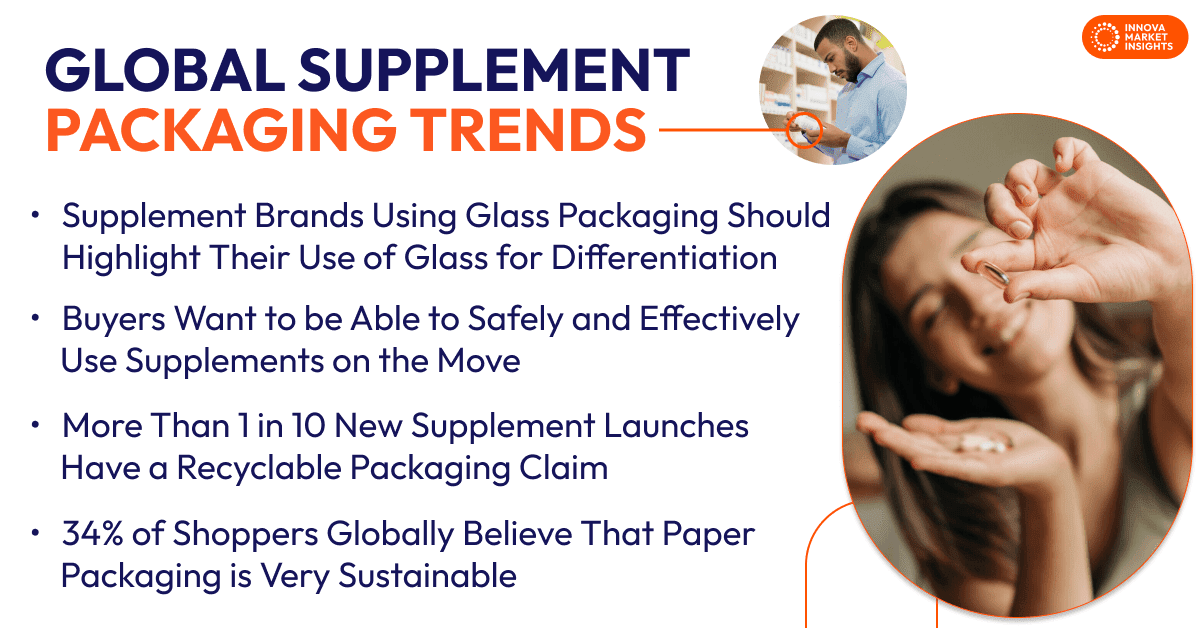
The top criterion in supplement packaging is that it should protect the product from heat, light, and moisture to ensure potency. Safety is also key as the packaging needs to be tamper-proof. Within these areas, there is NPD, including dark glass colors and barrier films. When considering what packaging aspects shoppers are prepared to pay more for, quality and safety rank the highest. However, brands also need to balance packaging choices with what adds value for consumers and aligns with spending expectations, as rising material and production costs can lead to higher prices for upgraded packaging. In NPD, plastics continue to lead in supplement packaging since it is cost-effective compared to other materials and favored for use by many large brands. Glass, on the other hand, is losing share within NPD despite its positive consumer image in terms of safety. Therefore, supplement brands using glass packaging should highlight their use of glass for differentiation.
Stand-Pouches Lead Convenience Supplement Packaging Innovation
In addition to protecting potency, resealable and recloseable options are a key area of convenience-led packaging in supplements. A notable innovation success is the stand-up pouch, which offers resealable convenience and on-shelf visibility. These pouches offer tamper-evident packaging solutions for modern households, commonly made of plastic or bio-based materials. Additionally, this packaging makes it easier for brands to communicate health and sustainability messaging clearly.
The Shift Toward More Sustainable Packaging
Consumers worldwide are looking to improve not only their own health but also that of the planet, which is now their number one concern. It’s no surprise, then, that 2 in 3 global consumers are drawn to sustainability in packaging. Furthermore, packaging options that are environmentally friendly are increasingly aligned with cleaner ingredients in the supplements market. Now, more than 1 in 10 new supplement launches have a recyclable packaging claim, reflecting current supplement packaging trends.
Advances in materials will push forward sustainability goals in the supplement packaging market. For example, advances in bioplastics enable better recyclability or the use of monomaterials, which makes the recycling process simpler. Paper-based packaging also has a positive sustainability image among buyers and is a readily recyclable material, with 34% of consumers globally believing that paper packaging is very sustainable.
Supplement Packaging Design Can Appeal to Varying Consumer Demands
Changing lifestyles are influencing supplements’ uptake, but they need to become a convenient part of everyday lives. This can mean different things to different consumers. For example, how they are purchased, where they are stored, ease of opening and portability. The market prefers simple shapes, clear visuals, minimal text, and vibrant colors on food and drink packaging. In supplements packaging, innovators are responding but are looking to balance these aspects with sustainability and convenience.
Multipacks offer bulk buy convenience, whereas individual packs add convenience in both dosage control and in portability, which is handy for when people are on the go. For example, US company AG1 builds convenience and consumer loyalty by offering a travel pack version of its daily health beverage supplement powder.
What’s Next in Supplement Packaging Trends?
Going forward, we can expect more innovation in convenient solutions in supplement packaging due to increasing interest in the subscription-based retail model, encouraging packaging innovators to design packaging for letterbox delivery. For this reason, brands are also innovating in portability. Examples include supplying refillable bottles or easy to carry tins or stick packs. Additionally, brands will continue to repackage supplements in order to reach their sustainability goals, particularly by using novel packaging materials. Packaging design will seek to position supplements away from a pharmaceutical image and increase appeal to changing lifestyles or life stages. With ever more reliance on social media marketing, this is an expanding theme in the supplement packaging market. On this theme, engagement with buyers is also key. Brands need to connect with consumers in how packaging is sourced and how it can be recycled or reused, along with how packaging has been changed or why costs might have increased. Clear communication will build trust among shoppers in supplements packaging.
This article is based on Innova’s Global Supplement Packaging: Innovation, Demand & Convenience report. This report is available to purchase or with an Innova Reports subscription. Reach out to find out more