



April 27, 2026 – Tea is evolving across the Asia Pacific market as brands react to shifting consumer expectations regarding wellness, convenience, and sensory pleasure. Tea is no longer seen just as a traditional drink but is becoming a versatile category that includes health benefits, premium rituals, and new formats for people on the go. At the same time, limited-edition designs create excitement and interest. Flavor innovation, from familiar herbs and flowers to rich dessert-inspired flavors, also helps brands expand tea’s appeal for different occasions. Innova Market Insights looks at the key trends shaping the Asia Pacific tea market and future product development opportunities.
Improving Tea Rituals Through Format and Texture
Improved tea formats with easily dissolvable, easy-to-use options combine convenience with sensory engagement. For example, Waterdrop’s recent Australian launch offers peach iced tea in cube form, which can be added to water to create freshly made iced tea. At the same time, texture-led additions such as boba pearls and sticky rice infusions elevate tea into a multi-sensory experience. Furthermore, advanced processing techniques such as freeze-drying and HPP can preserve flavor and nutrition. Emphasizing traditional, handmade processes and slow brewing can reposition teas as a craft-led ritual rooted in tradition in the Asia Pacific tea market. Layering this with mindfulness-led positioning, using subtle herbal blends and refreshing notes, aligns tea with everyday wellness.
How Does Tea Align with Wellness Trends in the Asia Pacific?
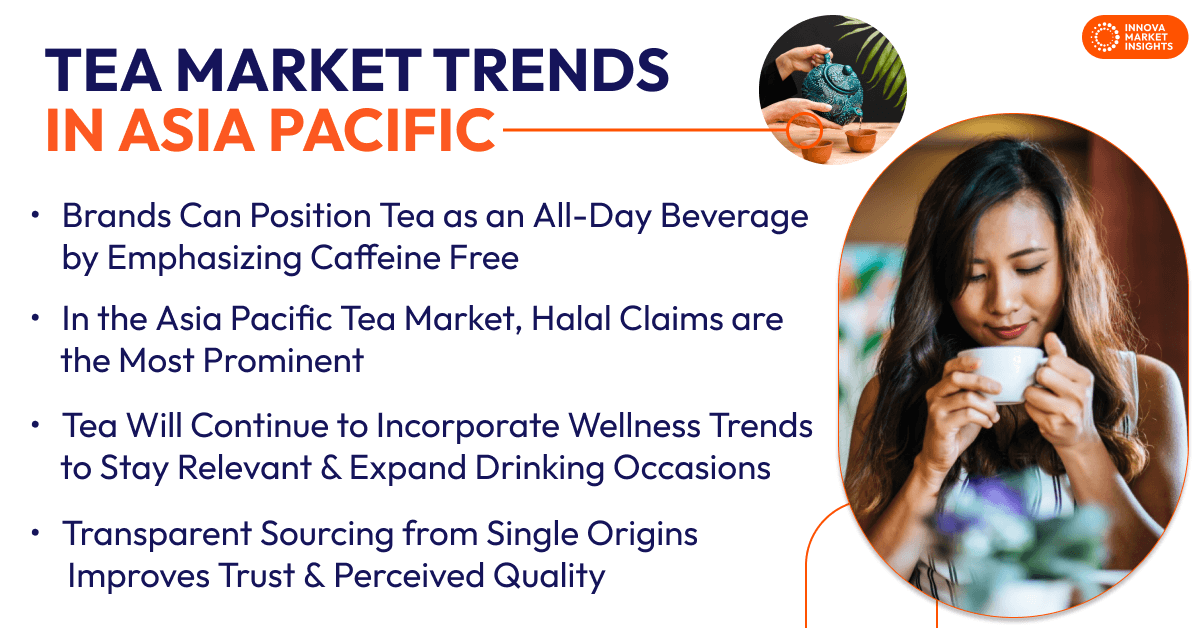
Tea aligns with wellness trends in the Asia Pacific by offering decaffeinated options and naturally caffeine-free sources that promote relaxation without stimulant concerns. For example, Pompadour New York Chai Rooibos Teabags help consumers unwind while addressing the 72% of consumers in the Asia Pacific region who pay attention to caffeine intake. Brands can position tea as an all-day beverage by emphasizing caffeine-free varieties. Additionally, the trend toward clean-label products, such as Wana’s Sparkling Kombucha: Ginger Pineapple, caters to health-conscious consumers seeking natural, additive-free options. Transparent sourcing from single origins, like Iet En Oi Oicha’s Unsweetened Green Tea Drink made from Japanese green tea leaves, improves trust and perceived quality. Moreover, plant-based substitutes derived from grains, seeds, herbs, and botanicals expand tea’s appeal, aligning it further with wellness preferences in the region.
How is Packaging Evolving in the Asia Pacific Tea Market?
Packaging in the Asia Pacific tea market is evolving to emphasize ease of use, portability, and efficient storage, making it more relevant to consumers. Innovations include single-serve cups, easy-to-open cans, and cartons. There is also a growing trend toward sustainability, with brands incorporating biodegradable materials such as corn fiber teabags, exemplified by Shangsan Teahouse’s Daily Drink Tea Cold Brew Original Flavor Oolong Teabags launched in China. Moreover, packaging is becoming more engaging through limited-edition, seasonal, or entertainment-inspired designs, which create excitement and encourage impulse purchases. An example is Kobetea’s Raspberry Vanilla Teabags, launched in Japan for the winter season.
What Claims are Popular in the Asia Pacific Tea Market?
In the Asia Pacific tea market, halal claims are the most prominent, while low/no/reduced calorie claims are rapidly increasing. Other popular claims include low/no/reduced fat, digestive and gut health, plant-based, and heart health.
What are the Trending Flavors in Asia Pacific Tea Launches?
Tea trends show that milk was the fastest-growing flavor last year. Teas formulated with familiar botanicals and subtle fermentation cues can naturally support health, while floral tea notes add softness, elegance, and emotional comfort. For example, Cultures Kombucha, in Myanmar, launched a ginger and lemon flavor. Alongside the probiotics, ginger and lemon help reinforce the digestive and immune health benefits. Another launch, Shiva Organic Lavender Flower Buds Tea, in India capitalizes on lavender’s known relaxation benefits, positioning the tea as a sleep aid. Furthermore, dessert- and confectionery-inspired flavors such as strawberry shortcake, white chocolate, or cocoa allow brands to introduce sweet indulgence into tea. For example, Almighty recently launched White Chocolate Oat Matcha Latte in New Zealand, combining indulgence with the natural goodness of matcha.
What’s Next in Tea Market Trends in Asia Pacific?
Tea will continue to incorporate wellness trends to stay relevant and expand drinking occasions in the Asia Pacific. For example, collagen-infused teas allow brands to bridge daily hydration with beauty and joint-health aspirations, positioning tea as a functional ritual rather than a simple beverage. Furthermore, as consumers in the Asia Pacific market become more aware of caffeine intake and want to avoid caffeine crashes, yerba mate is an emerging ingredient that will see attention in tea innovation. Yerba mate-infused teas offer a plant-based energy alternative that sits between traditional tea and energy drinks. By delivering sustained stimulation with familiar tea cues, brands can attract energy seekers without the harshness associated with synthetic caffeine formats. Another ingredient is algae. Teas blended with algae and grass powders reposition teas from short-term cleansing to everyday nutritional support. When balanced with palatable flavors, these blends can functionally enhance daily tea routines. Consumers are also increasingly turning to iced tea and kombucha as alternatives to soda. Carbonated tea formats combine the lightness of teas with the excitement of fizz, offering a healthier alternative. This format refreshes tea’s image and increases relevance in social and on-the-go occasions. Brands that incorporate wellness trends and expanding drinking occasions will succeed in the Asia Pacific tea market.
This article is based on Innova’s Overview in Tea & Iced Tea in Asia Pacific report. This report is available to purchase or with an Innova Reports subscription. Reach out to find out more