


May 5, 2026 – Globally, beverages are moving beyond just quenching thirst. Beverage trends are now offering additional benefits for physical health, mental wellbeing, convenience, and enjoyment. Consumers worldwide are increasingly purchasing drinks like protein-rich dairy, fortified waters, functional teas, and clean-label energy drinks that support their health goals. Innova Market Insights refers to these drinks as “beverages with a purpose” and fit into the growing category of functional beverages. These health beverages are easy to find, convenient, and flexible; they can be enjoyed hot or cold, creamy, or sparkling. They help consumers tackle various health issues like weight management, gut health, relaxation, and happiness. We look at the health trends driving the popularity of beverages with a purpose, looking at product launches and growth opportunities.
What are Functional Beverages?
Functional beverages are drinks that offer health benefits beyond basic hydration. They are convenient and easy to consume. These drinks often contain ingredients like energy-boosting elements, protein, or clean label components. Various subcategories of these health beverages may be created to address specific health needs. Ongoing ingredient innovation keeps adding to the variety of functional beverages and their use cases.
What Types of Functional Beverages Do Consumers Want?
Beverage trends show that consumers want functional beverages that improve various aspects of their health beyond traditional benefits. They are interested in a wide range of options, including innovative drink types, functional ingredients, and specific health benefits. Despite limitations such as shelf space, competition, and consumer budgets, there is a clear demand for classical beverages with added benefits. Specifically, opportunities lie in hot tea and bottled water, which are under-penetrated, with potential for growth in health benefits beyond their traditional roles of calmness, energy, and hydration.
Consumers Prefer Liquid Formats for Functional Ingredients
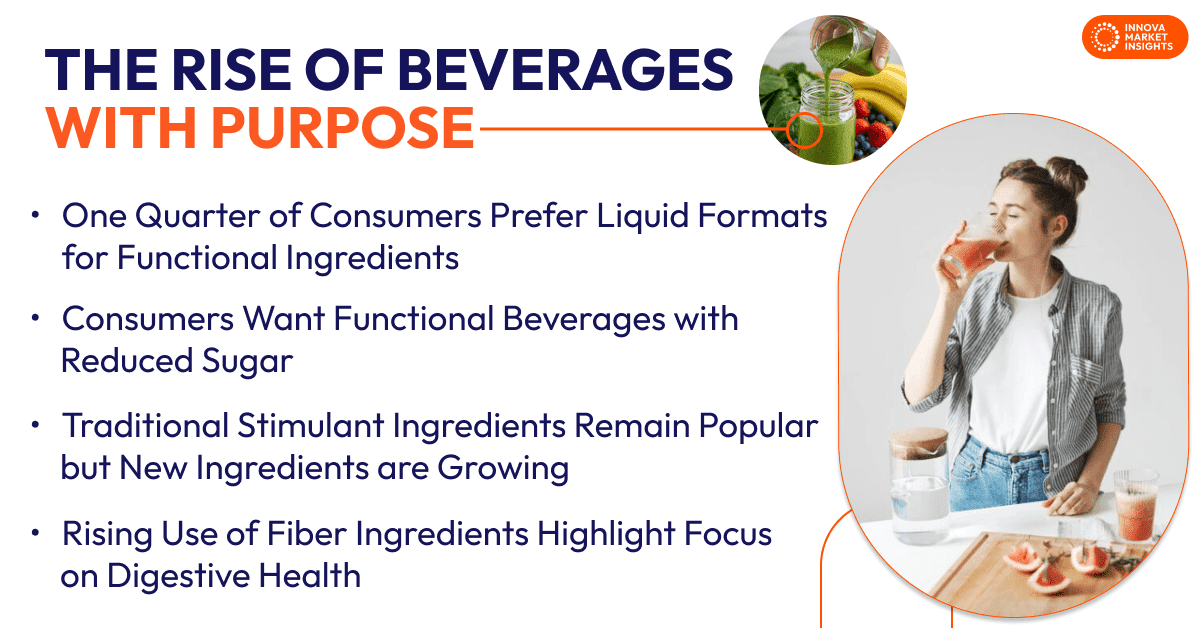
When asked about preferred formats for various functional ingredients, at least one-quarter of those researched named liquid formats. These can include postbiotic and prebiotic drinks, fermented beverages, electrolyte drinks, vitamin water, energy drinks, botanical drinks, dairy, and smoothies. The question remains whether consumers will seek out specific health beverages for single ingredients; for example, a carbonated drink with prebiotic fiber, or whether they want multiple benefits, such as prebiotics, minerals and protein, in a single beverage.
What Claims are Consumers Looking for in Health Beverages?
Beverage trends reveal that consumers are looking for claims in functional beverages that focus on lowering negative ingredients, like sugar, and including positive ones, such as protein. Global consumers appreciate beverages that provide specific health benefits or functions, with 25% of consumers globally looking for products that support self-sufficiency. Also, natural and plant-based ingredients, like spinach, flaxseed, and matcha, attract consumers interested in clean label beverages.
How Can Functional Beverage Brands Stand Out?
To stand out in the crowded functional beverage market, brands should consider changing their package design, nutrient content claims, pricing, and other product features. This approach helps them stand apart and supports consumers in making thoughtful choices. It is essential for product benefits to align with consumer expectations. This means using imagery, color, and names to highlight indulgence for beverages like carbonated drinks, energy drinks, and hot drinks. For dairy, juices, and smoothies, the focus should be on health benefits. Indulgent claims are less common, especially for hot coffee, tea, and malt beverages. Using visual cues and branding strategies can effectively convey a sense of indulgence and capture consumer interest.
Energy Boosts in Hot and Cold Beverages
Energy can come from caloric ingredients that fuel the body or from stimulants like caffeine, green tea extract, and guarana, which contain no calories but help people feel more energetic. Traditional stimulants such as coffee are still popular, but newer ingredients are gaining traction. These new ingredients in drinks aim to mimic the energy effects of caffeine without the ups and downs. For example, energy drinks might be enriched with B vitamins and guarana extract, while herbal stimulants might be added to hot beverages.
Carbonated Drinks Driving Gut Health Ingredients
Carbonates are competing for gut health with ingredients like probiotics, postbiotics, and vinegar. Beverage trends show that sugar-free claims are also common in these gut health drinks. For example, Local Ferment Co’s Soduh Non Alcoholic Raspberry Rush Soda, which recently launched in India, is a soda that contains prebiotic fiber (polydextrose, inulin), vinegar, and no sugar. The increase in gut health and fiber ingredients in health beverages reflects the continued consumer prioritization of digestive health trends.
What are Leading Ingredients in Beverages with Purpose?
Vitamins, minerals, botanical ingredients, and nutraceuticals are found in half of beverages with purpose. Vitamins are more common in the beverage market than minerals. Vitamin C, B vitamins, vitamin A, and vitamin D are the leading vitamins. Botanical ingredients are mainly added for flavor, including green tea, ginger, and guarana. Caffeine is the top nutraceutical. Leading protein sources come from both dairy and plants. Whey protein produced by fermentation is expected to grow in clear drinks, while pea, soy, and fava are the primary plant-based proteins used in beverages with a purpose. Inulin and oligofructose are the leading sources of fiber for gut health, with soluble corn fiber and other soluble fibers becoming more popular.
What’s Next in Beverages with a Purpose?
Looking ahead, the success of beverages with purpose will benefit brands that offer clear health advantages, convenience, and strong appeal to consumers in a crowded market. As demand rises for drinks that boost energy, protein intake, gut health, hydration, and overall wellness, innovation will likely focus on multifunctional products that deliver multiple benefits at once without compromising taste or accessibility. Opportunities lie in underdeveloped areas like hot coffee, hot tea, and bottled water, where functional positioning can still expand. Additionally, clean label ingredients and lower sugar will remain important as consumers become more selective about the role beverages play in their daily lives. For brands in the beverage market, the key to success is to create health beverages that seem relevant, trustworthy, and worth purchasing again.
This article is based on Innova’s Top 10 Trends 2026: #4 Beverages with Purpose – Global report. This report is available to purchase or with an Innova Reports subscription. Reach out to find out more
Written by Declan Godfrey