



May 6, 2026 – Southeast Asia has long been a market where dairy sits on the periphery of daily eating. It is consumed occasionally, not habitually, and penetration across the region remains below average. Yet something is shifting. Southeast Asians are drinking and eating more dairy than they were a year ago, across every subcategory, due to health reasonings. Innova’s report on the Southeast Asian dairy market explores where that behavioral shift is heading, and what brands need to do now to turn growing interest into lasting impact.
Why is Dairy Growing in Southeast Asia Despite Below-Average Consumption Levels?
Dairy trends in Asia reflect the need to promote repeat consumption, rather than a focus on consumers who have never engaged with the category. According to Innova’s consumer insights, between one-third and one-half of Southeast Asian consumers increased their dairy intake in the past year, and perceived healthier choices sit at the heart of that decision.
Health perception varies sharply across subcategories, and the gaps highlight opportunities for innovation. Unflavored milk leads the category, with a majority of dairy users in the region viewing it as healthy. Subcategories that consumers see as healthier are the ones they are choosing more frequently, and for brands willing to invest in credible nutrition messaging, this strategy will lead to growth.
How does Southeast Asian Dairy Innovation Stack Up Against Global Trends?
By most measures, Southeast Asia is moving faster than the rest of the world on dairy innovation. Innova’s new product launch insights show that dairy launches increased in the region between 2021 and 2025, outpacing the rate of Southeast Asian food and beverage overall, as well as global dairy growth in the same timeframe.
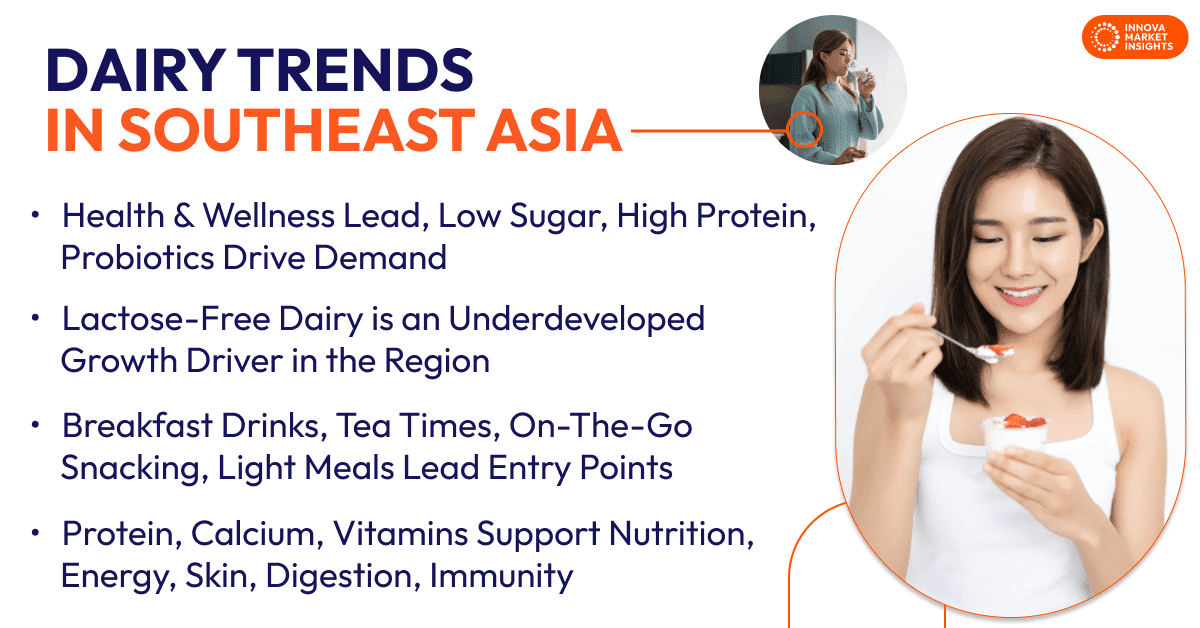
Health and wellness remain the most fertile ground, with low sugar, high protein, and probiotics all resonating strongly with regional consumers. Functional ingredients with established local appeal, such as B vitamins, collagen, and ashwagandha, give brands a way to add differentiation without overcomplicating new product development. Convenience is equally non-negotiable. Single-serve sizes and easy on-the-go formats fit neatly into how dairy is actually consumed across the region: at breakfast, during tea time, as a quick snack. Where indulgence is a core element, local flavors like passionfruit and ginger offer a decadent twist.
How Should Brands Address the Barriers Limiting Dairy’s Everyday Role in Southeast Asia?
Two barriers play a role in limiting dairy’s integration as a daily habit across Southeast Asia. The first is lactose intolerance, which affects a large share of the population and remains one of the most persistent barriers to regular consumption in the region. The second is occasion fit, as dairy simply does not have the natural, automatic place in Southeast Asian daily routines that it holds in many Western markets.
On lactose, the answer is product formats that remove the problem rather than work around it. Probiotic dairy like yogurt and kefir, A2 milk, lactose-free products, and items with added lactase enzymes all have genuine traction potential. Lactose-free dairy is an underdeveloped growth driver in the region. The prevalence of intolerance is high enough that addressing it meaningfully could expand the addressable market. Halal certification is a separate but equally important baseline.
To fit, the path forward will be to design products for the moments where dairy makes the most sense. Breakfast drink occasions, tea times, on-the-go snacking, and light meals are the most natural entry points. Variety also has a specific role to play in driving frequency, especially as a significant share of Southeast Asian consumers cited increased product variety as a key reason they consumed more dairy in the past year. Localized and seasonal flavors, limited edition runs, and co-branded launches are all practical ways to keep the category feeling fresh and worth returning to.
What’s Next for Southeast Asian Dairy Trends?
The brands best placed to grow in Southeast Asia are those that stop treating the region as a single undifferentiated market and start innovating for the specific health motivations and consumption occasions that shape behavior in the region. Protein, calcium, and vitamins are real nutritional credentials and functional boosts that dairy can offer, however they need to be connected to other aspects Southeast Asian consumers care about: energy, skin health, digestion, immunity. Brands should also increasingly highlight lactose-free recipes and probiotic ingredients that address digestive concerns. Localized flavors can also shift value perception, creating novelty without adding complexity.
This article is based on Innova’s Dairy in Southeast Asia report. This report is available to purchase or with an Innova Reports subscription. Reach out to learn more.