



May 7, 2026 – Protein dominates Innova’s 2026 trends and is in high demand worldwide. It symbolizes wealth, with consumption rising alongside economic growth, especially animal protein, valued for its essential amino acid profile (complete protein). Some plant sources like soy, grains, seeds, pistachios, algae, and nutritional yeast are also complete proteins, offering fiber as an extra benefit. Despite consumer aspirations for animal protein, affordability, resource use, disease, and climate issues threaten supply amid rising demand. The global rise of powerhouse protein highlights balancing consumer needs with sustainability, including whole food, plant-based, and innovative protein sources via technology and fermentation.
What are Consumer Trends in the Global Protein Market?
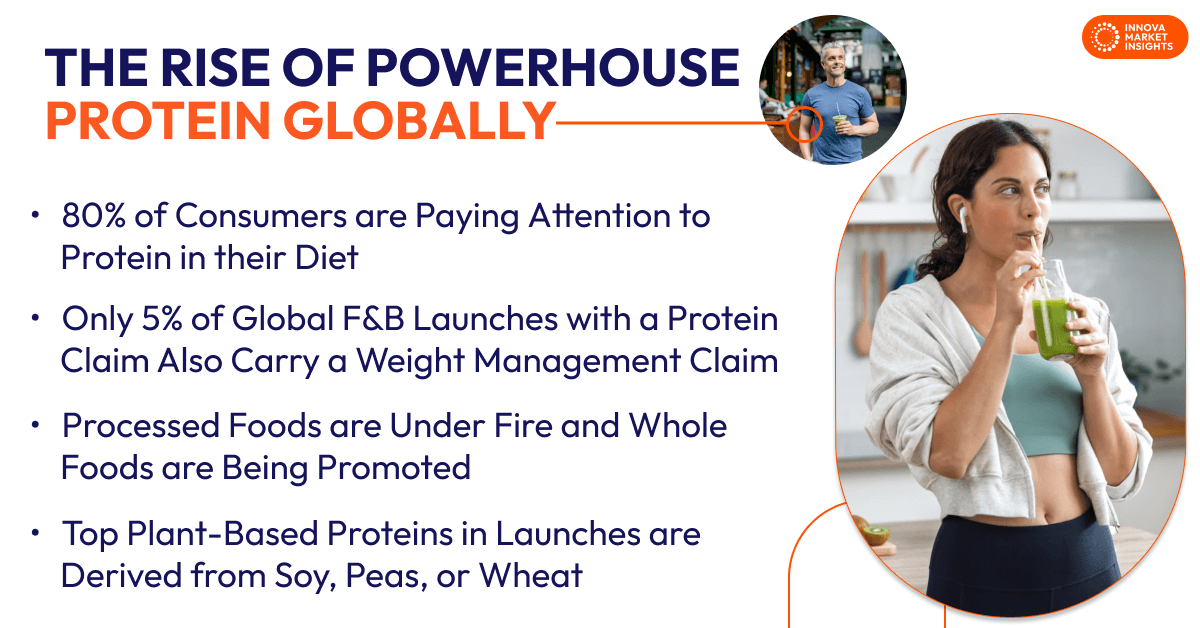
Protein is an enduring wellness powerhouse that is highly desirable to consumers globally, with 80% of consumers saying they pay attention to protein in their diet. Consumers say they actively include more protein in their diet for various aspects of physical and mental health, led by sports performance and weight.
Protein crosses over several other top F&B trends. For example, protein-rich categories such as dairy are also marketed for their gut health benefits. Increasingly, indulgent categories are also incorporating protein and innovating with protein ingredients, fueling the expansion of protein-rich beverages. Rising in popularity are plant-based alternatives which mimic the protein content of their animal counterparts. Consumers are living in a time filled with financial pressures, and brands should look to offer protein-rich products which are also affordable. Just 2% of launches with a protein claim have an economy claim, highlighting the opportunity to offer affordable protein options and attract budget-conscious consumers.
How Does Protein Help Performance and Weight Loss?
Protein already had good penetration among casual and serious athletes looking to boost performance, strength, and muscle building, where the benefits are well-known. Protein is also the top nutrient that supports weight loss and has even greater importance to maintain muscle for GLP-1 users. However, only 5% of global food and beverage launches with a protein claim also carry a weight management claim. This is a missed but growing opportunity for brands to capitalize on interest and help make a meaningful difference in consumer health. With physical activity and weight loss efforts on the rise, we can expect more future growth for protein, especially as 41% of consumers of all ages recognize the link between protein and health goals.
How Can the Protein Market Capture More Consumer Attention?
The gap between familiarity and purchase, especially plant protein sources, opens the door for improved consumer education and promotion of protein foods, especially to move protein beyond sports to prominence at mealtimes. This is particularly happening with legumes. Protein claims that rise above label clutter are easy to spot, especially in less traditional protein sources such as snacks and cereals. For example, Topway Nutrition Protein Chips Corn Snack, recently launched in Brazil, has a very clear protein claim on the front of its packaging, making it easier for consumers seeking protein-enhanced snacks.
What Impact Does Clean Label Trends Have on Protein?
Especially in the US, processed foods are under fire and whole foods are being promoted. Yet, much of the growth in protein-containing food and beverage is driven by the addition of processed protein ingredients. It remains to be seen whether consumers will move toward whole foods for protein or continue to be attracted to convenience and processed food. However, 40% of consumers, particularly Generation X and Boomers, say they prioritize protein sources that are natural and whole foods, showing a clear appetite for clean label protein sources from consumers if brands offer them.
How is Technology Transforming Protein?
Technology is the future of protein, helping to enhance protein content and meet consumer needs in the most resource-efficient way. Today’s precision fermentation may evolve into technologies that offer protein production scalability, versatility, and availability at an affordable price point. Additionally, advances in the production of clear whey protein ingredients that are suitable for a broad range of beverages have created opportunities for protein enrichment in the soft drink and hot drink categories. However, smart marketing in these new protein ingredients will be essential.
What are the Consumer Trends in Plant-Based Protein?
Among plant-based sources, legumes are the most popular choice; outperforming options like tofu, tempeh, and meat substitutes in overall appeal. This trend also shows a change across generations. Older generations, Boomers and Generation X usually prefer familiar plant protein sources, while younger consumers, Millennials and Gen Z, are more open to trying new formats and ideas. This presents an opportunity for brands to create plant protein products that combine everyday accessibility with bolder flavors and appealing packaging. Over ¼ of consumers consider various plant-based foods to be protein sources, led by rice, vegetables, nuts, and oats. However, these leading sources are lower in protein than legumes, pulses, and soy, which are better suited to protein claims. The opportunity in plant proteins is perhaps most highlighted by the leading protein choices for consumers being animal-based. Milk, yogurt, and milk and yogurt drinks are the most purchased products with protein claims, while vegetarian, vegan, and plant-based are leading clean and lifestyle claims in launches with a protein claim. The top plant-based ingredients in launches are derived from soy, peas, or wheat.
What’s Next in Protein Market Trends?
What’s next in protein market trends is a broader and more strategic change in how protein is positioned, sourced, and delivered to consumers. Future growth will likely come from protein being integrated into everyday foods and beverages. This shift occurs as consumers increasingly connect protein to weight management, healthy aging, and overall wellness. Brands also have a chance to bridge the gap between awareness and purchase by making protein claims clearer and educating consumers on the benefits of both animal and plant-based sources. At the same time, the demand for clean label products will encourage companies to showcase more natural, whole-food protein options. New technologies like precision fermentation and advanced whey processing will also expand the range of protein applications. Overall, the next phase of protein market trends will focus on innovation, accessibility, and products that meet health goals and changing consumer expectations.
This article is based on Innova’s Top 10 Trends 2026: #1 Powerhouse Protein – Global report. This report is available to purchase or with an Innova Reports subscription. Reach out to learn more.