


May 28, 2026 – Increasingly, consumers in the global beverage market are tired of the status quo in beverage choices. Instead of the typical choices, like a cappuccino, iced latte, or a glass of orange juice for breakfast, they are ready for something new. Consumers are now looking for local provenance, sensory indulgence beyond flavor, and taking health and sustainability seriously, not limited to the concerns about microplastics in beverages. Innova Market Insights takes a look at the global alternative beverage trends, looking at product launches, consumer insights, and opportunities for innovation in this expanding market.
What Alternative Beverages Are Consumers Choosing?
Consumers in the beverage market are rediscovering coffee substitutes that their grandparents used during the post-war period, but this time around, it is a positive choice made for the environment, their health, or both. Moreover, fermented drinks, once deemed an acquired taste, are becoming more mainstream and savory-driven innovation in hot drinks is driving the transition from sweetness, in favor of different textures and health benefits. For example, Gobbi Savory Tea with Soothing Miso Flavor, recently launched in the US, bringing the rich, umami taste to the tea category.
Consumers Are Ready for New Types of Beverages
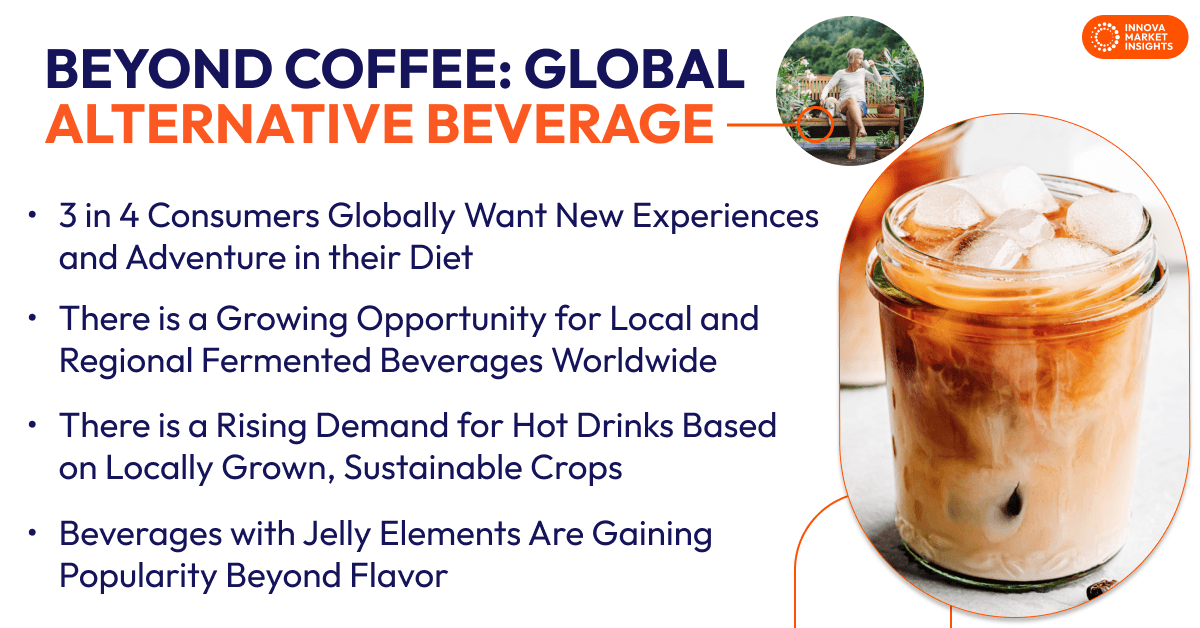
3 in 4 consumers globally want new experiences and adventure in their diet. Half are looking for healthy flavors, and 1 in 4 would like more sustainable products. This is increasing demand across the beverage market for alternative choices to what’s currently on offer, such as hot drinks derived from non-tropical crops, juice products with health benefits instead of sugar, novel flavors, and sensory experiences that go beyond flavor. The juice category is particularly a good target for innovation, given that half of consumers say this is where they’re most open to flavor experimentation.
The Appetite for Fermented Beverages is Growing
Combined with the fact that healthy flavors are popular, there is an opportunity for local and regional fermented beverages, such as kvass, beetroot and sauerkraut juice, to become more mainstream in the global beverage market. Water kefir, with its mild flavor profile, is particularly appealing to consumers with sensitive taste buds. Kult Passion And HOPS Sparkling Water Kefir, a recent launch in Belgium, is an example of the emergence of water kefir competing with the established kombucha, as well as an alternative to regular sodas. The popularity of fermented beverages is greatly influenced by their multiple health benefits, which continue to be the subject of scientific research. A strengthening emphasis on postbiotics (beneficial substances that remain in a product even after the fermenting organisms have died off) will broaden the health positioning platform for fermented beverages.
Why Are Consumers Drinking More Coffee Alternatives?
Driven by concerns over health and sustainability in equal measures, there is a rising demand for hot drinks based on crops grown close to home. This has triggered a resurgence of coffee substitutes in the alternative beverages market that were once widely available in the first half of the 20th century and made from, for example, chicory and dandelion root. Moreover, there is an expansion of innovative coffee alternatives, made, for instance, from lupin seed, which grows well across Europe, or figs, a low-water crop. These coffee alternatives also tend to be naturally free of caffeine and high in fiber and antioxidants, improving their consumer appeal even further. Brand Cherico highlights these benefits in its Instant Organic Natural Chicory Powder, recently launched in France.
Why Are Consumers Drinking More Local Beverages?
Nearly 1 in 3 consumers in the global beverage market say they are choosing products made from local ingredients, and almost 1 in 5 prefer brands committed to promoting biodiversity. This creates opportunities for juices made from endangered heirloom fruit and vegetable varieties, each showcasing its distinctive flavor profile and giving rise to a whole new segment of premium-positioned juice products. Conventional beverages made from commodity crops, such as tea, coffee, and cacao, cultivated in tropical and subtropical regions of the world, can be problematic, as they are associated with issues such as natural habitat destruction, pesticide use, and heavy reliance on irrigation. As a result, there is a rising demand for alternatives grown closer to home.
What Textures Are Desired in Alternative Beverages?
Beverages with jelly elements such as pearls, seeds, chunks or layers are very much up and coming in the alternative beverages market. 2 in 5 consumers are looking for intriguing textures, and more than 1 in 10 say they are strongly influenced by their purchasing decisions by sensory experiences that go beyond flavor. These textured beverages not only satisfy consumers’ thirst for novelty but can deliver on other consumer demands, such as health benefits and indulgence, with ingredients like tapioca, konjac, and chia seeds helping to enrich textured beverages with fiber, omega-3, and vitamins and minerals. Textures also create a new consumption experience that lies somewhere between a drink and a snack, especially as consumers look to satisfy their longing for new experiences without breaking the bank. One example of a trending textured beverage is bubble or boba tea. Originally from Taiwan in the 1980s, the beverage, which uses chewy tapioca pearls as its texturizing ingredient, has gone on to become popular worldwide.
How Concerned are Consumers About Microplastics in Beverages?
Microplastics are everywhere, and although their impacts on human health and the environment are still under investigation without any clear results so far, the likelihood that they are harmful is high. Therefore, the microplastics-free claim is going to become even more common on beverage products. Drinks aimed at babies and young children are likely to be the first category in which a microplastics-free positioning will become a new industry standard, alongside any type of beverage with an overt health positioning. At present, investment in beverage innovation is mainly focused on microplastics-free teabags. For example, Hamburg-based 1000Tees offers TeaBlobs, a line of organic teas and infusions promising a 70% reduction in packaging material by getting rid of the bags and sachets altogether. Instead, the grounds are pressed into tablets, which dissolve in hot water.
What’s Next in Global Alternative Beverage Trends?
Sustainably grown alternatives to conventional hot drinks, such as coffee, tea, and chocolate, made from crops such as lupin, roots, and grains, are expected to increase their market share going forward. Moreover, on sustainability, there will be an increased focus on making drinks from plants that have a low water footprint, such as figs and catus fruit (prickly pear). This is not only relevant to the juice category, as figs can also be used in coffee substitutes. Fermented beverages will continue to grow. Water kefir will be particularly popular among consumers who aren’t big fans of dairy drinks or who find kombucha too strong on the taste buds. Furthermore, textures will play a key role in alternative beverage innovation, appealing to growing consumer demand for novel sensory characteristics beyond flavor in search of indulgence. The microplastics-free claim will become increasingly important, especially in health positioned beverages and drinks aimed at babies and children, as consumers become more aware of the health and environmental impacts of microplastics. Innovators that can appeal to consumer demand for sustainability, health, and new experiences should do well in the growing global alternative beverages market.
This article is based on Innova’s Beyond Coffee: The Rise of Alternative Beverages – Global report. This report is available to purchase or with an Innova Reports subscription. Reach out to learn more.