



June 5, 2026 – Flavor innovation is a growing segment of innovation in the global food and beverage market, and brands are increasingly tapping into the link between emotion and the flavors consumers choose. In particular, comfort, nostalgia, relaxation, and happiness are the major emotional states that consumers are seeking in connection to their food and beverage choices. Innova’s report “How Mood and Emotion Shape Global Flavor Innovation in F&B” dives deeper into these drivers and how brands can tailor their flavor innovation to capture consumer attention and evoke the desired emotions.
How Do Consumers Understand The Link Between Mood And Flavor?
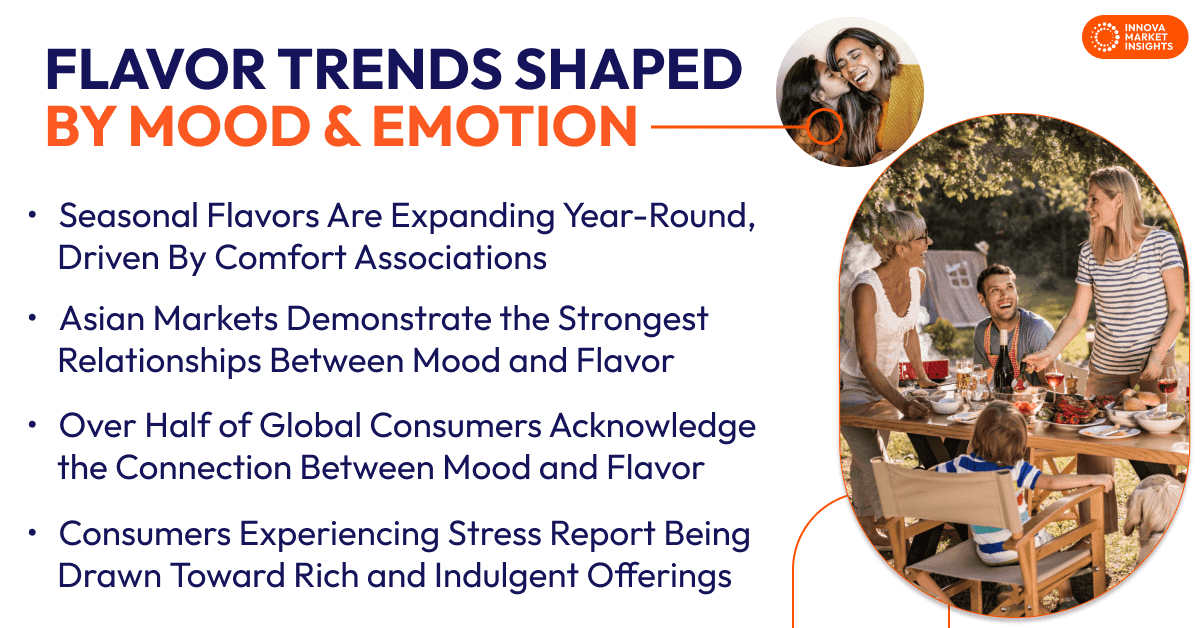
Over half of global consumers acknowledge the connection between mood and flavor. Within this group, 56% of consumers report that happiness is the main emotional driver when it comes to their flavor choices. It is also the emotion they link most to exploration and indulgence. Comfort is another, and Innova’s flavor trends research shows that consumers who seek moments of comfort tend to turn to familiar and nostalgic options.
Flavor can also be used as a tool to help consumers regulate their emotions. In fact, global consumers experiencing stress report being drawn toward rich and indulgent offerings. This highlights an opportunity for brands to create products positioned for comfort, as they are able to also offer a sense of emotional relief.
How Do Regional Patterns Impact The Connection Between Emotion And Flavor In The Global F&B Market?
Culture and region play a crucial role in how consumers translate their mood into flavor choices. Innova’s flavor trends research indicates that Asian markets demonstrate the strongest relationships between mood and flavor. This suggests a greater cultural acceptance in this region of food’s role in emotion. For example, India and Indonesia represent the top countries for emotional flavor connection, with 58% and 56% of consumers reporting that mood influences which flavor they reach for. In contrast, English-speaking markets can be defined as more comfort-driven. As a result, nostalgic and indulgent approaches will resonate more with these consumers.
What Flavors Do Consumers Prefer When Seeking Comfort And Indulgence?
Milk chocolate and vanilla remain established leaders in the global flavor market. This is largely due to their broad appeal. Vanilla also remains a staple for comfort and is often used as a familiar base note that consumers associate with safety and tradition. Milk chocolate also leads, accounting for 4% of market penetration. Nevertheless, it has experienced a decline, despite its status as a leading choice for consumers.
Moving forward, premium positionings will also be significant. For example, cocoa maintains a strong presence in the global flavor market, with brands emphasizing the ingredient for quality and sophistication. Honey also benefits from its natural positioning and its ability to appeal to consumers seeking natural sweetness.
Which Flavors Do Consumers Most Associate With Nostalgia And Familiarity?
Childhood and heritage flavors are another avenue for evoking emotional responses from consumers, and biscuit and cookie flavors are driving the nostalgia category. In particular, products inspired by Oreos are now extending beyond confectionery into the beverage, snack, and dairy categories. Cookie flavors are also appearing across categories like cereals and protein bars, emphasizing how brands are tapping into childhood and comfort associations, in order to drive innovation. Nevertheless, the success of nostalgia positionings will lie in the ability of brands to do so authentically. Additionally, winning innovation strategies will be centered on how well brands can execute balancing familiar flavors with modern formats, allowing brands to bridge emotion with modern lifestyle needs.
How Can Brands Leverage Flavor Innovation To Evoke Excitement And Novelty?
New and emerging flavors indicate the power of cultural storytelling and brand integration within new product development. For instance, Dubai chocolate represents a largely successful flavor, and its dominance in the market is rooted in luxury Middle Eastern associations. These are what distinguishes it from traditional chocolate offerings. Viewed as both culturally relevant and a premium selection, Dubai chocolate signals how brands can lean into cultural elements as a strategy to encourage trial. The brand-as-strategy approach is another noteworthy flavor trend. It underscores how brand identity is increasingly intertwined with flavor identity. Kit Kat and Nutella are two examples of brands who are demonstrating this approach where established confectionery brands are becoming flavor platforms across categories.
Which Flavor Is Demonstrating Growth In The Global Market And Worth Looking Out For?
Cinnamon is a flavor that is showing consistent growth. From cinnamon-roll inspired products to spiced beverages, this global flavor trend is demonstrating the rising consumer interest in warm, spiced flavors that are extending across categories. This is also in tandem with the fact that historically seasonal options are now expanding into year-round occasions, due to associations with comfort.
Cinnamon and cinnamon sub-flavors are also driving beverage innovation, with adoption primarily seen in coffee, tea, and functional beverages. Furthermore, brands can take advantage of cinnamon’s health benefits, surrounding natural wellness and metabolic function.
What’s Next For Flavor Trends In The Global Food And Beverage Market?
The relationship between emotion and flavor is likely to continue rising in importance, as brands continue to acknowledge the emotional drivers that influence consumers’ purchasing decisions. Chocolate flavors, warming spices, and nostalgic profiles will continue to gain relevance, offering brands an opportunity to connect with consumers through taste. Additionally, brands can increasingly leverage functional comfort combinations to appeal to the health-conscious consumer and provide emotional pay-off without any accompanying guilt. Moreover, regional variations in markets with high emotional engagement, such as Asia, present localization opportunities for flavor.
This article is based on Innova’s How Mood & Emotion Shape Global Flavor Innovation in F&B report. This report is available to purchase or with an Innova Reports subscription. Reach out to learn more.