


June 23, 2026 – Innova Market Insights looks at how seniors view nutrition in relation to their health needs and beliefs about food. Seniors are looking to maintain their strength, mobility, energy, and wellbeing. We explore how seniors prioritize nutrients like protein, fiber, omega-3s, vitamins, and minerals, and how they choose food, drinks, and supplements accordingly. We also discuss the beliefs that influence seniors’ acceptance of nutrition, highlighting their preference for natural, familiar, tasty, and traditional options. These insights reveal opportunities for brands to better support senior nutrition.
How Do Boomers Approach Nutrition?
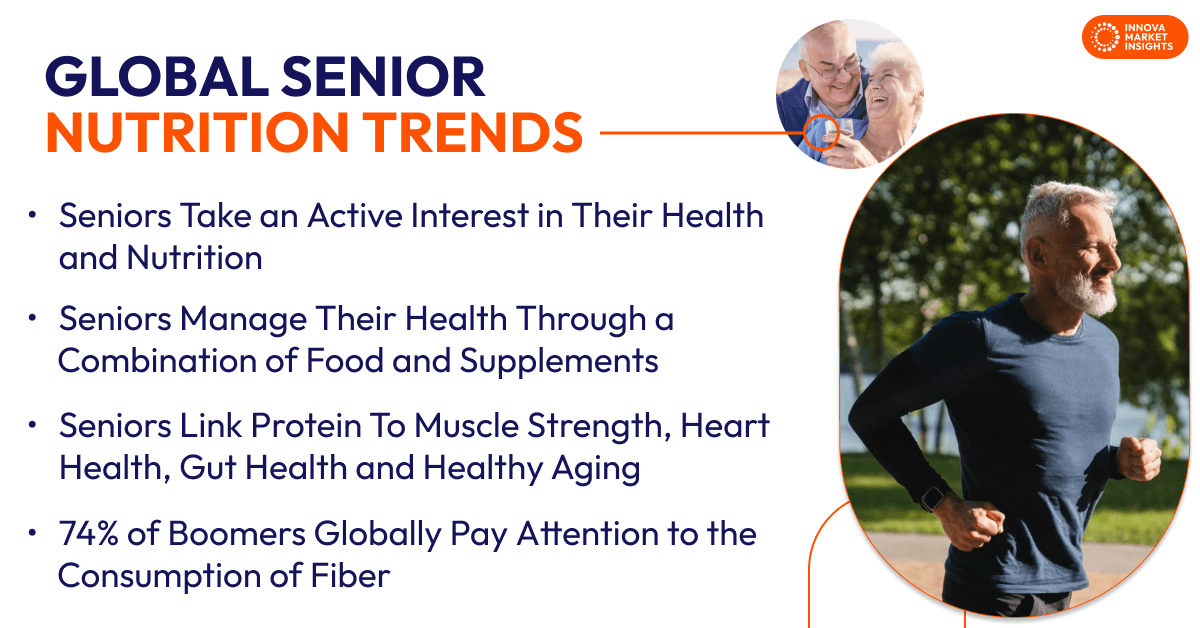
Senior nutrition trends reveal that Boomers take an active interest in their health and nutrition, using everyday choices to support wellbeing. Despite this engagement, age-related health challenges remain, highlighting the need for effective nutritional support. Today’s seniors are active, informed, and self-directed in managing their wellbeing, with 78% of Boomers considering themselves somewhat to be very self-sufficient in the care of their own health. Boomers recognize that their health concerns link back to a number of essential nutrients, including protein, fiber, vitamins, and minerals.
What are Beliefs Shaping Nutritional Choices for Seniors?
Among Boomers, nutrition is judged by beliefs about what feels natural, familiar, and safe, influencing their perception of its credibility. Seniors prefer to manage their health through a combination of food and supplements, which shapes their evaluation of nutrition options. While aware of their health needs, their actions follow their beliefs, emphasizing natural foods like fruits, vegetables, dairy, lean proteins, and legumes, and limiting sugar, salt, and fats. For seniors, natural cues boost confidence in a product’s safety and healthfulness, with naturalness taking precedence over enhanced nutrition.
Familiarity is Key in Nutrition Trends for Senior Consumers
Nutrition works best when it fits into foods, formats, and flavors seniors already know. Familiarity builds confidence with known categories feeling more credible and easier to adopt. Taste is also non-negotiable, as nutrition is generally only accepted when it tastes good. Traditional flavor profiles help nutrition feel acceptable. For example, Sekar Jawi Food Red Ginger Latte Traditional Botanical Drink Powder is a traditional drink blended with red ginger and beverage cream, combined in a modern way into a health drink with benefits. Brands should reformulate familiar foods to improve nutritional profiles without compromising flavor, ensuring healthier choices still feel satisfying and enjoyable. For example, TG Lite Seniors Noodles, recently launched in Malaysia, offers different textures of noodles aimed at seniors.
Functional Ingredients in Senior Nutrition Trends
Brands in the nutrition market should use natural functional ingredients that inherently offer nutritional benefits when developing nutritional products for seniors. This approach aligns with seniors’ belief that good nutrition comes from real food. For example, Naturya Strawberry and Acai Superfood Porridge, recently launched in the UK, uses familiar food to deliver nutritional benefits, including being high in fiber and a source of plant protein.
How Important is Protein in Senior Nutrition Trends?
Protein is important, but seniors do not pay enough attention to it. However, older adults need more dietary protein than younger adults to support muscle mass, strength, and function. This is reflected in many individuals aged 51+ who do not meet basic protein intake recommendations, putting them at increased risk of muscle loss, frailty, and reduced functional health. Seniors link protein to many health benefits, especially muscle strength, heart health, gut health and healthy aging, showing strong awareness of its role in wellbeing. When choosing food and beverages for protein, seniors prioritize price, naturalness, availability, and familiarity.
What is the Role of Fiber in Senior Nutrition Trends?
Fiber supports whole-body health, but intake remains below needs among seniors. As highlighted by the NHS in the UK, eating fiber is associated with a lower risk of heart disease, stroke, type 2 diabetes, and bowel cancer. A diet rich in fiber can also help digestion and prevent constipation. Nutrition trends show that 74% of Boomers globally pay attention to the consumption of fiber. However, the majority of older adults’ dietary fiber intake is consistently below recommendations. Boomers particularly prioritize fiber for gut health and intentionally seek it in foods. 95% of Boomers agree that gut health is important for their whole body, making it a key claim to target for senior nutrition brands.
What are Supplement Trends in Senior Nutrition?
Supplements act as nutritional insurance for key senior health needs. While food remains the nutritional foundation, Boomers rely on supplements to support health areas that feel harder to manage through diet alone, particularly immunity, bone and joint health, and energy. Leading functional ingredients for supplements targeting these health claims are Vitamin C, Vitamin D3, Vitamin B6, Vitamin B12, and magnesium. Successful supplements for Boomers are built around familiar vitamins and minerals with clear, well-understood benefits. Trust comes from simplicity, recognizability, and reassurance. For example, Berocca Energy Everyday Multivitamin Dietary Supplement with Pinelime Crush flavor, recently launched in New Zealand, clearly targets energy and contains the daily requirement of B vitamins, helping to support energy levels.
What’s Next in Global Senior Nutrition Trends?
Seniors are more likely to trust and adopt nutrition products when benefits are delivered through natural, recognizable ingredients they already associate with real food, health, and safety. Brands in the nutrition market should anchor nutritional benefits in naturally functional ingredients seniors already recognize. Using whole foods, botanicals, dairy cultures, grains, fruits and seeds to deliver nutrition reduces reliance on abstract or technical functional claims. Furthermore, nutrition is more readily accepted when it appears in everyday food and beverage categories seniors already consume, rather than in new or unfamiliar formats. Brands can build nutritional value into staples such as dairy, breakfast foods, soups, snacks, and ready meals, allowing healthier choices to fit seamlessly into daily routines. Brands mustn’t forget the importance of taste in senior nutrition. Therefore, reformulating familiar foods to improve protein, fiber, or micronutrient content without compromising flavor, mouthfeel, or enjoyment is key, in line with current senior nutrition trends. Additionally, heritage-inspired and familiar flavor profiles reinforce emotional comfort and authenticity, making nutritional products feel more acceptable and less forced. Brands can pair nutritional benefits with traditional flavors and recipes. This helps communicate health benefits in a way that feels comforting, authentic, and aligned with seniors’ expectations.
This article is based on Innova’s Senior Nutrition – Global report. This report is available to purchase or with an Innova Reports subscription. Reach out to learn more.