



June 30, 2026 – In Germany, the range of health needs tackled through supplementation continues to expand. Supplement use includes energy, immune health, brain health and skin health, with niches like mental acuity, joint health and diabetes support trending. Moreover, supplement formats are also evolving in Germany. Capsules and tablets still dominate, but gummies are continuing to gain market share. Presently, adding value is a key strategic consideration for the category as cost-of-living pressures intensify the importance of price for German consumers. Accordingly, ingredients are advancing all the time to deliver optimum efficacy, while promotional strategies are geared toward educating and informing consumers of health supplements’ health benefits. These German supplements market trends are reviewed by Innova Market Insights, discussing macro themes, consumer drivers, brand strategies, and new product launch trends, while also spotlighting innovation examples and pinpointing potential what’s next opportunities in supplements in Germany.
How Are German Consumers Using Supplements?
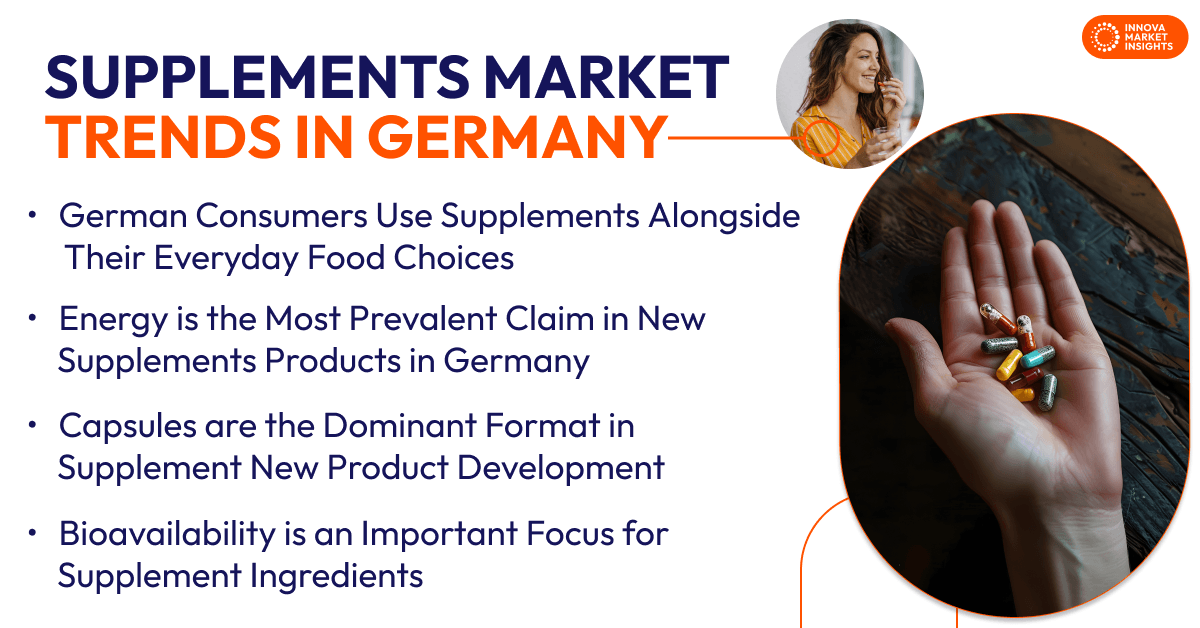
Supplement trends reveal that 8 in 10 German consumers say they are somewhat or very self-sufficient in managing their health, and more than 1 in 5 say they are becoming even more so. A sense of control, convenience and personalization are key drivers of self-care for Germans, which are needs that can be met by supplements. When addressing specific health needs, many German consumers are using supplements alongside their everyday food choices. Supplements are widely used by German consumers for immune, gut, energy, hormone and healthy aging support, while mental energy, emotional support, and brain performance are other drivers of supplement use.
What Are Barriers to Adoption of Supplements in Germany?
Cost-of-living pressures have been significant across most of Europe since the pandemic, and just as there were some signs of improvement, recent international events have intensified the issue. As supplements can be costly, it is vital that brands educate consumers in Germany on the benefits and value of supplements, so that the cost can be justified. An example is InnoNature, who promoted its recent launch, Inno Darm Sensitiv plant-based gut health powder, with information on “four reasons why your gut is a real powerhouse.” Additionally, price promotions have been common strategy in Germany in recent years as supplements brands seek an edge over their rivals. Meanwhile, others are looking to further add value to recognized ingredients, e.g., probiotics are being promoted on a wider range of benefits, while ever more complex blends are being formulated to deliver multiple benefits in a single supplement.
Which Supplement Subcategories Are Trending in Germany?
Vitamins, minerals, and botanicals remain the most important supplement subcategories in Germany in terms of innovation, but have lost share as the market continues to diversify. After immunity, gut, energy and hormone balance, healthy aging is the fourth most in-demand physical health target for Germans when choosing supplements. This now goes far beyond core issues related to beauty through better skin health or improved mobility from muscle, bone and joint health.
What Positionings Are Trending in the German Supplement Market?
Energy is the most prevalent claim attached to new supplements products in Germany. This is not limited to physical energy, but there is also increased attention on mental boosts. For example, Unilq is targeting brain performance with its new L-theanine capsules, which supports calm, mental clarity, and focus. This supplements trend aligns with almost half of Germans looking to boost their energy saying they had used supplements to do so. Claims related to brain and skin health are also on the up. Meanwhile, niches such as mental acuity, joint health, and diabetes support are on trend in supplements in Germany.
Which Supplement Ingredients Are Trending in Germany?
Bioavailability is an important focus for supplement ingredients in Germany, while certain amino acids for energy and complex probiotic blends for a range of health benefits are also showing good growth in use. For example, Tetesept has used probiotics to target immune support with its new Proflora Darm, designed to support intestinal health, the immune system, and energy metabolism. Trust in efficacy is one of the most vital issues for supplements brands, so there is ongoing pressure to improve ingredients and ensure positive results. Social media campaigns for supplements often focus on informing and educating consumers about specific health needs and effective ingredients.
What Formats Are Trending in the German Supplements Market?
Capsules are the dominant format in NPD, but gummies have more than doubled their share of supplements launches since 2021 in Germany, boosted by a child- and woman-friendly image. For example, Bear with Benefits has recently launched Kids Multivtiamins in a gummy format. This trend has also contributed to a rise in flavored supplements as a whole. Citrus flavors are particularly important in Germany, but diversification is ongoing, with recent strength in more berry tastes and more exotic flavors such as mango, particularly in drinkable supplements. For example, recent launch from BrainEffect, Summer Collagen Powder, is flavored with mango and passionfruit.
What’s Next in German Supplements Market Trends?
Miscellaneous is one of the fastest-growing subcategories in German supplements NPD, which reflects the increased variety of supplements and the growing use of complex ingredient blends to target a wider range of needs. We expect this diversification to continue in the German supplements market. Ingredients are core to the development of supplements, and brands must continually look to improve the efficacy of active components, e.g., better bioavailability. At the same time, educating German consumers about new ingredients and their role in health is vital and will remain a key promotional strategy. While healthy aging concerns, such as brain, skin and joint health are being addressed, there are also opportunities for supplements that target longevity and comprise complex blends to support long-term health.
Across Europe, women’s specialty supplements have been witnessing a period of strong growth. This is yet to translate to the German market, with some fluctuation in NPD, but there was a flurry of interest in menopause support last year, and this could become a key target in future. In the US, demand for GLP-1 weight loss drugs has exploded in recent years and supplements are being offered to support users. This trend is yet to hit as hard in Europe, but consumer awareness is growing, and several new products appeared in Germany in 2025, suggesting future potential for development in the German supplements market.
This article is based on Innova’s Supplements in Germany report. This report is available to purchase or with an Innova Reports subscription. Reach out to learn more.