


March 5, 2026 – The sweet baked goods market is changing due to lower commodity costs, shifting consumer habits, and more innovation. Stable sugar and wheat prices allow producers to invest in new products. However, brands must adjust to changing consumption habits and attract both families and adults with evolving lifestyles. Health and diet concerns are still important, so making credible claims, like sugar reduction and real ingredients, is crucial for success. To build loyalty, products should feature appealing ingredients, balanced nutrition, and unique flavors. Innova Market Insights looks at the main trends shaping the global sweet baked goods category.
Functional and Healthy Benefits in Sweet Baked Goods
Health concerns keep some consumers from enjoying sweet baked goods. This makes it important for brands to provide trustworthy, healthier options. Market growth relies on products that focus on sugar reduction and more real ingredients. By pairing good taste with proven functional health benefits, brands can help change negative views. For example, Gullón has succeeded in the cookie market by offering sugar-free, gluten-free, and organic options that focus on both consumer and environmental health.
Emotional Benefits Drive Consumption of Sweet Baked Goods
Consumers mainly eat sweet baked goods to boost their mood. Brands can increase sales by marketing these products as part of relaxation or stress-relief routines. Health benefits should support the emotional appeal, not overshadow it. While non-parents often look for indulgence, parents usually prefer healthier choices. To attract customers at different life stages, brands should combine rich flavors with functional health benefits. For example, BeCalm cookies include ingredients like ashwagandha to promote calmness and reduce stress.
Flavor Diversification in Sweet Baked Goods Category
To unlock future growth, brands must reduce their dependence on milk chocolate. Flavor diversification is essential, as there is significant innovation and market opportunity in exploring popular flavors beyond milk chocolate. Creative combinations and single-flavor highlights can offer new and memorable experiences for consumers.
Flavor and price are the main factors that affect purchases of sweet baked goods, but parents have different priorities. Adults without children pay more attention to taste and cost, while they care less about brands, freshness, or health. To encourage more frequent purchases and foster long-term loyalty, brands should create flavors that attract both adults and families.
Trends in Sweet Baked Goods Flavor Combinations
Combining sweet, salty, and savory flavors attracts many consumers, especially younger consumers who want bold, complex experiences. Brands should make unique but familiar products to draw in and keep these consumers. For example, in Austria, Conditorei Coppenrath’s Birthday Cake Raspberry and Bourbon Vanilla has bourbon vanilla cream and raspberry filling layered between sponge cakes, topped with colorful confetti. Consumers like dark chocolate and chocolate chip just as much as milk chocolate, but these flavors are often overlooked in new products. Fruit flavors are uncommon in cakes, and butter flavors offer a fresh opportunity in cookies.
Ingredient Price Trends in Sweet Baked Goods
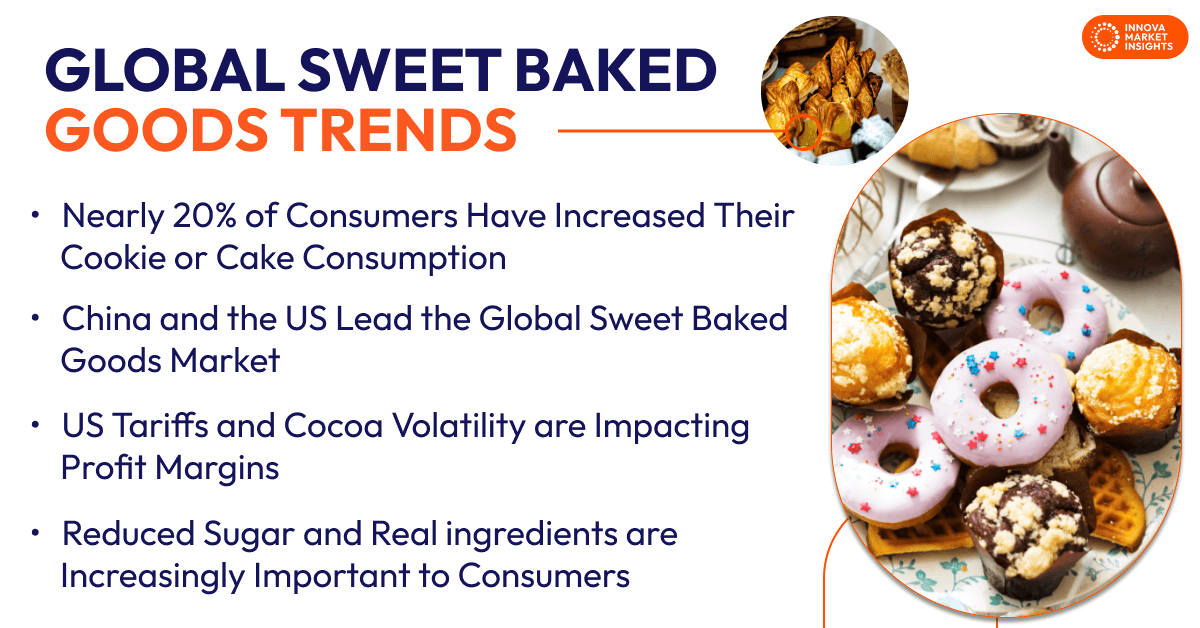
Global sugar prices have dropped 40% since 2023. They are now at pre-COVID-19 levels. This decline eases cost pressures for producers. Wheat prices surged 130% between 2020 and 2022. They have now nearly returned to levels seen before 2020. These trends allow for reinvestment in new ideas and may let brands pass on savings to consumers. However, new US tariffs in 2025 have raised the cost of importing raw, specialty, and manufactured ingredients. Furthermore, the cocoa supply is already strained due to climate change. Therefore, any relief in profit margins is likely to be temporary.
Cookie and Cake Consumption Patterns
Consumption patterns for cookies and cakes are similar. Almost 20% of global consumers in both categories have increased their intake over the past year. A similar number reports eating less. This has led to a stable overall market. Younger consumers are boosting growth, while older consumers are cutting back, likely due to life stage and parenthood. By offering a diverse product range, brands can appeal across generations.
How Often are Sweet Baked Goods Consumed?
Cookies and cakes are usually enjoyed only a few times each month. Consumers without children tend to buy sweet baked goods less frequently, highlighting families’ impact on eating habits. While focusing on families is important, brands should also connect with adult buyers, providing smaller, portable options.
Saving time is increasingly important in the cake market, especially for holiday-themed products. Convenient and indulgent choices appeal to people celebrating who want an easy, stress-free treat. For example, in South Africa, Pick N Pay introduced an Easter Traybake packaged in a plastic tray with a reclosable lid.
Sustainability and Environmental Claims in the Sweet Baked Goods Market
Environmental sustainability is starting to affect the production of sweet baked goods, but only a few products currently showcase these efforts. To create a more sustainable future, brands should adopt eco-friendly manufacturing and sourcing methods. Some companies, like Boni in Belgium, already use Rainforest Alliance People and Nature certified cocoa in their Corn Crisps Filled with Hazelnut Paste.
Leading Markets in Sweet Baked Goods
China and the US currently dominate the global sweet baked goods category. Their combined lead is especially strong in the cakes market, where they hold a significant advantage over all other global competitors.
Egypt leads in the rapidly growing African sweet baked goods market. In Latin America, Argentina is leading growth, with Mexico, Brazil, and Peru also seeing notable expansion.
What’s Next in the Global Sweet Baked Goods Market?
The global sweet baked goods market is moving toward a wider variety of flavors as brands try to stand out. Future growth will rely on attracting adults with products that suit their tastes and lifestyles, not just families. Convenience will become more important, with smaller, portable, and time-saving options. Brands should find a balance between indulgence and functional health benefits by using ingredients that provide both enjoyment and well-being. As consumers globally show more interest in mental wellbeing, more products will include ingredients associated with mood and relaxation. Additionally, sustainable sourcing, production, and packaging will be vital for long-term success in the global sweet baked goods market.
This article is based on Innova’s Cookies & Sweet Baked Goods – Global report. This report is available to purchase or with an Innova Reports subscription. Reach out to find out more.