



April 16, 2026 – The ready meals market Italy is different from the rest of Europe. Strong culinary traditions keep purchase rates lower than in neighboring countries. Italian culinary tradition in convenience meals is a defining market factor. Italian shoppers favor prepared pasta, which Italy is known for, such as tortellini, gnocchi, and ravioli, over full-plate ready meals. Italian food market trends 2026 show that the category is growing. Time pressure is increasing. Microwaveable meals Italy-wide are expanding in format and availability. Quality expectations are rising. PDO ingredients Italian food brands use to signal authenticity are now a baseline requirement. Free-range eggs and natural formulations are also expected. Innova Market Insights explores the drivers, market dynamics, brand strategies, and opportunities shaping this market.
What are Convenience Meals?
The convenience meals market covers three main categories: ready meals, main dishes, and prepared pasta and noodles. Ready meals include protein, starch, and vegetables. They only need to be reheated. They can be ambient, chilled, or frozen. Main dish formats include chilis, stews, casseroles, quiches, and pies. Prepared pasta Italy-style includes tortellini, ravioli, gnocchi, lasagna, and macaroni and cheese. When pasta dishes include protein and vegetables, they qualify as ready meals. This classification matters when comparing Italy’s adoption rates to the rest of Europe.
What Shapes the Convenience Meals Market in Italy?
Convenience meals Italy is growing but faces challenges. Demand for quick meal options is increasing. At the same time, Italian culinary tradition is strong and limits adoption compared to other European markets. The ready meals market Italy favors prepared pasta and rice over complete plate meals. Brands that succeed must meet high standards. They need recipes that reflect Italian food pride. They need natural and recognizable ingredients. They need a clear Italian identity on pack. Price promotions are also important. Italian households are managing tighter budgets and respond to value.
How Does Italy’s Consumption of Convenience Meals Compare to the Rest of Europe?
Italy has the lowest adoption of complete main-dish Italian ready meals in Western Europe. Pasta classification is part of the reason. Pasta is treated as a staple, not a main dish. This makes Italy’s numbers appear lower than actual convenience food engagement. Even so, the gap is real. Fewer than 1 in 3 Italian shoppers buy prepared foods at all. Of those who do, most eat them at home and alone. 37% choose them for solo meals. 32% eat them at dinner. 31% eat them at lunch. Weekly purchase frequency is 40%. That is below the European average of 47% and the global average of 56%.
When Do Italians Consumer Consume Convenience Meals?
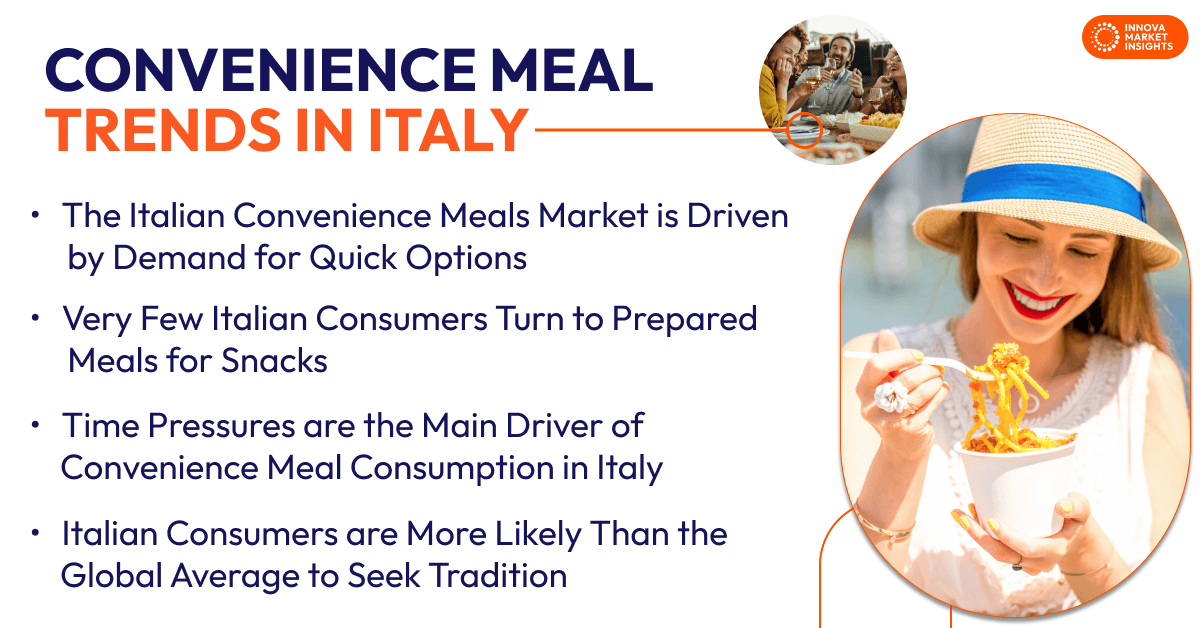
Italian shoppers eat convenience meals Italy primarily at lunch. They over-index for lunchtime compared to European and global averages. Dinner consumption is closer to regional norms. Very few Italian shoppers use prepared meals for snacking. Breakfast use is also low. Both snacking and breakfast under-index compared to global averages.
Time Pressures are Boosting Demand for Convenience Meals in Italy
Most Italian ready meal shoppers maintain steady consumption. In 2026, however, more Italian shoppers increased their intake than reduced it. 19% are eating more than before. 12% are eating less. This net positive outpaces both European and global averages. Time pressure is the main driver of convenience meal consumption in Italy. 37% of shoppers cite less time to cook. 28% point to changing lifestyles. Italian shoppers are turning to convenience meals Italy because their daily schedules leave less room for cooking.
Traditional Recipes and Real Ingredients Popular with Italian Consumers
Traditional Italian food trends are a key driver in the ready meals category. Italian shoppers are more likely than the global average to seek traditional recipes in prepared foods. Environmental and ethical values also matter. Non-GMO and palm-oil-free formulations over-index significantly compared to global norms. Clean label food Italy-wide is not a niche concern. Real, natural, and organic formulations are important to mainstream Italian shoppers. This expectation is higher in Italy than in most other markets.
How is Balance Between Traditional and Adventure Kept in Italian Convenience Meals?
Successful brands in convenience meals Italy combine tradition with variety. They use Italian flags, origin claims, and 100% Italian ingredient messaging on packaging. This signals quality and authenticity. PDO ingredients Italian food brands feature are also important. Giovanni Rana’s filled pastas and Oro Rosso variants showcase DOP and IGP credentials. This supports premium positioning. Il Viaggiator Goloso expands into ethnic recipes while keeping Italian prepared pasta and rice at the center of its portfolio. This approach serves both traditional shoppers and those seeking new experiences.
How Do Convenience Meal Brands Build Higher Quality Images in Italy?
Italian convenience meal brands face a specific challenge. Home cooking has strong cultural value in Italy. Brands must work to build credibility for Italian ready meals. The most effective strategy combines chef partnerships, storytelling, and upscale presentation. Chef partnerships add credibility. Social media and advertising use sensory language and high-quality visuals. This positions Italian ready meals as indulgent and restaurant-quality. The goal is to shift consumer perception from compromise to quality choice.
Pasta Dishes Promoted Around Specific Occasions in Italy
Prepared pasta Italy brands use seasonal occasions to connect with shoppers. Autumn products feature pumpkin, venison, truffle, and local cheeses. These formats are comforting and suited to home dinners. Seasonal promotions include Halloween-themed ravioli in orange and black and spring releases like Ravioli Bufala e Limone. These limited editions tie traditional Italian food trends to a retail calendar. They give shoppers a reason to purchase across the year. Seasonal positioning helps prepared pasta fit into Italy’s strong cooking culture while still offering convenience.
What Are the Flavor Trends in Italian Convenience Meals?
Flavor trends in convenience meals Italy show a balance between familiarity and gradual innovation. Poultry, meat, fish, and vegetable flavors are the core bases. These reflect Italian shoppers’ preference for recognizable, meal-focused recipes. Cheese flavors in filled pasta are losing ground. Health awareness is driving a shift toward lighter profiles. Ethnic flavors are gaining share but remain largely Italian or Mediterranean. Asian dishes are limited. Premiumization in fresh filled pasta is creating space for more novel recipes. This includes fruit flavors and innovative combinations that appeal to upscale shoppers seeking something new within Italian ready meals.
What’s Next in Italy’s Convenience Meal Trends?
Italian food market trends 2026 show that convenience meals Italy will continue to grow. Brands that combine quality with convenience will find the most success. Italian shoppers expect clean label food Italy-wide, with natural and recognizable ingredients. PDO ingredients Italian food culture values will remain an important differentiator. Air fryer meals Italy is a growing opportunity. As air fryers become more common in Italian homes, air-fry friendly formats and better-positioned microwaveable meals Italy shoppers can use at home will gain relevance. There are also opportunities to introduce more international recipes for younger Italian shoppers. Convenience meals Italy are moving away from being seen as a compromise. They are becoming a credible and practical part of everyday Italian food culture.
This article is based on Innova’s Trends in Convenience Meals in Italy report. This report is available to purchase or with an Innova Reports subscription. Reach out to find out more.