



May 22, 2026 – With economic pressures rising, affordability and accessibility are becoming key drivers of consumer loyalty and choice. Using analysis of consumer research and launch trends, Innova Market Insights discusses topics surrounding Innova’s #7 Top 10 Trend for 2026: Worth Every Bite. We highlight the importance of cost to many consumers globally and their need to justify spending in a world of high food inflation. We look at the role of private label in grocery shopping, renewed interest in frozen foods, particularly among younger consumers, and the importance of price promotions.
Economic Pressures Make an Impact
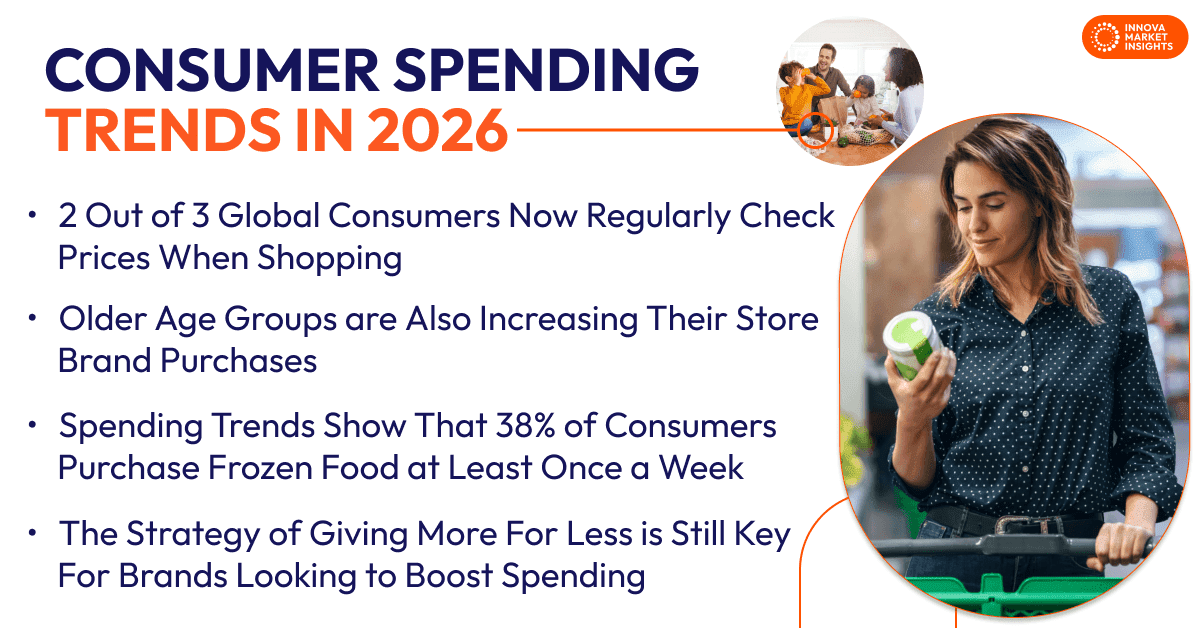
Post-pandemic, food inflation rose sharply. Although rates have dropped since then, some markets still have high prices. Banks often set targets for overall inflation at no more than 2%, showing that global pressures on food prices are still strong in many of the world’s largest markets. While 38% of global consumers say their financial situations have improved over the past year, nearly a quarter says that their finances have gotten worse. Indonesians have a notably negative outlook, with more saying their situations are worse than better. In contrast, consumers in India and Latin America are often hopeful about their financial futures. Globally, 1 in 4 consumers sees their finances declining, and about 1/3 view access to affordable food as a major global issue. It’s no surprise, then, that 2 out of 3 global consumers now regularly check prices when shopping. Global uncertainties often push many to simple, familiar, and good-value food choices. Even popular brand names like Tropicana and Nescafé are launching more affordable options, with value packs.
The Value of Private Label
The gap between private label and name brand has closed as consumers notice better quality and more variety in store brands. Spending trends show that there is a global rise in private label purchases, with 1 in 5 new food and beverage launches now being private label. Value for money remains the main reason people choose private label, but high quality and variety are also important. Generation Z and Millennials especially appreciate these qualities, leading brands to consider factors beyond price, such as healthy options. For example, the GLP-1 trend is gaining traction in the UK, with supermarkets starting initiatives to help consumers follow healthy diets while losing weight. Marks & Spencer has introduced its Nutrient Dense collection, and the Co-op has rolled out Good Fuel.
Moreover, older age groups are also increasing their store brand purchases. At the same time, they are buying fewer name brands. For many Boomers, value for money is the primary motivation, with 3 out of 4 increasing their store brand purchases. Over half of Generation X consumers are doing the same. Accessibility is also more important for older consumers, but they are less likely than younger consumers to look for health benefits, indulgence, or new experiences in store brands.
Frozen: The Affordable Fresh
Globally, spending trends show that 38% of consumers purchase frozen food at least once a week. Their choices are often driven by convenience, but over a quarter also prioritizes value for money amid food inflation. The main benefits cited for choosing frozen include easy storage, time savings, and longer shelf life.
Younger consumers are more inclined to buy frozen food and tend to view it more positively, placing greater importance on a fresher feel and better taste. They also value portion control and opportunities for sharing. Additionally, younger generations explore a wider variety of frozen foods, from snacks and baked goods to confectionery. Spending trends reveal that Gen Z, in particular, shows a strong interest in diverse frozen options, appreciating the convenience and variety they offer. To add value, brands are emphasizing a fresher feel in their products. Claims such as “harvested at peak freshness and frozen within 24 hours” help communicate the preserved nutrients and freshness, as seen with Puravida Flame Grilled Adobo Street Corn and Peppers, recently launched in Canada.
Price Promotions Justify Spend
1 in 5 consumers who increased their food and beverage purchases over the past year named promotions as one of their top three reasons. This rises to 1 in 4 for specific categories, such as snacks, chocolate, bakery, and soda. The strategy of giving more for less remains key amid food inflation for brands looking to boost spending. Furthermore, brands are working on aligning costs with specific needs. For example, offering single-serve items as an alternative to family packs addresses different needs across generations.
What’s Next in Food Inflation and Consumer Spending Trends?
Food inflation is expected to continue to influence consumer spending trends. While not all consumers are impacted equally, those facing tighter finances and varying needs, from singles to large families, offering a range of pack formats and price points remains essential. Frozen foods, especially vegetables, will continue to be promoted for their quality and freshness benefits alongside value claims, highlighting their advantages over chilled items. As meat prices reach unprecedented levels, there will be a growing shift toward plant-based diets, with cost-effective vegetable-centered dishes gaining popularity. The private label segment will further diversify, especially in health-focused areas, with new sub-brands emphasizing protein and GLP-1-friendly nutrition. Additionally, alternatives to volatile-priced foods like chocolate and coffee will become more prevalent, providing taste and quality comparable to traditional products while benefiting from more stable pricing, which is an important consideration as climate change impacts the global food supply.
This article is based on Innova’s Top 10 Trends 2026: #7 Worth Every Bite – Global report. This report is available to purchase or with an Innova Reports subscription. Reach out to find out more