



April 15, 2026 – The Spanish convenience meals market is changing. Consumer demands are rising. Speed and ease are no longer enough. The modern Spanish consumer expects quality, health, and variety from ready meals Spain. Convenience itself continues to evolve. Suppliers are investing in microwaveable formats, single servings, and air fryer Spain food-compatible products. Air fryers are now a fixture in many Spanish kitchens. Innova Market Insights explores the macro themes, consumer drivers, market dynamics, brand strategies, and new product launch trends shaping convenience meal trends Spain.
What Are Convenience Meals?
The convenience meals market covers three main categories: ready meals, main dishes, and prepared pasta and noodles. Ready meals include protein, starch, and vegetables. They only need to be heated. They can be ambient, chilled, or frozen. Main dishes include chilis, stews, casseroles, quiches, and pies. Prepared pasta and noodles consist of pre-made products such as tortellini, ravioli, gnocchi, lasagna, and macaroni and cheese. When these products include protein and vegetables, they are classified as ready meals.
Convenience Meals in Spain Must Balance Core Considerations
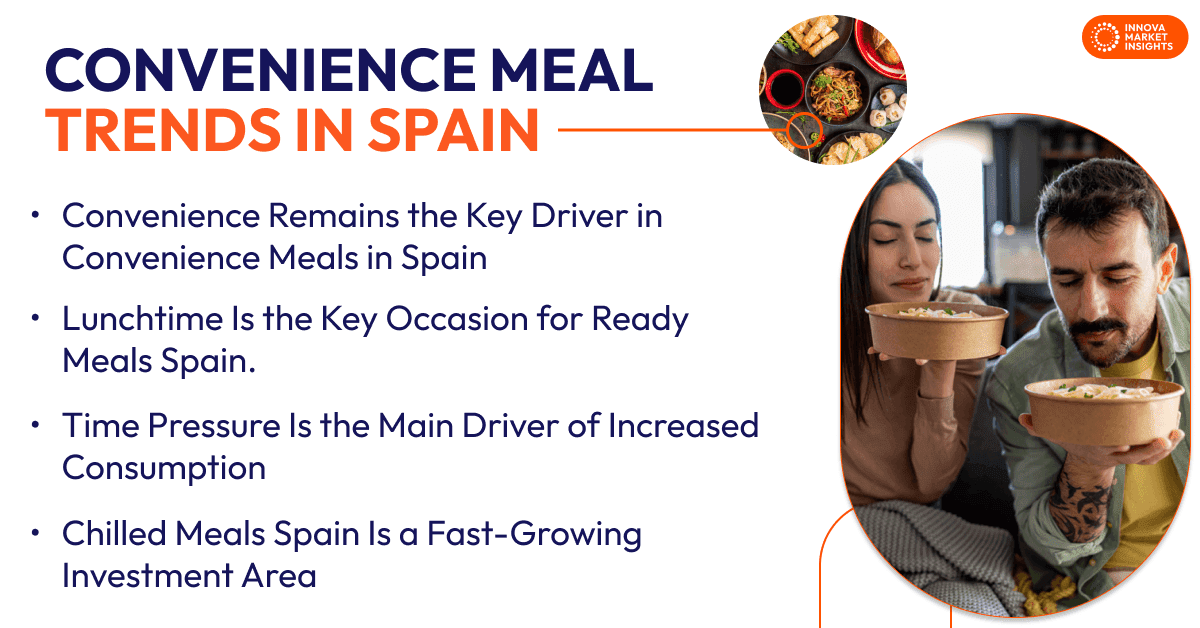
Spanish convenience meals must balance several core factors. Convenience remains the primary driver. It influences packaging, cooking time, and on-the-go suitability. Nearly half of Spanish consumers prioritize convenience over taste. But expectations are rising. Spanish consumers now want higher quality and variety. They seek indulgence and novelty alongside speed. Nutritional quality is also important. Many Spanish shoppers favor high-protein, plant-based, and natural ingredients. About 25% of Spanish consumers prefer real, natural components. Clean label ready meals Spain-wide are becoming a baseline expectation, not a premium option.
What’s Driving Convenience Meal Trends in Spain?
Younger consumers are driving demand for ethnic cuisines in ready meals Spain. Japanese options are especially popular. Lidl’s Vitasia range has expanded to include Japanese Style Soy Ginger Ramen, reflecting this demand for authentic ethnic cuisines Spain ready meals can deliver. High-protein recipes and natural whole foods like vegetables and pulses also attract interest. Most Spanish ready meal consumers maintain steady consumption. Among those changing habits, 18% are eating more, not less. Time pressure is the main reason. Spanish food market trends confirm that busier lifestyles are a structural driver of category growth.
When Do Spaniards Consume Convenience Meals?
Spanish consumers eat convenience meals primarily at lunch and dinner. Lunch is especially important. Spanish shoppers over-index European and global averages for lunchtime ready meal consumption. This reflects a strong cultural preference for hot midday meals. Dinner is also a key occasion. Snacking moments — morning, afternoon, and evening — see limited use of ready meals compared to these two main occasions.
Spanish Convenience Meals Must Offer Value for Money
Value for money is a key factor in the Spanish convenience meals market. The pandemic pushed many Spanish households into at-home dining and scratch cooking. The return to busier lifestyles has raised the profile of convenience again. More than half of those eating at home more often are doing so to save money. Convenience foods must offer good value. Around 2 in 5 Spanish consumers say that savvy, value-for-money choices increase their enjoyment of food. Private label ready meals Spain is an important part of this picture. Mercadona, Carrefour, and regional chains have all invested in private label ready meal ranges to meet demand for quality at competitive prices.
How Are UPF Concerns Affecting the Spanish Convenience Meals Market?
UPF concerns are affecting the Spanish convenience meals market. Spanish consumers value the convenience and taste of ultra-processed foods. But they remain concerned about health impact and nutritional quality. UPF Spain awareness is growing. It is vital for ready meals brands to address these concerns. Brands that deliver healthy ready meals Spain shoppers can trust will gain a competitive advantage. Spanish consumers are looking for recognizable ingredients, shorter ingredient lists, and cleaner formulations.
Chilled Meals Growing Focus for Investment
Chilled meals Spain is a fast-growing investment area. Several brands from adjacent segments have moved into chilled ready meals. Ensalandia, part of Egrin Alimentación, has expanded from chilled salads into hot-eating chilled meals. Its range includes risottos and pasta ready in under two minutes. Audens Food has extended its frozen Preli brand into chilled formats with the Preli Listo range. Products include coated chicken, nuggets, filled pastries, and breaded balls. Carretilla, part of Industrias Alimentarias Navarra, has entered the Spanish convenience meals market with cheese-topped gratin dishes under the El Buen Comer sub-brand. Products include stuffed eggplant, zucchini, vegetable gratin, and lasagna.
How Does New Product Development Look in Spanish Convenience Meals?
New product development in convenience meal trends Spain has been uneven. Genuine innovation remains limited. Activity centers on familiar main dishes and pasta-based development. There is room for more adventurous NPD. 46% of Spanish consumers say they look for flavors they have not tried before when shopping. 68% say they are open to trying new global cuisines. These figures represent a real opportunity for brands willing to go further in the Spanish convenience meals market.
What Are Convenience Meal Claim Trends in Spain?
Claim trends in ready meals Spain reflect shifting priorities. Convenience positionings dominate. Additive-free, natural, and traditional claims have all lost share in recent years. High-protein and vegan formulations have performed more steadily. Environmental positionings have increased strongly, mainly around FSC or B Corp certifications. Bolder eco claims remain limited. Spanish food market trends suggest that clean label and high-protein positioning will continue to grow in importance.
Which Ingredients Are Trending in the Spanish Convenience Meal Market?
Poultry, meat, and fish remain significant in the Spanish convenience meals market. Their share has declined slightly in recent years. Vegetables, beans, and pulses have gained ground as the market explores plant-based recipes. An example is Carrefour’s Lentils, Rice, and Vegetables. Ethnic flavors have also performed well. Spanish brands are also showing more interest in cheese flavors, influenced by international trends such as pasta with ricotta and parmesan. High protein ready meals Spain is a growing sub-segment, with brands responding to consumer demand for nutritional performance alongside convenience.
What’s Next in Convenience Meal Trends in Spain?
Convenience meal trends Spain are pointing in a clear direction. Quality, health, and novelty are now as important as speed. Spanish consumers want clean label ready meals Spain can be proud of. They want recognizable ingredients and fresher, often chilled options. A new generation favors international flavors. Japanese and Korean cuisines are gaining ground fast. Healthier options with added protein and fiber represent underused growth opportunities. The rising use of air fryers in Spanish homes is creating new innovation space. Air fryer Spain food formats are an emerging category. Brands that blend convenience, quality, health, and culinary excitement will lead the Spanish convenience meals market in the years ahead.
This article is based on Innova’s Trends in Convenience Meals in Spain report. This report is available to purchase or with an Innova Reports subscription. Reach out to find out more.