


April 20, 2026 – A new study conducted by in California at UCLA suggests that different combinations of fibers could affect brain health. This may mean new opportunities for ingredient suppliers to join pharmaceuticals in managing certain brain conditions.
Questions about Ketogenic
The ketogenic diet has a long history of use for people with epilepsy. How it works is not well understood. Ketone supplements do not work as well as the low carb ketosis diet. A new study published in Nature Communications by the UCLA team suggests that dietary fiber, in addition to ketones, could play an essential role in helping manage epilepsy.
Fiber Rather Than Fat
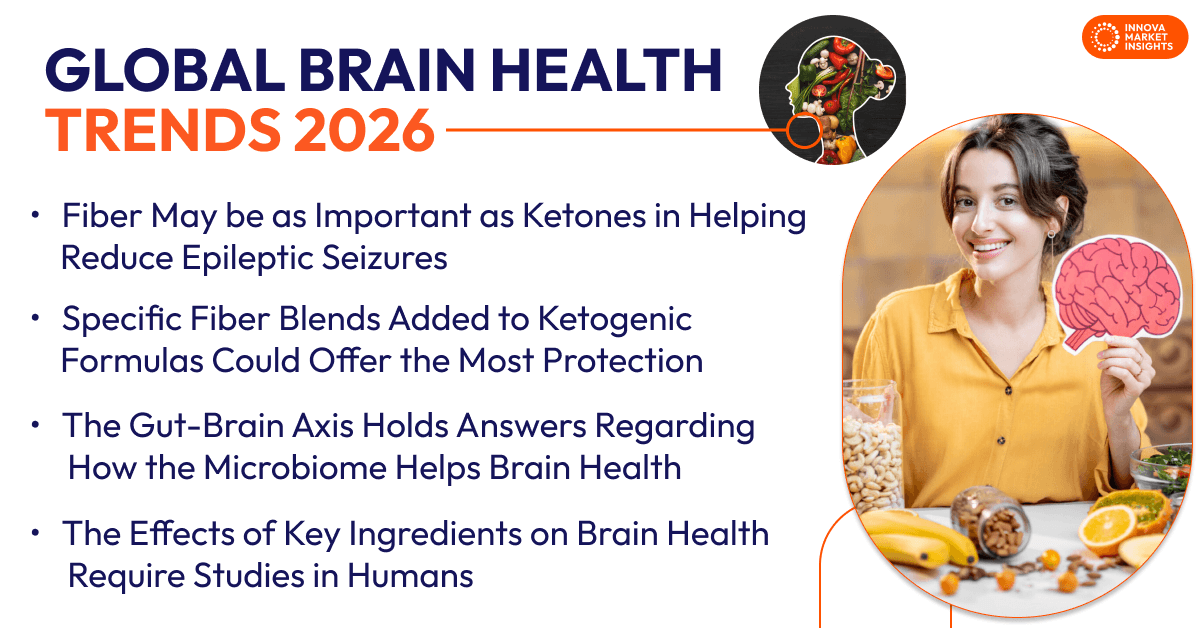
In a preclinical model, the UCLA compared different ketogenic infant formulas and found that those with more fiber offered more protection from seizures. Specifically, adding a fiber combination of inulin, FOS, gum arabic, and cellulose to a ketogenic formula offered the most seizure protection to laboratory mice. These four fiber ingredients already are widely available, reflecting current brain health trends. It seems that ketones alone are not enough, and that beneficial gut bacteria need certain fibers.
What is Happening in the Microbiome
Bacterial fermentation helps explain how fiber helps protect the brain’s health. Gut bacteria that feed on fiber generate short-chain fatty acids (SCFAs), especially the SCFA butyrate, cross into the brain and affect the balance of neurotransmitters. Research suggests that people who are resistant to epilepsy medications are deficient in bacteria that produce butyrate. Butyrate can help prevent or even reverse conditions affecting the brain’s health. Queuosine is another compound produced by bacteria, and it helps with learning and memory. This means actions beyond epilepsy. A researcher at the Karolinska Institute agrees that concentrations of ketones do not predict reduction in seizures, and that dietary fiber may be a more important factor.
Opportunities in the Fiber Marketplace
Even though human studies and validation are pending, opportunities exist for food ingredients. Three options with the most potential are inulin, oat fiber, and the combination of inulin, FOS, gum arabic, and cellulose in the UCLA study. It is possible that fiber supplements alone could help with brain health, but each person’s tolerance for and reaction to fiber needs to be considered. The lead UCLA researcher comments that fiber supplementation will need time for the patient to adjust and tolerate the amount of fiber. Regulations also can be a challenge since specific dietary fiber blends are not yet approved for use in ketogenic infant formulas in several countries. The US is one of them. It could be possible to use the fiber blend for anyone over one year of age.
Probiotics for Brain Impact
Certain bacterial strains may benefit brain health. Species of Lactobacillus and Bifidobacterium produce the neurotransmitter GABA. A study in Spain on patients who were resistant to epilepsy medications found that a blend of Lactobacillus, Bifidobacterium, and Streptococcus strains reduced seizures in a proportion of study subjects, although about half didn’t respond. It could be that supplementation with probiotic strains or with prebiotics could boost the effectiveness of the keto diet. Newer strains to watch include Akkermansia and Parabacteroides, which have been shown to protect against seizures in mice on normal diets.
Precision and Targeted Nutrition
The best opportunities may be in personalized nutrition to improve the microbiome. At UCLA, researchers have created communities of microbes that could be fed different combinations of fiber ingredients. It will be important to identify biomarkers based on the target disease and to understand the differences in results among individuals.
Areas that Need to be Studied
Even though preliminary findings are exciting, additional scientific work is needed. The fiber study was done in mice, so effects need to be confirmed in humans. Human data is not available regarding the production of queuosine. Studies on a ketogenic diet formula with added fiber need to be conducted in children. Some children with epilepsy do respond to the ketogenic diet. Safety also is a consideration. It is possible to change the balance of gut bacteria in a negative way long-term. And not enough is known regarding whether these diet changes are appropriate for healthy or overweight individuals.
The Gut Microbiome and Brain Health
It seems that the gut-brain axis has impacts beyond the effects on seizures. Researchers are considering whether early findings on epilepsy may apply to other neurological disorders. Researchers are asking how different types of diets affect the gut microbiome and the brain, and how foods can be optimized to better target the microbiome and compounds produced by the gut microbiome. It is possible that changes in the gut microbiome that result from a ketogenic diet could have relevance across various neurological conditions. Also, queuosine is of particular interest.
Strategy for the Future
Food ingredient manufacturers and suppliers have an opportunity to expand into the microbiome-neurological health space. This is particularly true for key fibers such as cellulose, gum Arabic, FOS, and inulin, as well as certain probiotic strains. Future paths need to be navigated with care. Brain health trends indicate that precision nutrition and personalized medicine will be essential to reformulate medical foods with an understanding of the effects of ingredients that change the microbiome. Ingredients have the potential to drive product development from a base of science rather than marketing.
This article is based on Innova’s Brain Food: The Microbiome Link to Seizure Protection – Global report. This report is available to purchase or with an Innova Reports subscription. Reach out to find out more