


April 17, 2026 – The UK ready meal market has moved a long way from the basic TV dinner. Today’s UK convenience meal trends point to a category under pressure from every direction: shoppers want faster prep, cleaner labels, bolder flavors, and better nutrition, all at a price that still makes sense. New appliances are rewriting the rulebook, with air fryers pushing microwaves off center stage in the kitchen. Innova’s Convenience Meals in the UK report looks at the drivers, the consumer behaviors, and the product strategies defining the next phase of the UK ready meal market.
How do UK Shoppers Define a Ready Meal Today?
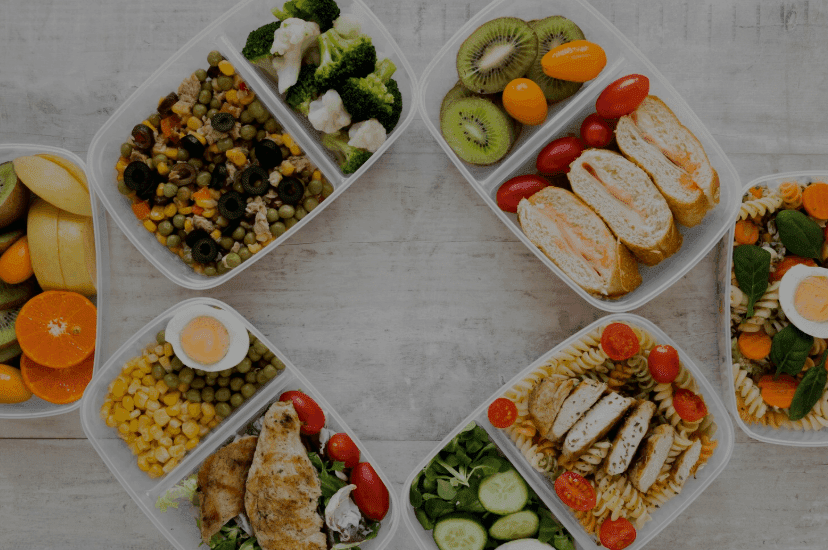
Ready meals are pre-prepared main dishes built around a protein, a starch, and vegetables, designed to heat and eat with minimal effort. They cover main dishes, prepared pasta, noodle bowls, and other meal solutions that remove the need for cooking skills. The frozen vs chilled ready meals UK question matters here: products sit across chilled, frozen, and ambient shelves, and format choice shapes everything from shelf life to perceived quality. The draw is the same across formats, a consistent, hassle-free dinner without the time investment.
What do UK Shoppers Expect from Ready Meals Now?
Convenience is still the number one reason British shoppers reach for a pre-prepared meal, but the bar on everything else keeps rising. Around 1 in 3 British consumers buy ready meals specifically for the taste, which puts real pressure on brands to deliver an eating experience worth repeating. Health sits close behind. UK households want natural recipes and transparent claims on fat, sugar, and salt, and they notice when brands cut corners. Packaging and format matter too, especially for on-the-go occasions where a meal needs to travel as easily as it reheats.
What is Driving the UK Ready Meal Market?
Three forces shape buying behavior: money, health, and the planet. Budget pressure, sharpened by the pandemic and ongoing geopolitical conflicts, keeps value front of mind, and pre-prepared meals pitch themselves as restaurant-quality food at a fraction of the price. Health consciousness pulls the category toward fresher, more transparent ingredients, which is a genuine challenge given ready meals’ historic reputation. Environmental concern is the third lever, with shoppers rewarding brands that invest in recyclable packaging and plant-based recipes. Put together, these pressures push manufacturers to reformulate faster than the category has ever had to move.
How Many UK Households Actually Buy Ready Meals?
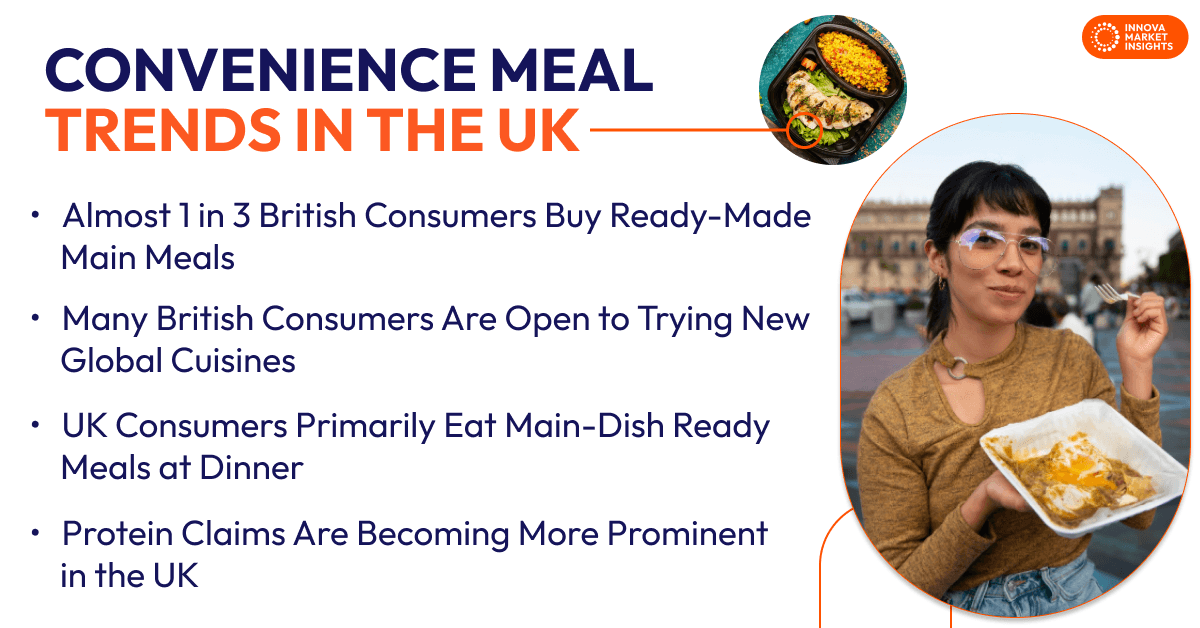
Nearly 1 in 3 British shoppers buy ready-made main meals, and more than half of UK households have bought pre-prepared foods at some point. UK penetration sits ahead of the European average of 23% and broadly matches Scandinavia, making the UK one of Europe’s most engaged ready meal markets. These products skew domestic and solo: 59% of UK buyers eat main-dish ready meals as an at-home dinner, 35% eat them alone, and 25% treat them as an at-home lunch. Consumption volumes are largely stable, with a slight net increase among those reporting a change, as 38% of buyers eating more cite health reasons, while 48% of those eating fewer blame the unhealthy reputation of the category.
Are Ultra-Processed Food UK Consumers Still Buying in?
Yes, but cautiously. UK households value the cost, convenience, and taste of ultra-processed options, yet remain uneasy about the nutritional trade-off. That tension is the single biggest opportunity for healthy ready meals UK innovation. Suppliers have to close the gap between perception and product, and some are already moving. The Skinny Food Co’s Portuguese Style Peri Peri Chicken, a recent UK launch, delivers low-fat, low-sugar, high-protein credentials using only recognizable ingredients. The formula is simple: short ingredient lists, clear claims, and a recipe that reads like food rather than chemistry.
How are Gen Z Food Trends UK Shaping International Cuisine Ready Meals?
Younger buyers are driving the appetite for international cuisine ready meals, with Millennials and Gen Z food trends UK leading demand for global flavors and street food concepts. Restaurants remain the main entry point for new cuisines, but 38% of UK households also experiment at home, and the ready meal sits neatly between the two as a low-risk way to try a foreign dish before cooking it from scratch. Asian cuisines dominate, with Indian, Chinese, Thai, Korean, and Japanese dishes leading the charge. Tesco leaned directly into this demand, launching a private label range of Japanese and Korean dishes in 2025.
When do British Buyers Eat Ready Meals?
Dinner is the anchor occasion for UK ready meals, more so than in Europe or globally. Lunch consumption runs well behind, and breakfast or general snacking barely register compared with other regions. When ready meals do get snacked on, it happens in the evening, reinforcing the category’s position as a solution for the end of the day rather than a moment-to-moment fix. For brands, that means dinner-worthy portion sizes, plating cues, and flavor profiles still matter more than grab-and-go formats.
What does Air Fryer Ready Meals UK Growth Look Like?
Air fryer ready meals UK products have moved from non-existent to category-defining in under four years. Microwaveable formats still appear in around 46% of UK launches, but air-fryer-ready meals have climbed from virtually zero in 2020–2021 to roughly 5% of launches in 2024–2025. Brands are responding with dedicated air fryer ranges, appliance-brand collaborations, and front-of-pack air-fry instructions that signal the meal belongs in the new kitchen workflow. It is the most visible technology shift the category has seen in a decade.
What do Ready Meals Protein Claims Look Like in the UK?
Ready meals protein claims are getting sharper and more quantified. Overall use of protein claims has dipped, but the brands that do use them are making them count. Protein now features more prominently in product names and descriptions, a practice that has doubled in frequency over the past five years, and front-of-pack labels increasingly call out exact gram counts. Bol Foods’ PROTEIN+ range makes the point clearly, moving from 20–22g of protein to 30g and putting the number on the pack. The message has shifted from simply claiming protein to proving it.
What’s Next for UK Convenience Meal Trends?
The UK ready meal market is moving toward a version of itself that balances indulgence with responsibility. Winning brands will invest in clean label ready meals, shorter ingredient decks, and recipes that chip away at the ultra-processed image. Bold international flavors will keep pulling younger consumers in, with East Asian cuisines positioned to lead the next wave of launches. Salt reduction will accelerate without sacrificing flavor, and air fryer formats will keep expanding as appliance penetration grows across UK households. Expect a category that looks less like a compromise and more like a genuine weeknight choice, healthier, more global, and built for the way British buyers actually cook in 2026.
This article is based on Innova’s Trends in Convenience Meals in the UK report. This report is available to purchase or with an Innova Reports subscription. Reach out to find out more