



May 21, 2026 – Today, mental wellbeing is a top priority for consumers. Increasingly, consumers are looking for ways to improve mental balance, relax, recharge, and build resilience. This is especially true for younger generations like Gen Z and Millennials. These younger generations are looking to balance work and family, while older generations are looking to maintain cognitive function. Food and beverages can support mental balance by improving mental performance, energy, quick thinking, focus, memory, as well as emotional aspects of mental health, such as mood and sleep. In this article, Innova Market Insights examines global mental health trends with a focus on Gen Z and Millennials.
What Mental Health Issues Are Consumers Worried About?
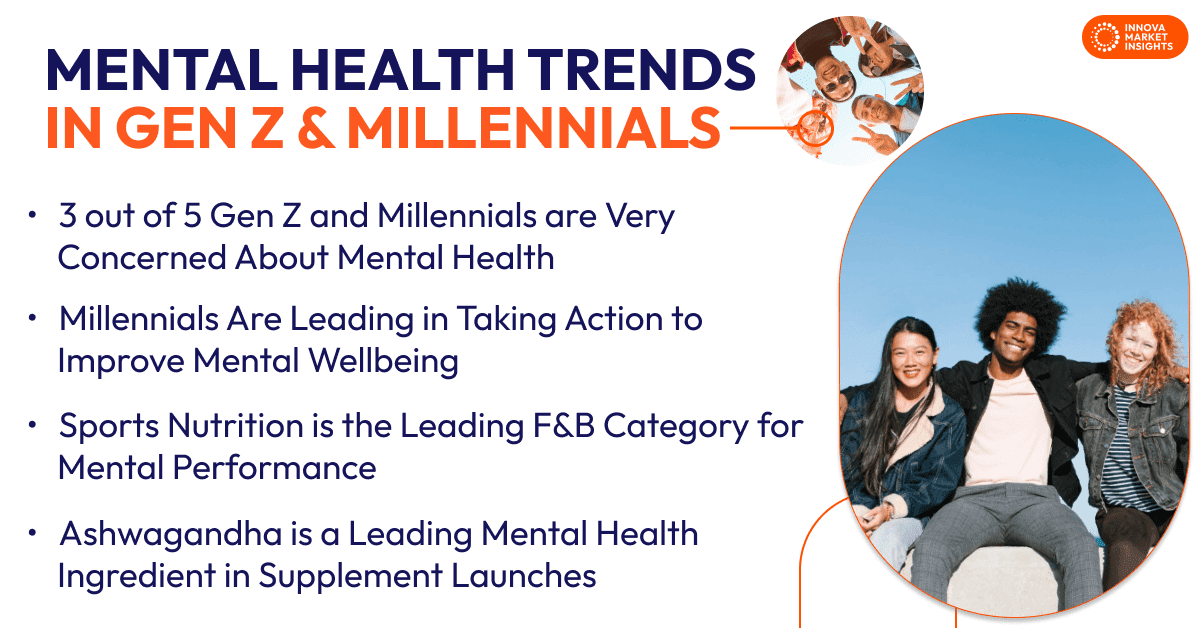
The mental health issues consumers are most worried about are sleep difficulties, followed by stress, anxiety, and worry. Consumers are especially concerned about mental strain and recovery-related issues, and the role of sleep and energy in these issues. When it comes to mental health improvement, younger generations are taking the lead, with a 20% difference between Gen Z and Boomers tackling stress, anxiety, and focus. Furthermore, 3 out of 5 Gen Z and Millennials are very concerned about mental health. Therefore, mental health trends show that brands have a great opportunity to reach younger generations with products that aim to improve various aspects of mental health.
What Actions Are Consumers Taking To Address Mental Health?
Leading actions consumers take to address mental health are sleep, physical and leisure activities, as well as simplifying life. These actions rank above diet and supplements as strategies to improve mental health. A likely explanation is that actions like sleep and physical activity are more tangible for consumers, and results are more immediate. Whereas the results from diet and supplements on mental health can take more time. Gen Z and Millennial trends suggest that one way for brands to address this is to educate consumers about the scientifically supported benefits of foods, ingredients, and supplements marketed for mental health. For all actions to improve mental wellbeing, Millennials are the leading generation. Gen Z consumers also highly report steps to improve mental and emotional health, but their purchasing power is lower.
What Is The Food And Beverage’s Role In Mental Health Trends?
When consumers use food and beverages to improve mental health, they often focus on aspects like energy, focus, and memory, particularly fortified foods and supplements. This highlights the opportunity for brands to clearly market their products with clear, trustworthy benefits. For mental performance, sports nutrition is the leading F&B category. Other categories, like soft drinks and dairy, have growth potential. Hot drinks are already a popular choice, with 35% of consumers finding comfort in hot drinks. Still, the focus on relaxation is growing, reflected in the rising number of relaxing food and beverage launches, which grew by 44% last year. However, mental health trends recommend brands need to ensure they provide proven mental health benefits at affordable prices, with consumers willing to try products with functional benefits at budget-friendly prices.
Bundling Mental And Physical Benefits Increases Consumer Appeal
Increasingly, consumers want products that offer multiple health benefits. This includes mental balance, protein, gut health, and immune support, especially as purchasing power decreases. For example, Switch Nutrition’s Thermal supplement offers dual benefits of energy and weight management. Diets that offer multiple health benefits, whole food and low carb, are popular among consumers for supporting mental health. Brands are highlighting these diets by showcasing proven benefits. Another health trend, gut health, connects with mental wellbeing, including stress relief and improved sleep. However, very few new products mention this connection. As budgets tighten, brands can include gut health ingredients, such as fiber, to help meet consumer demand for multiple health benefits, alongside mental wellness.
What Are Trending Mental Health Ingredients?
Ashwagandha, L-theanine, melatonin, and functional mushrooms are ingredients that have proven mental health benefits. However, consumer use remains low, especially in supplements. Better communication about these benefits and their inclusion in drinks and sports nutrition could increase adoption. Gen Z and Millennials trends indicate that protein is also sought for mental benefits. 78% of consumers manage their protein intake to boost mental energy. A recent US launch capitalizes on this mental health ingredient trend; the Feel Calm Vanilla Spice L-Theanine Plant Protein Bar combines protein with L-theanine to promote relaxation. Botanical ingredients like saffron and lavender, aside from green tea and chamomile, are not commonly used but provide calming effects, making them suitable for tea. Ashwagandha is a leading mental health ingredient in supplement launches. Low usage of mental health ingredients among consumers presents an opportunity for brands to inform consumers about their mental health benefits.
What’s Next In Mental Health Trends?
The future of mental health trends will focus on a holistic approach that includes mental, physical, and emotional well-being. As awareness increases, the need for solutions that address stress, anxiety, sleep, and cognition will grow. This will create opportunities across food, drinks, personal care, and wellness markets. Innovations that support both body and mind will be driven by highlighting the connection between gut and brain health. Products that offer multiple benefits, such as those combining protein with gut or immune support, will attract budget-conscious consumers. Brands will be particularly looking to target Gen Z and Millennials, who seek relief from stress, anxiety, sleep problems, and fatigue. Key ingredients like ashwagandha, L-theanine, melatonin, and mushrooms have growth potential, but it is important to educate consumers about their benefits. Success will depend on science-based solutions that fit easily into the daily routines of consumers.
This article is based on Innova’s Top 10 Trends 2026: #8 Mind Balance – Global report. This report is available to purchase or with an Innova Reports subscription. Reach out to find out more