


August 18, 2026 – GLP-1 medications continue to garner consumer attention in the US and Canadian food and beverage markets. Despite weight management being a top concern, Innova’s research highlights how GLP-1 use is amplifying greater health priorities. At the same time, the market is moving from weight management to GLP-1 conditioning, highlighting key opportunities for brands. Innova’s hot topic report, The GLP-1 Era: The Impact on Food, Ingredients & Innovation in the US & Canada, explores the interest in weight loss medications, alongside the major trends driving this interest. It also explores how brands can tailor their new product development to consumer priorities.
What is the Position of GLP-1 in Food and Beverage, and How are They Impacting Trends?
In the US and Canadian markets, weight is a top health concern. More than 2 in 5 consumers report weight as their top physical health worry, though a majority say they take action in order to feel well, not just for aesthetics. In this context, GLP-1 medications are gaining greater visibility and adoption, with 17% of consumers saying they intend to use such medications. GLP-1 use remains relatively limited, but its influence on the US and Canadian food and beverage market is expanding. The biggest GLP-1 impact on food and beverages is on portions.
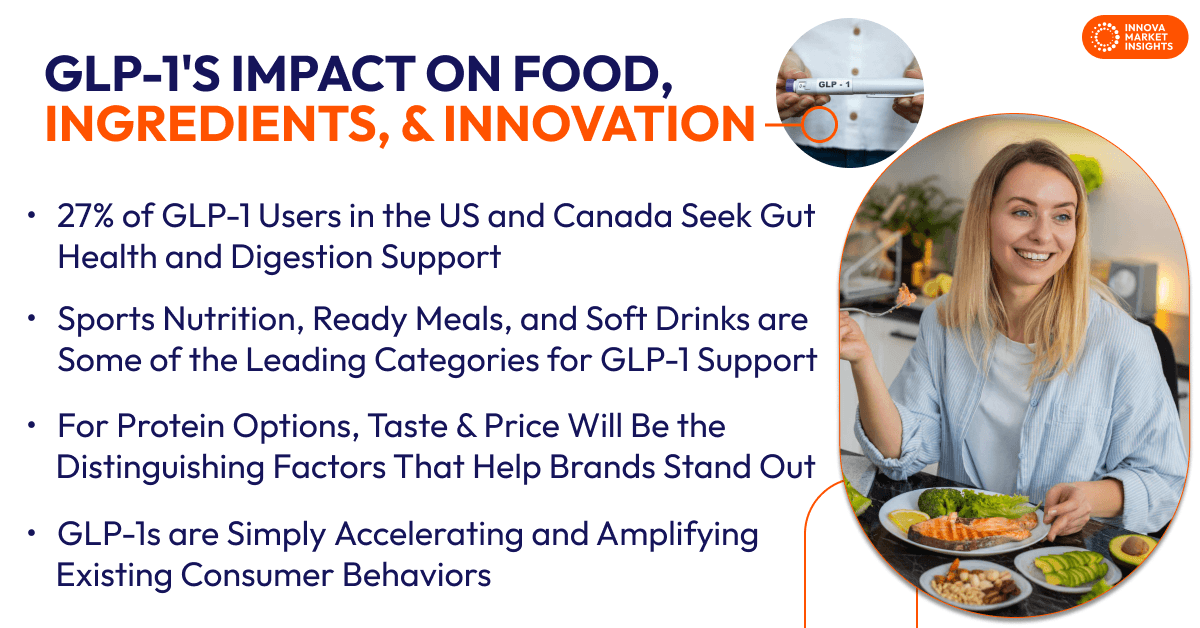
Exercise, fitness, and diet approaches continue to prevail as top weight management tools that consumers turn to. GLP-1s are simply accelerating and amplifying existing consumer behaviors, particularly within their food and beverage choices. Additionally, weight management is tied to how consumers want to look, feel, and age, not just what they see on the scale, highlighting how the overall message for GLP-1 food innovation should focus on health and confidence over dieting alone.
How Can Brands Address Shifting Expectations Consumers Have from Their F&B?
GLP-1 food trends show that smaller appetites are shifting value in the US & Canadian food and beverage markets. Now, consumers want better, taste, nutrition, and portions that fit GLP-1-adjacent lifestyles. The best place to reach GLP-1 users and their needs is also shifting. For example, 41% of consumers now say they started shopping more at supermarkets after starting their weight loss medications.
GLP-1 food trends also reveal that they consume is also changing. After starting the use of GLP-1s, US and Canadian consumers report increasing their intake of foods in the fruits and vegetables, fish, whole plant foods, and supplement categories. Simultaneously, lower-nutrition categories like desserts, confectionery, and carbonated beverages are losing relevance, as appetites become more selective. For brands, the important takeaway for the role of GLP-1s in food and beverage is intentional eating, shifting from volume to smaller, deliberate, and more nutrient-rich options.
How Do GLP-1 Needs Intersect with General Health Trends?
In the US & Canadian food and beverage market, healthy eating actions match recommendations for supporting GLP-1s in food and beverage. Nearly half of consumers drink more water to be healthier, while 29% are also increasing protein. These mainstream healthy eating trends are overlapping with the behaviors of GLP-1 users.
Which Approach to Nutrient Delivery Should Brands Leverage?
For brands looking to target GLP-1 food trends, nutrient density is the new brief. Each eating occasion matters and has to deliver more. US and Canadian consumers are turning to familiar, whole foods for both protein and fiber needs, with protein continuing to reign as the top nutrient to emphasize in new product development. Recognizable foods will therefore be important for innovation and delivering essential nutrition in smaller, more satisfying portions. Innova’s research also indicates that gut health will be a key differentiator moving forward and will influence purchases among protein choices. This is demonstrated by the fact that 27% of GLP-1 users in the US and Canada seek gut health and digestion support, largely driven by concerns consumers have regarding GLP-1 side effects.
Which Categories & Ingredients are Driving GLP-1 Innovation?
Sports nutrition, ready meals, and soft drinks are some of the leading categories for GLP-1 innovation. GLP-1 formulations are also leaning into natural taste, dairy protein, and sugar reduction. In fact, natural flavor is a key functional ingredient that makes up 57% of food and beverage launches with a GLP-1 friendly claim. Protein also remains the star ingredient for GLP-1 support. Therefore, when it comes to protein, taste and price will be the distinguishing factors that help brands stand out from competition.
How Can Beverage Innovation Support GLP-1 Goals?
Hydration is another focus for GLP-1 users, and brands can leverage beverage innovation to better target consumers. 22% of GLP-1 users in the US and Canada are seeking hydration and electrolyte balance, and the soft drink category is one of the leading ones for GLP-1 support. Thus, products that offer hydration support alongside nutrients like protein or fiber will be more competitive in the market by tailoring to multiple needs.
This article is based on Innova’s The GLP-1 Era: The Impact on Food, Ingredients & Innovation in the US & Canada report. This report is available to purchase or with an Innova Reports subscription. Reach out to learn more.