



July 10, 2026 – The time has come for increased attention on women’s health nutrition. Until recently, research efforts focused on men. Also, women received the same treatment for diseases as men did. Women’s health issues are in the spotlight today.
Why is Women’s Health Becoming a Nutrition Priority?
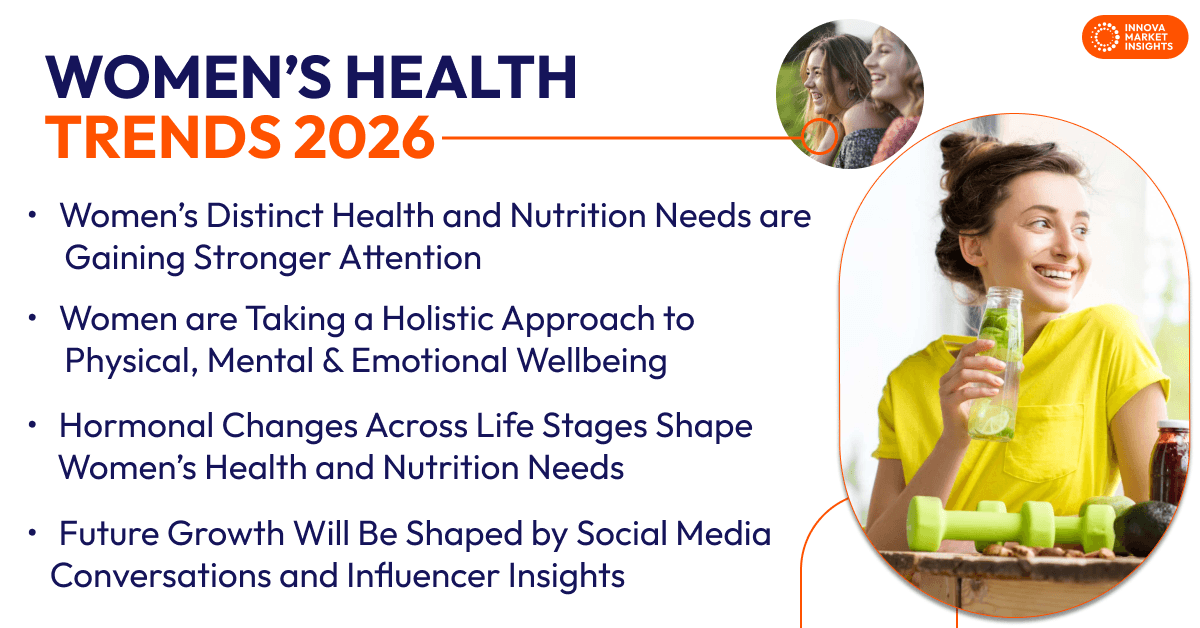
Attention on women’s health and nutrition is relatively recent. Historically, clinical research focused primarily on men, with women’s health research taking a backseat. Health and treatment of diseases were handled with the same approach, even though the two consumer groups have distinct health needs. Fortunately, in the global food and beverage and supplement markets, knowledge around women’s health is expanding. This is increasingly reflected in new product development that is tailored to their specific needs. Female consumers are also speaking up more about their health concerns, reflected by Innova’s social listening data, and these conversations are instrumental in shaping women’s health ingredients and products.
How Do Women Approach Holistic Health Through Nutrition?
Female consumers are looking for holistic approaches to health and well-being. Innova’s consumer trends research indicates that 40% are looking to reduce or limit products with sugar and preservatives. Behind sugar, artificial sweeteners and saturated fats are also on the list, and desire to limit these ingredients grows as this consumer base gets older. Globally, female consumers are also trying to consume more protein, fiber, and vitamins.
Sleep and weight management concerns are also top of mind for many women and contribute to holistic wellness. For instance, sleep plays a crucial role in mental health and stress relief. For brands, the opportunity lies in clear messaging on nutrient content, incorporating key nutrients, and addressing the specific benefits consumers are looking for.
What Role Do Hormones Play in Women’s Nutrition Needs?
Female consumers recognize the connection between hormones and their health, as changes in their hormones during their lifecycle can affect their health concerns, health goals, and nutrition needs. For instance, mood, energy levels, and sleep are both hormone-related concerns and goals that that female consumers have voiced. They also know how important it is to take action as they get older, especially since women face two sets of health changes, which include general health as they age and effects of changes in hormones.
How Are Brands Marketing Food And Beverage Products To Women
It’s important to catch the attention of female consumers. One way to do this is with packaging. Ingredients and approaches with proven benefits, effectively communicated on-pack, will resonate with female consumers looking to support their health. Specific callouts like menopause, PMS, or pregnancy will also capture their attention, by offering solutions and benefits to their particular concerns.
Why Are Supplements More Popular Than Food And Beverage For Women’s Health?
It’s easier to add functional women’s health ingredients to supplements than to food and beverage products. Functional ingredients can impart off-flavors to foods and drinks. Additional barriers to marketing food and beverage products for women’s health are the lack of evidence regarding health benefits and limits on health statements. Given these limitations, food and beverage brands often rely on marketing to encourage purchases.
Because of the ability to incorporate more concentrated amounts of active ingredients, supplements are an attractive vehicle for supporting women’s health. The supplement market for women’s health is highly nuanced and very competitive. Women’s health supplements can have significant benefits for fertility, pregnancy, breastfeeding, menstruation, or menopause. Women’s health ingredients in supplements include vitamins and minerals, herbal medicine ingredients such as black cohosh, maca, and ashwagandha, and newer ingredients that are less well-proven. Additional research will increase understanding of how various active ingredients can help target women’s health.
What’s Next in Women’s Health?
It is worthwhile to listen in on social media conversations to keep up with what women say works and doesn’t work for their various health and nutrition needs. Social conversations will be enhanced by the presence of influencers in women’s health spaces. Regulations and approvals of ingredients are likely to expand. The use of AI will also help brands discover additional herbal ingredients and ingredient combinations that could benefit women at various stages of life.
This article draws on key insights from Innova’s Women’s Health – Global report. This report is available to purchase or with an Innova Reports subscription. Reach out to learn more.