



October 13, 2026 – Comfort leads how consumers define indulgence, yet flavor is also innately personal, holding different emotional meanings for different consumers. Multiple factors shape the link between flavor and mood, but this does not mean flavor has to be complicated. In many cases, enhancing mood through flavor can be achieved by thoughtfully pairing elements and presenting them in a way that resonates with consumers. Innova’s Mood, Food & Flavors in the US & Canada report explores where that leaves room for brands.
Where is Mood-Led Flavor Innovation Centered in the US & Canada?
Seasonings and baked goods account for a significant portion of flavor innovation, as these are the categories requiring high flavor intensity or are closely tied to emotional well-being. More specifically, they demonstrate a strong connection to consumer mood and craving management. According to Innova’s research, seasonings lead as the top subcategory for innovation, followed by sweet biscuits and cookies. This spread across formats shows that mood-led flavor is not limited to treats, and occasions offer brands an opportunity to strengthen the emotional associations consumers have with products in these categories.
Why is There No Single Answer to What a Flavor Means?
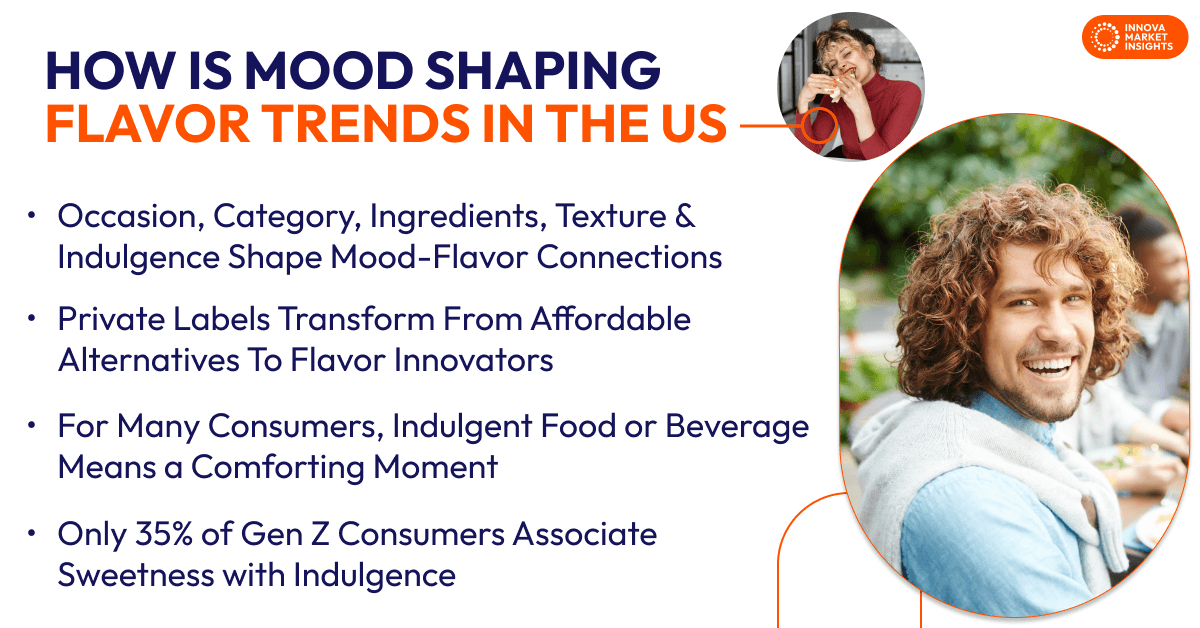
Innova’s flavor trends research shows that occasion, category, ingredients, texture, and indulgence collectively shape the relationship between mood and flavor for consumers in the US and Canadian market. There is minimal agreement among consumers on what specific flavors represent, which creates both a challenge and an opportunity for brands. The context in which a product is consumed can also heighten or alter taste perception and emotional response, varying from celebratory occasions to quiet moments of relaxation.
To 39% of US and Canadian consumers, an indulgent food or beverage means a comforting moment, underscoring the role of mood in messaging and brand story. Sweet and creamy flavors also continue to lead, reinforcing comfort as the foundation of indulgence. However, these perceptions are shifting across generations.
How is Gen Z Redefining Indulgence?
Only 35% of Gen Z consumers associate sweetness with indulgence, a smaller percentage than their older counterparts, meaning brands have the opportunity to expand product lines and messaging to include other flavor profiles. Flavor trends research highlights how younger consumers like Gen Z are associating a greater range of flavors with indulgence, including sweet and salty, salty, sweet and spicy, and sweet and sour. This signals that both marketing and innovation for indulgent products will need to reflect evolving tastes.
What Do Consumers Reach for When They Need Energy, Not Comfort?
Although consumers seek moments of comfort to combat external pressures, this is not the only occasion that brands should tap into. Flavor trends in the US and Canada demonstrate that 39% of consumers say they crave sweet and spicy flavors when seeking energy, while citrus flavors or crunchy textures help fight boredom. Energetic flavors can play a growing role in main meals, snacks, and treats by making heavier meals feel light and sweet or salty treats feel more purposeful. Bolder flavors and textures enable brands to position products around multiple mood states, rather than comfort alone.
How is Private Label Raising Expectations for Flavor at Lower Prices?
Private label brands have evolved beyond budget-friendly options to leaders in flavor innovation. Economic pressures and rising prices are shifting consumers toward private label products, where flavor, quality, and affordability are expected to coexist. This is raising the bar for both store brands and national brands through chef-inspired or more premium flavor offerings. Positive mood associations are easier to accomplish when prices feel fair and accessible.
What’s Next for Mood and Flavor Trends in the US & Canada?
Global unrest will keep shaping consumer moods, so comfort will remain essential for brands. Simplicity and classic flavors are one strategy to achieve this by maximizing the nostalgia trend, while limited-time seasonal offerings and cross-cultural flavor experimentation can spark joy and urgency across occasions. Messaging will become increasingly tied to occasions and their impact on mood. Flavor innovations that align with physical responses, like sour and spicy, can also be increasingly used alongside mood claims such as energy. With these trends in mind, flavor innovation will become a baseline expectation rather than a differentiator.
This article is based on Innova’s Mood, Food & Flavors in the US & Canada report. This report is available to purchase or with an Innova Reports subscription. Reach out to learn more.