


September 10, 2026 – Across markets, consumers are seeking more options that bring on the heat and offer bold flavor experiences. Spicy food and beverages are increasingly intertwined with consumer perceptions of identity, culture, mood, and adventure. As such, brands are looking at how spicy ingredients can be deployed across categories to amplify flavor discovery, boost indulgence, and offer culturally rooted options for consumers. Swicy is also a growing trend, offering ample opportunity for brands to expand their spicy product portfolios. Innova’s Hot & Spicy Routes to Adventure & Sensory Bliss – Global report conveys the direction of spicy flavors in both consumer preferences and new product launches in the global market.
Why Do Consumers Enjoy Spicy Food and Beverage Products?
Spicy food trends in 2026 reveal that consumers in the global food and beverage market are expecting more from their indulgent food and beverage selections. Sensory stimulation, an experience that hot and spicy foods can deliver, are becoming increasingly influential besides just flavor alone. 1 in 5 consumers also say the way they choose to indulge is also closely tied to the perception of their own identity. Mood is another important driver, as hot and spicy flavors help consumers dispel anger or stress, boost energy levels, and combat boredom.
How Are Brands Using Spicy Flavors to Create Sensory Experiences?
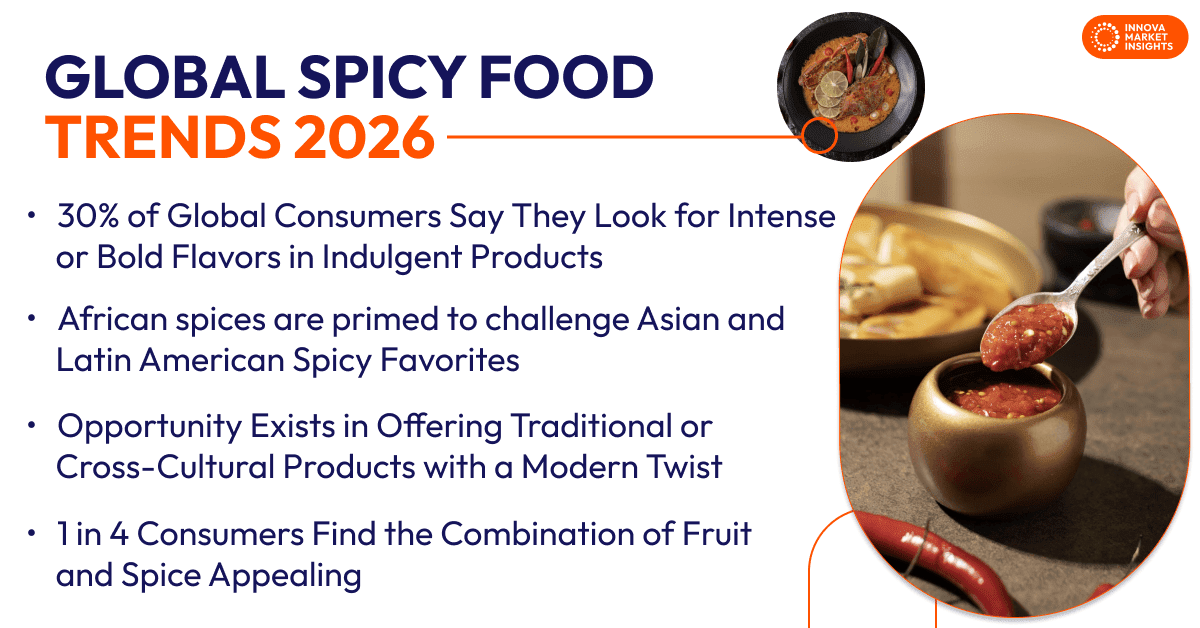
Over half of global consumers say they like to look for flavors they have never tried before when they purchase food and beverage products, and sensory enjoyment plays a crucial role in offering elevated experiences. 30% say they look for intense or bold profiles in indulgent products, and others also seek those that linger on the palate. Spices and chili flavors are therefore a relatively underutilized area that can take this sensory experience to the next level. For example, Sichuan pepper is known for its pleasant numbing and tingling sensation that lasts up to 15 minutes after consumption. Variety is also key in the global spicy food market. Although habanero and jalapeño are more recognizable to global consumers, there are hundreds of local spice and pepper varieties, as well as hybrids, that brands can tap into.
How Are Spicy Flavor Trends Balancing Novelty and Familiarity?
As consumers increasingly crave more dynamic and striking food and beverage products, cross cultural flavor discovery remains a growing trend. Enhancing traditional food and beverages with added heat is one way to achieve this. In fact, 61% of global consumers say they are open to traditional products with a modern twist. For manufacturers, this opens the door for not only product differentiation but also premiumization opportunities.
Half of consumers also say they favor familiarity when grocery shopping, yet at times, exotic offerings can be similar to recognizable staples. This means brands can expand novel flavors that can target both consumers looking for new options and those who prefer the familiar. For example, karashi is a traditional Japanese mustard made from spicy brown mustard seeds that can appeal to both adventurous consumers and those seeking a Dijon mustard alternative.
How Are Brands Using Spice to Enhance Flavor Contrasts?
In the global food and beverage market, the proliferation of the swicy (sweet and spicy) flavor trend exemplifies consumers’ growing interest in flavor contrasts. In sweet food categories like cakes, pastries, desserts, and juices, around 1 in 4 consumers find the combination of fruit and spice appealing. Mango and watermelon products, combined with chili, for example, are gaining prominence. Opportunity exists to apply this swicy trend in sugar confectionery, from gummies to chocolates, and beverages, where consumers demonstrate interest in experimentation. The sports drink category is another, especially as the stimulating effect from hot and spicy ingredients could be leveraged in pre-workout offerings.
How is Cross-Cultural Flavor Discovery Impacting Innovation?
Though hot Asian and Latin American flavors dominate condiments and table sauces, African spices are primed to challenge these favorites. For instance, spicy flavor trends reveal how North African harissa paste is showing potential to become the next sriracha sauce. Sudanese shatat dakwa is a hot condiment made from peanut butter, chili peppers, lime, and garlic that remains a hidden gem with the potential for mainstream popularity.
What’s Next for Global Spicy Food Trends?
For the next chapter of global spicy and beverage innovation, brands should watch out for a few key trends. Hot and spicy will increasingly infiltrate adult-positioned beverages. Especially for those looking for non-alcoholic options, new launches with an added kick can draw in consumers. Brands can also usher in a new era of spicy coffees, chocolates, and hot drinks that can appeal to consumers who are looking for alternative methods to uplift their mood or achieve a similar effect as caffeine stimulation. Mild or medium-spicy products aimed at young children will also be a growing territory for innovation. Careful formulations can set them up for spice appreciation later on in their lives and will likely account for a greater share of launches in the global food and beverage market.
This article is based on Innova’s Hot & Spicy Routes to Adventure & Sensory Bliss – Global report. This report is available to purchase or with an Innova Reports subscription. Reach out to learn more