



July 03, 2026- The global sugar confectionery market is being redefined. More than simple indulgence, consumers increasingly expect more from their food and beverage, and this is extending into the confectionery category. Along with their traditional roles as sweet treats, candy is also being reframed as a wholesome snack for consumers that can address multiple needs. Functionality is thus a main driver. Consumers are expecting more from the category, including energy, performance, and wellness support. That being said, indulgence and occasion remain central for unique confectionery experiences. Innova’s “Innovation in Sugar Confectionery – Global” report explores these trends and where brands can look for innovation opportunities.
How is the global confectionery market being repositioned?
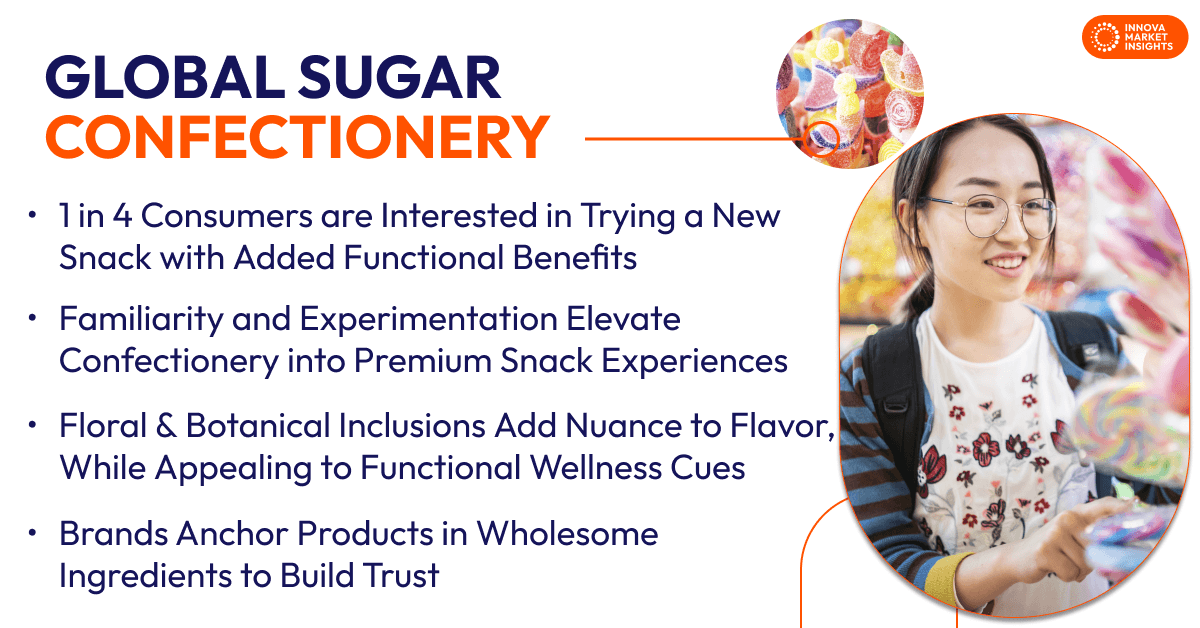
The global confectionery category is being repositioned, driven by demand for nutritional, functional, and performance-led cues. For one, brands can position confectionery as a smarter form of indulgence, rooted in real, recognizable ingredients. At the same time, 1 in 4 consumers are interested in trying a new snack with added functional benefits. Therefore, brands should move toward active functional positioning that embeds benefits like energy, digestive support, and satiety into sugar confectionery products. Gummies and candies, for example, can be repositioned as on-the-go energy solutions through the incorporation of vitamins, electrolytes, and other nutrients. Gut health is also emerging as a high-potential space in confectionery, with postbiotics offering solutions that are both scalable into formats like gummies without compromising taste or shelf life.
Which elements of indulgence should confectionery brands tap into?
Confectionery brands are tapping into mood and moment-driven indulgences. When looking to indulge, global consumers seek comforting or mood-enhancing moments, as well as rich sensory enjoyment. Dessert-like cues in comforting formats or hybrid textures can create immersive experiences for consumers. Brands are also pushing boundaries with experimental and culturally rooted confectionery. 61% of global consumers are interested in trying traditional food with a modern twist. Confectionery that pushes the boundaries between familiarity, experimentation, and culturally rich moments can elevate products into premium snack experiences. Translating nostalgic of local specialties iso ne way to fuel these experiences.
How are brands building on confectionery formats and packaging to drive engagement?
Beyond the traditional single-step eating occasions, brands are building on the interactive aspects of consumption to create greater opportunities for engagement. The combination of playful mechanics and convenient formats can help create repeatable moments for indulgence. Squeezable candy packs and dispenser-led formats are a few examples that not only strengthen novelty but also usability. Bold colors, along with aesthetic design and structure, also drive appeal.
Confectionery packaging is also being reimagined with experience-led formats. Toy-linked packs, tongue-coloring gels, and musically driven options are just a few examples of how manufacturers can build anticipation and incorporate personalization into consumption moments. That being said, eco-friendliness will continue to be important in candy packaging to build trust and unlock another level of differentiation.
How are wellness concerns impacting sugar confectionery trends?
The confectionery category is expanding into wellness spaces like beauty-from-within, cognitive support, and active nutrition. For example, collagen peptides and DHA algal oil are just a couple of functional inclusions that can redefine sugar confectionery’s role. In fact, 76% of global consumers are looking to include more omega-3 and collagen into their diets. Embedding these kinds of ingredients into approachable formats like lollipops and chews can enable brands to align with consumer lifestyles.
How are plant-based products and inclusions shaping the category?
Plants are also reshaping the category from a formulation and flavor perspective. With plant-based confectionery, leveraging next-gen starch systems, hydrocolloids, and protein networks can help rebuild texture. For instance, plant-based starches improve elasticity and chew for gelatin-free gummies. Floral and botanical inclusions can also add nuance to flavor, while also appealing to functional wellness cues. This combination enables confectionery brands to create approachable yet sophisticated kinds of indulgence.
Why should confectionery brand tap more into flavor and textural contrasts?
Contrasts and unexpected combinations in flavor and texture can lead to heightened excitement and memorability in confectionery. 2 in 3 global consumers say they like to try new foods they have never tasted before, and brands that blend sweet with spicy or indulgent with savory can deliver multi-layered sensory experiences that feel novel. For example, in Latin America, Tajin’s mango flavored lollipop with hot Tajin powder and bubble gum exemplifies how brands can lean into bold combinations.
This article is based on Innova’s Innovation in Sugar Confectionery- Global report. This report is available to purchase or with an Innova Reports subscription. Reach out to learn more.