



June 22, 2026 – High cost of living and changes in technology are causing uncertainty and changing consumer behaviors across Europe, with many consumers feeling anxious about the world. Concerns include the health of the planet, money, and personal health. In response, European consumers are taking charge of their health and being more careful how they spend money. Demographic shifts, such as an aging population and more people living alone, are also starting to have an impact on consumer food and beverages trends in Europe. Innova Market Insights explores the key consumer trends in Europe for food and beverages, based on changes in lifestyles, attitudes, and behaviors, discussing innovation opportunities for brands.
Why Is Relaxed Sociability Driving More Casual At-Home Occasions in Europe?
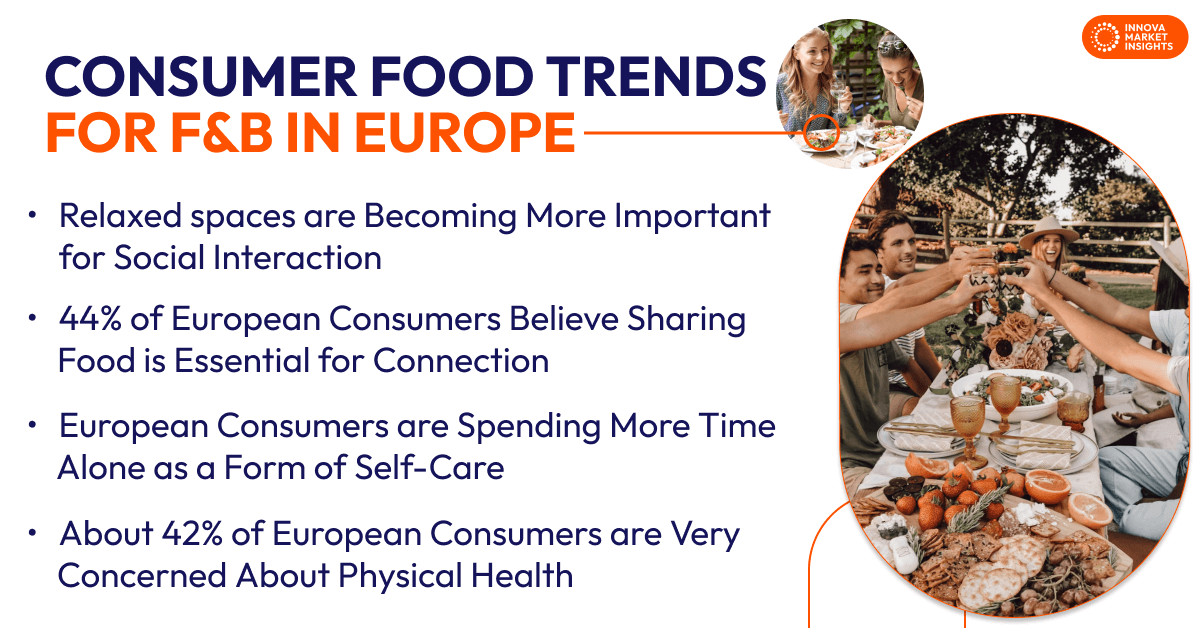
In Europe, more flexible, healthier lifestyles are leading to a shift toward lighter, more relaxed social occasions and spaces. Consumers in Europe now prefer casual socializing with small groups and activities like walking or enjoying coffee over pricier outings like spa visits or fine dining. Relaxed spaces are becoming more important for social interaction, while bars and pubs are losing appeal, particularly in France and Germany. Moreover, digital lifestyles are shaping social habits in Europe. Consumers are pushing for more flexibility and work-life balance, including an increase in remote work. Social habits vary across generations. Gen Z and Millennials tend to socialize outside the home and at night, while Boomers prefer daytime gatherings at home or in nature. 44% of European consumers believe that sharing food is essential for connection, prompting retailers like M&S to provide budget-friendly potluck ideas. Drinks brands could improve at-home social gatherings by introducing new flavors, including healthier alcohol alternatives. For example, the recent launch, Sentia, is an adaptogenic spirit that contains GABA to promote relaxation. Healthier lifestyles are also influencing social activities, with Millennials and Gen Z being more likely to play sports or exercise for enjoyment.
How Is Me Time Influencing Food and Dining Trends in Europe?
European consumers are spending more time alone as a form of self-care, to lift their mood and restore their physical and mental health. Solo activities should be a focus for innovation for brands, as the number of single-person households in the EU increased by 16.9% from 2015 to 2024. Cooking is a common solo activity, and 55% of Europeans prefer to cook on their own. Boomers enjoy preparing meals from scratch, while Gen Z tends to eat alone more often. However, they are less inclined to cook from scratch. This food trend creates opportunities for solo dining. For example, Vapiano’s encouraging solo diners with a 30% discount. Europeans enjoy comfort foods when they are alone, often looking for creamy, soft, or smooth textures. Brands can target these textures with appealing sensory cues.
Why Are Vitality and Longevity Becoming More Important to European Consumers?
European consumers are placing greater emphasis on health for the future. With nearly 30% of the EU population expected to be 65 or older by 2050, up from 21.6% in 2024, it’s no surprise that longevity is becoming important to consumers. About 42% of European consumers are very concerned about their physical health. Europeans monitor issues like weight, exercise, and blood pressure, and many consumers are looking to develop healthier habits. More often, they are using apps like Zoe to assess the healthiness of their food and getting advice from medical influencers online. Sleep and weight are health issues linked to longevity, and consumers are focusing on exercise, diet, weight management, and sleep as key actions to improve vitality. Boomers also prioritize medical check-ups.
How Is AI Impacting Food Trends in Europe?
AI adoption in Europe is increasing. Consumers use AI for shopping, entertainment, health, fitness, and work, but trust and privacy remain concerns for some. 39% of European consumers like using technology for cooking, such as social media recipes, and 35% use it while eating, like scrolling through social media. AI can help with meal ideas. For example, ChefGPT suggests recipes based on what consumers have in their pantry. Food ordering is also becoming easier thanks to AI. In the UK, Just Eat’s AI chat-ordering service works as a personal food concierge, streamlining choices and giving personalized recommendations.
How Are Simpler Lifestyles Influencing European Consumer Food Trends?
Faced with stress and complexity, European consumers want to simplify their lives. In Europe, 38% have tried to manage stress for their mental health. Increasingly, they look for balance by reducing screen time, with 64% of European consumers practicing digital detoxing. Brands are responding with options like Unplugged, a UK detox center, featuring 30 cabins without internet access. Gen Z and Millennials are the most active in cutting back on screen time. European consumers also enjoy disconnecting through simple pleasures, with 1 in 3 turning to food and drink, especially among Generation X. KitKat has responded to this food trend by encouraging consumers to take a break from phones and indulge in their chocolate bar as a snack. Additionally, there’s an opportunity for brands to create healthy outdoor food and drink options that appeal to Europeans seeking simple, affordable, and healthy choices.
What’s Next in European Consumer Food Trends?
European consumer trends are shifting toward a future focused on wellbeing, simplicity, and smart personalization. High living costs, stress, and social uncertainty continue to impact daily life. As a result, consumers want food and drink options that are affordable, trustworthy, and easy to incorporate into their daily lives. As more relaxed social occasions become more common, there is likely to be a boost in demand for healthier, convenient formats that support casual gatherings while maintaining wellness. At the same time, living alone and the need for emotional support will drive more interest in comforting products. Health will remain a long-term priority for Europeans, with more consumers looking for foods that promote vitality and longevity across different life stages. Technology will also become more important, as AI and digital tools help European consumers personalize and manage their food and drink choices.
This article is based on Innova’s Consumer Trends 2026 for Food & Beverage: Europe Edition report. This report is available to purchase or with an Innova Reports subscription. Reach out to learn more.