



April 14, 2026 – US consumers are watching their grocery dollars and seeking value in groceries. They also do not want to compromise on the basics of quality. Consumers in the US are using different spending strategies to help them adapt to rising prices. Price sensitivity affects the decisions they make when shopping across categories, deciding on package sizes, and selecting retail channels. Their approach to cost saving is practical. This is changing US demand for products that are affordable, versatile, and highly functional. US consumers are tired of inflation and have increased strategies such as trading down, looking for deals, and switching brands. They view value as being more than just low price – it also includes convenience, efficiency, and longevity.
Grocery Prices are On the Rise
Consumer spending trends reveal that US grocery prices have risen nearly 30% over the past 5 years. This is above historic norms for price increases. Knowing this, US consumers will need to budget proactively rather than using cost-cutting measures that are short-term. The rate of inflation is even higher in foodservice. That is a motivator for consumers to watch their spending and eat more meals at home.
Rising Prices Call for Creativity
US food price increases affect food categories differently. This requires consumers to be smarter about how they select substitutions, make trade-offs, and plan their grocery shopping.
Online conversations show that US consumers are talking about strategies for saving money as prices go up. Rising and persistently high prices are pushing US shoppers to be more creative. They are talking online about how to plan meals on a budget, stock the pantry economically, and shop for frozen foods. US shoppers are moving toward private label brands from Costco, Walmart, Aldi, Trader Joe’s, and Kroger. They also talk a lot about value as it relates to convenience foods and frozen. Other popular themes are food safety and reducing waste, including how to use leftovers and how to store food the right way. Reducing waste is another big theme, with tips on using leftovers and storing food properly. US consumer hacks are going viral and communities are offering advice to help other consumers manage their budget while ensuring good nutrition.
Family Comes First When Tackling Grocery Inflation
US households put family first when looking for strategies to combat grocery inflation. They talk on social media about budget-smart shopping and grocery habits that enable their food budget to go further while maintaining safety and nutrition. Topics they talk about include planning meals, using coupons, grocery shopping strategies, buying bulk sized and cutting back on food waste. Consumer spending trends show that US shoppers also are talking about comparing prices and shopping for private label brands. Conversations can range from cost comparisons to creative meal planning on a budget as ways to overcome rising food prices by being efficient, planning better, and shopping smarter.
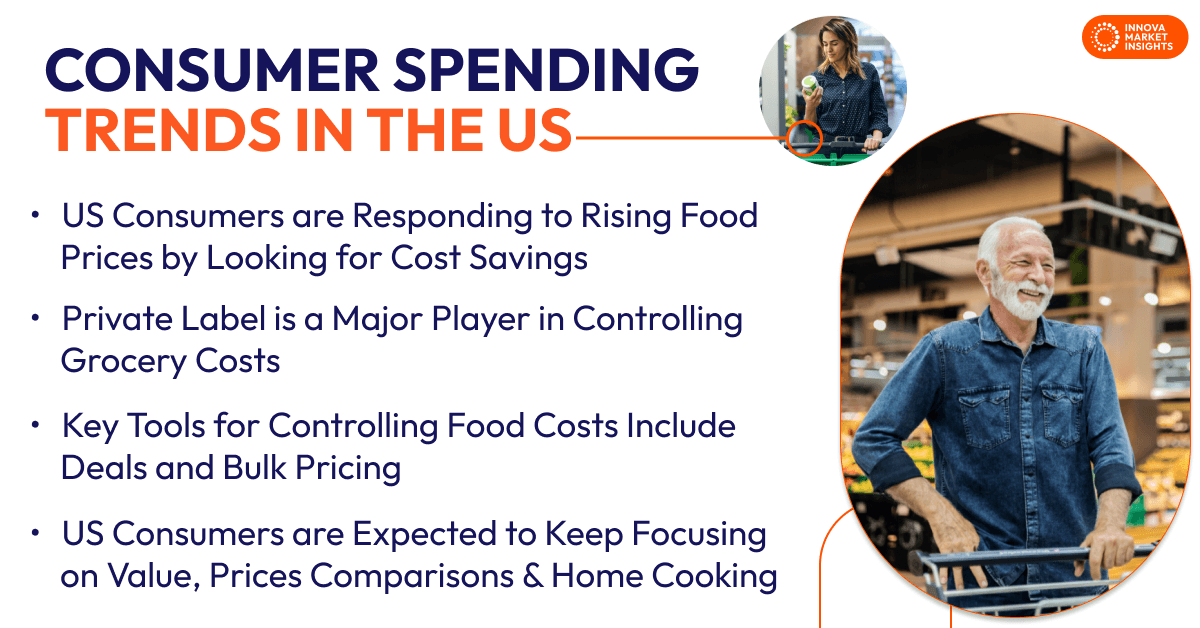
Additional Strategies to Grocery Inflation in the US
US consumers are sharing their food cost strategies on social media. They see and feel the impact of grocery inflation in the US. Some of the most common strategies mentioned on social media are purchasing less at a time while stocking up on important products, switching to stores with better prices, going for less expensive brands, shopping for the best package size, and comparing prices. US consumers are moving toward meal items that are shelf-stable or frozen. Other popular consumer spending behaviors include planning meals, eating fewer snacks, switching to more affordable protein sources, and seeking rewards, promotions, and cash-back.
Private Label is an Important Strategy
Switching to private label is an essential price control strategy for US consumers. US consumers see private label as trusted for everyday use, reflecting current consumer spending trends. Brands from Walmart and Kroger include essentials for everyday use, pantry items with cleaner labels, and multi-pack values. Private label brands match the quality of national brands and offer lower prices that appeal to US households who are watching their budget.
Meal Planning Helps Control Spending
Meal planning is an essential strategy for US consumers to control their grocery spending. Meals can be planned using ingredients that are versatile and help control food waste. The chain Aldi, for example, aids US consumers with meal planning using it private-label products.
Additional Tools and Strategies for Managing Grocery Costs
AI tools can help US consumers plan meals, shop for groceries, and control their spending. Shopping at club stores and buying in bulk secures lower per-unit prices and helps US families manage their grocery budget. Stocking up on frozen foods and shelf-stable foods can help US consumers to manage costs. Grocery store apps can help food budgeting with digital coupons, individualized promotions, and combinations of private-label products. Some apps can identify the best grocery deals. Reducing food waste goes beyond sustainability into food cost savings through companies that promote savings on key food items.
What’s Next for US Consumer Spending Trends?
US consumers will continue moving toward value, relying more on private label and retailer brands for quality at a lower price point. They will become more proactive in checking and comparing prices. Shifts in meal planning mean that US consumers will cook at home more often and reduce their food spending away from home. This opens the door for meal solutions that are affordable and convenient. US consumers will optimize and plan for using leftovers. They will change the way they shopping, moving more toward discounters and value retailers that offer products that are price-sensitive and affordable. US consumers are expected to look for deals and switch stores to pursue promotions, forcing brands to change the way they promote products, boost consumer loyalty, and package their products.
This article is based on Innova’s Trending in Budget Smart Planning in the US report. This report is available to purchase or with an Innova Reports subscription. Reach out to find out more.