



September 11, 2026 – Dairy does not have a natural presence in Japan and South Korea. Lactose intolerance is a factor, as its incidence is moderate in Japan and high in South Korea. That makes it harder to market these products to Japanese and South Korean consumers than it is to market dairy to those in Western markets. Currently, usage is limited to occasional milk and yogurt at breakfast and occasional cheese at dinner.
How Is Gut Health Shaping Dairy Market Trends in Japan and South Korea?
Benefits for gut health and immune health may be the key to success of the dairy market in Japan and South Korea. Consumers are highly interested in gut health and immune health as they also pertain to everyday wellness. Important features for gut health and immune health include various strains of probiotics to provide digestive support, fiber ingredients for supporting gut health and digestion, and A2 and lactose-free milk options for niche consumer needs to improve milk, cheese, and yogurt tolerance. Also, zinc could be promoted for immune system support.
How Can Dairy Fit Japanese and South Korean Food Traditions?
Japanese and South Korean consumers need reasons to include dairy in their everyday diet, and instead of traditional food and beverage products. They are concerned about lactose intolerance. They also have eating habits that are engrained in their culture and do not include milk, yogurt, and cheese. Because they don’t have strong reasons for including these products, consumers are very price sensitive about these products.
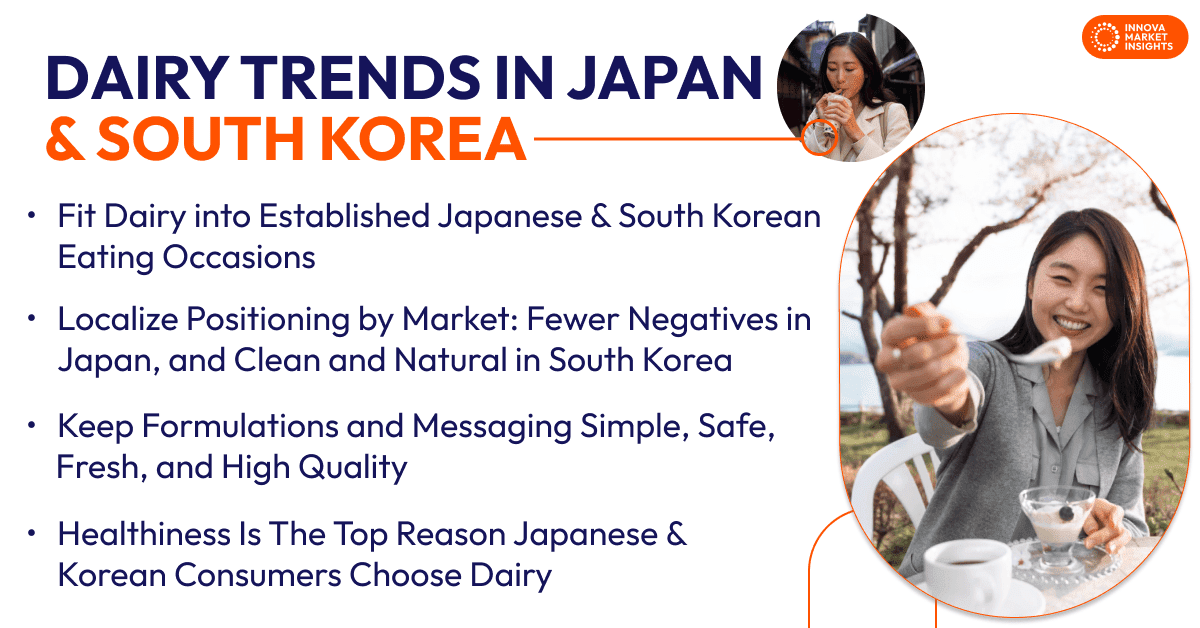
Consumers tend to engage with dairy food and beverages as standalone products rather than as part of their traditional meals. This suggests that the dairy market in Japan and South Korea need to do a better job of incorporating dairy as an easy, natural aspect of daily eating habits and meals. Some examples include traditional meals such as a Japanese breakfast with miso soup and rice, Japanese bento box lunch, and the Japanese oyatsu snack. South Korean options include rice-based meals plus banchan, beverages that are served café-style, late-night yasik snacking, and portable and convenient options.
How Do Japanese and South Korean Dairy Consumers Differ?
Consumers both value taste and health as drivers for supporting the dairy market. However, healthy eating means different things in each country and consumer interest in milk, yogurt, and cheese also differs. Consumers in Japan tend to prefer food and beverage products with fewer negatives, for example, reduced fat, no added sugar, and low salt. That is why dairy brands in Japan can focus on the low presence of negative components. Dairy products that might be successful in Japan include drinkable yogurt that is low in sugar, reduced sodium cheese, low-fat milk, and other products that fits into everyday consumption without being heavy or indulgent. Consumers in South Korea like formulations that are natural, offer natural goodness, and do not contain preservatives or additives. Options for the Korean dairy consumer could include plain Greek yogurt that is high in protein and probiotics, milk that is fresh and naturally high in B vitamins and calcium, and cheese snacks like mozzarella or quark cheese that are simple and naturally high in protein and calcium.
How Can Added Nutrition Drive Dairy Market Innovation?
Food and beverage brands in the dairy market can improve their credibility by adding protein, vitamins, and minerals. They also can become more accessible options for Japanese and Korean consumers by adding emerging healthy ingredients like B vitamins, collagen, and L-theanine, as well as promoting everyday benefits such as energy, calmness, mood support, and skin health.
Nutrition should feel safe and familiar. Consumer trends research conducted by Innova Market Insights shows that Japanese and Korean consumers name healthiness as the number one reason for choosing dairy foods and beverages. Inherent features in these products such as yogurt, cheese, and milk influence consumer buying. Nutrients to add and promote could include protein for boosting satiety and strength, collagen for skin health support, and omega-3 fatty acids and B vitamins to support the brain and mood.
Why Are Clean Label and Simple Dairy Products Gaining Attention?
One way to increase the number of consumers in this category is to bring attention to dairy products that have simple ingredients and fewer negatives that also taste good. Consumer trends research shows that Japanese consumers seek dairy products that are safe and have fewer negative nutrients like fat, sugar and salt. Therefore, suitable products in the dairy market in Japan could include reduced sugar yogurt and low-fat milk. South Korean consumers look for purity and nutrition. The best products for them might include fresh milk, plain yogurt, and cheese snacks with clean features and are pure and nutritious.
What’s Next for Dairy Market Trends in Japan and South Korea?
It is expected that dairy brands will strengthen their messaging to help overcome consumer price sensitivity. Dairy marketing messages can emphasize freshness, high quality, clean features, and naturalness in a way that communicates safety and nutrition. Gut health and immunity will continue to be important as core benefits of the category. As a result, watch for new dairy product launches that have probiotic ingredients, no lactose, and added fiber. Expect to see a balance of fewer negative nutrients and components plus more positive nutrients to enhance the value of these products and perceptions of healthiness. These can take the form of sweeteners to lower sugar, combinations of protein ingredients, and vitamins and minerals. A broader range of flavors can also appeal to local preferences. Social media and influencers can be pathways to promote seasonal flavors and unexpected combinations of local flavors. Dairy products in Korea and Japan will expand in use beyond breakfast into shelf-stable, single-serve, and portion-controlled options for tea, meals, or snacks.
This article is based on Innova’s Dairy in Japan & South Korea report. This report is available to purchase or with an Innova Reports subscription. Reach out to learn more