



May 8, 2026 – The US cooking and pasta sauces category is at an inflection point. The core of the category remains strong, built on familiar formats and loyal repeat buyers. But the market around it is shifting, in the flavors consumers are reaching for, the ingredients they are scrutinizing, the channels where they discover new products, and the generations that brands most urgently need to recruit. Innova’s “Pasta & Cooking Sauces in the US” report maps where the category stands today and, more importantly, where the opportunity lies for brands willing to act on it.
What is Flavor Doing for the Cooking Sauces Category Right Now?
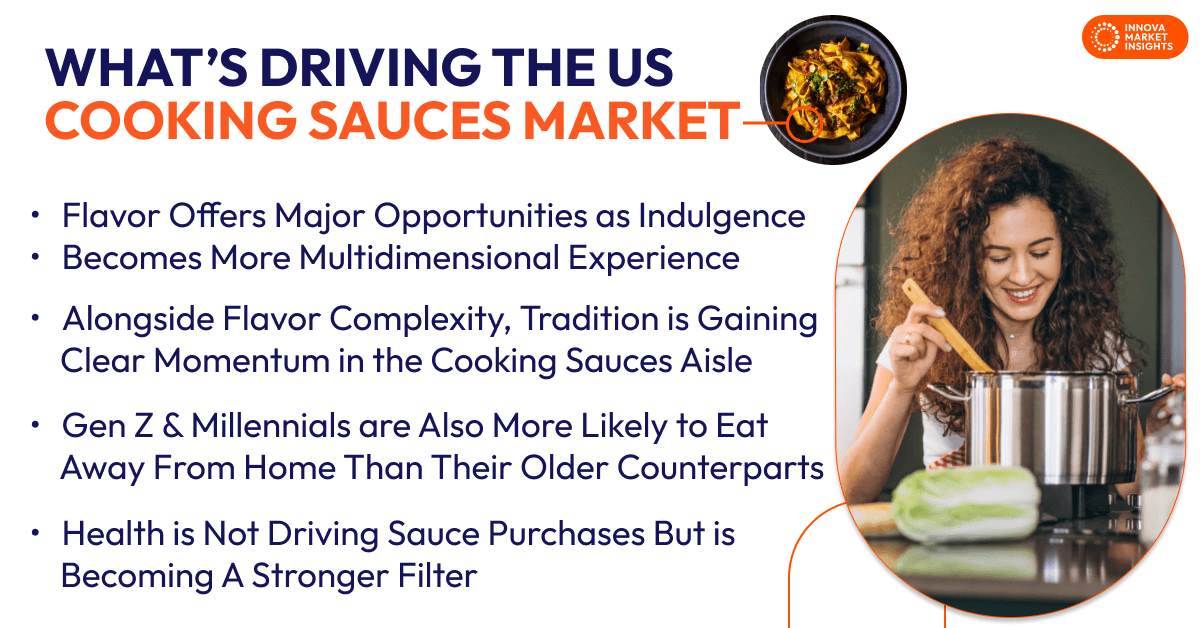
Flavor is a major opportunity for brands, as indulgence is evolving into a multidimensional experience that elevates the meal, the moment, and the mood, and the most exciting space in the category right now is indulgence evolving into a multidimensional experience. It elevates the meal, the moment, and the mood while combining richness with a growing expectation around ingredient quality and well-being. For cooking sauces, this means bold, complex flavor profiles and clean formulations are no longer competing priorities. They are appearing together, and consumers are responding.
Recent US launches show how brands are moving in this direction. Martone Street’s Garlic, Caper and Oregano Sauce layers sweet onions, capers, and tomatoes with a hint of anchovy umami, for a sauce that is bright, savory, and free from added sugar. Heb’s Italian Style Marsala Sauce brings creamy Marsala wine, mushrooms, and thyme into a format that feels restaurant-quality without demanding culinary effort. What connects these launches is a shared ambition: to make a jarred cooking sauce feel like a deliberate, elevated choice rather than a shortcut.
How is Food Heritage Becoming a Growth Driver in the US Sauces Market?
Alongside flavor complexity, tradition is gaining clear momentum in the cooking sauces aisle. Food heritage is driving choice by offering comfort, identity, and authenticity, qualities that resonate with consumers navigating uncertain times. Critically, these products also make the cooking task feel easy, appealing to consumers who want experiential meals with minimal effort. Alfez’s Moroccan Style Meatball Sauce and Private Selection’s Mexican Inspired Birria Cooking Sauce are examples of this trend in action, bringing globally inspired flavors into the home kitchen through clean formulations and clear, simple cooking guidance.
What do Generational Dynamics Mean for the Category’s Future?
Generational purchase dynamics are one of the more pressing challenges facing the cooking and pasta sauces category. Penetration is highest among older consumers, but these cohorts are not increasing their consumption meaningfully. Younger consumers, particularly Gen Z, represent a significant untapped opportunity, but one that requires active work to convert.
Gen Z has the lowest category penetration of any generation, and this gap matters because their cooking habits and food preferences are still being formed. Gen Z and Millennials are also more likely to eat away from home than their older counterparts, reducing the meal occasions where a cooking sauce would naturally come into play. There is, however, cause for optimism: among Gen Z consumers who do buy cooking sauces, a majority are increasing their consumption.
Because Gen Z and Millennials are still building their habits and expanding their sauce repertoires, brands need to get there first. They need to offer new tastes and new applications that meet younger consumers where they are. That means globally inspired flavors, effortless recipes, clean formulations, and formats suited to smaller households and more spontaneous meal occasions.
How are Health Expectations Reshaping What Consumers Look for on the Sauce Label?
Health is not leading the purchase decision in the cooking sauces category, but it is functioning as an increasingly firm filter. Americans are scrutinizing food labels more carefully than before. For most consumers, the focus is on removing negatives, such as no artificial additives, no allergens, and for a meaningful share of shoppers, reduced sugar, and sodium. Clean labels have become baseline expectations, not a premium differentiator.
What is notable is how consistently this expectation is being met alongside bold flavor in the most recent product launches. Gluten-free credentials, no artificial preservatives, and no added sugar appear across heritage-inspired and indulgence-led products alike. The category is demonstrating that clean formulation and genuinely exciting taste can coexist, and brands that lead with both are better positioned across all consumer segments.
What’s Next for Pasta and Cooking Sauce Brands in the US?
The category’s path forward runs through flavor leadership, cleaner ingredients, and a sharper understanding of where and how different generations encounter and choose their next sauce. As more consumers, especially younger ones, shift their shopping online and away from center-store aisles, getting sauces into consideration before the purchase moment becomes a strategic priority. Marketing needs to reach people on the internet, inspire meal ideas, and keep sauces top of mind as a pantry essential rather than an afterthought. The brands best placed to grow are those that can balance multiple priorities at once. Flavor, ease, authenticity, and transparency are what the US cooking sauces market is being asked to deliver.
This article is based on Innova’s Pasta & Cooking Sauces in the US report. This report is available to purchase or with an Innova Reports subscription. Reach out to learn more.