



June 9, 2026 – Growing global uncertainty, persistent inflation, and the visible effects of climate change are increasingly influencing consumer food and beverage choices. As consumers become more cautious with spending, demand is growing for affordable staples and value-driven categories. At the same time, health and sustainability remain important considerations, with consumers paying closer attention to personal wellbeing and environmental impact when selecting food and beverages. This is shaping both purchase frequency and category preferences, with a shift toward more nutritious and responsibly sourced options. As a result, some categories are gaining importance globally, while others are seeing declining consumption. Innova Market Insights examines food trends and consumption habits in Nigeria and explores the factors driving changing demand across specific categories, highlighting which are increasing or declining, and the reasons behind these shifts.
What Are Health And Freshness Trends In The Nigerian Food Market?
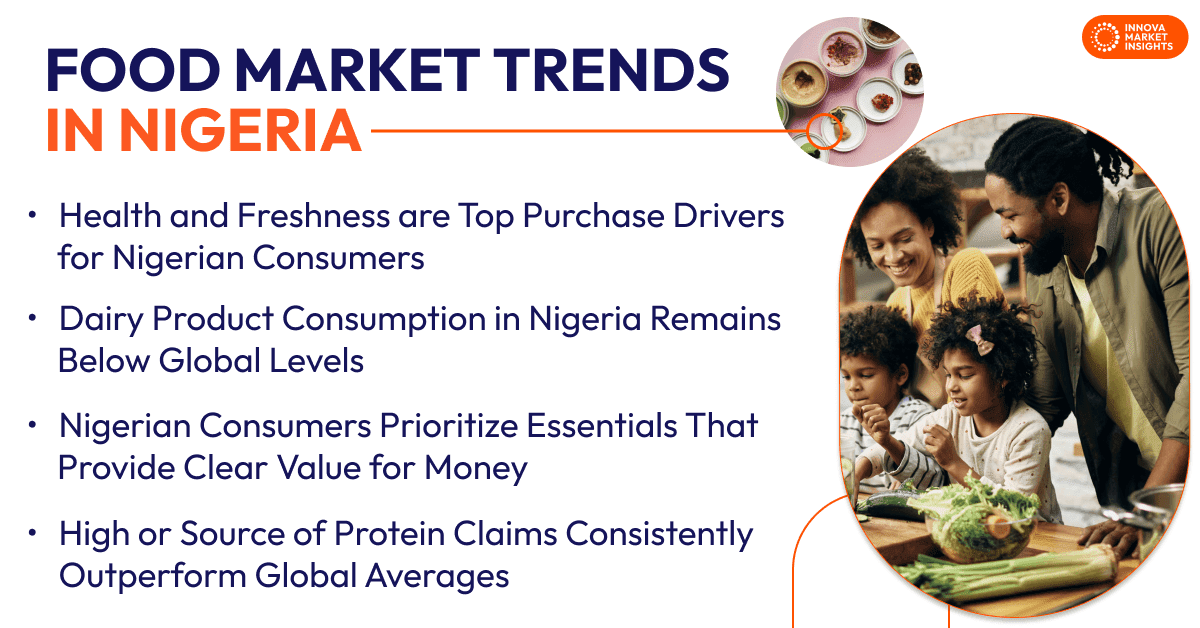
Across categories, from dairy, bakery, cereals, meat & fish to ready meals and snacks, health and freshness consistently rank as the top purchase drivers for Nigerian consumers, often outperforming global averages. This is reflected in strong interest in real ingredients/natural, product safety, reduced sugar/fat, high-protein, fiber, and functional claims, showing a shift toward more mindful, better-for-you everyday eating rather than occasional indulgence.
What Are Dairy Preferences In Nigeria?
Food trends show that while dairy product consumption in Nigeria remains below global levels, health, freshness, flavor, and price guide dairy preferences in the country. Nigerian consumers prioritize these attributes when purchasing dairy products, with over 2 in 5 citing them as important across most categories. An example product launch in Nigeria catering to these dairy preferences is Hashimah Foods Greek Yoghurt Mixed Fruit Flavoured, which offers both flavor and health benefits, supporting immune health and weight management.
How Important Is Affordability In The Nigerian Food Market?
Value considerations significantly influence purchase decisions in the Nigerian food market. While health remains a key factor in food choices, price continues to play a crucial role across categories such as bakery, cereals, dairy, meal preparations, salty snacks, and spreads. Consumers tend to be selective and cautious, often assigning lower-than-average scores to attributes like price, flavor, shelf life, and brand, showing that Nigerian consumers prioritize essentials that provide clear value for money.
What Are Leading Drivers Of Cereals Consumption In Nigeria?
In Nigeria, health, price, and brand are the primary factors influencing cereals consumption. Specifically, food trends reveal that 49% of Nigerian consumers cite health and price as the leading attributes driving increased cereal intake, while 37% recognize brand as an influential factor.
Protein And Functional Nutrition: Consumer Perceptions And Trends
High or source of protein claims consistently outperform global averages across cereals, dairy, meat and fish, snacks, spreads, and meal preparations. Fiber and omega-3/6 claims also resonate, especially in cereals, fish, and ready meals. This suggests that Nigerian consumers increasingly associate protein and functional nutrients with strength, satiety, and overall wellbeing, beyond just fitness.
How Are Plant-Based Categories Performing In Nigeria?
Purchases of meat substitutes are higher in Nigeria compared to the global average, while demand for dairy alternatives remains low, reflecting the country’s lower dairy consumption. Rising health awareness, interest in the category, and personal moral considerations have boosted meat substitute consumption. The growth in dairy alternative demand is driven by health benefits, increased variety, and affordability. Claims such as organic, no artificial flavors, real or natural ingredients, product safety, sugar and fat reduction, high or source of protein, and functional ingredients are highly valued in these products.
How Important Is Brand Power In The Nigerian Food Market?
Across many categories, brand influence underperforms compared to global averages, while clean label claims such as product safety, real ingredients/natural, product origin, organic, and no artificial colors/flavors have a big influence on consumer choices. This suggests that Nigerian consumers trust what a product contains more than the brand behind it, particularly in staple and family-oriented categories.
What Key Claims Influence Bakery Purchases In Nigeria?
In Nigeria, for bread and bread products, important claims include product safety, no artificial colors/flavors, reduced sugar, and flavor attributes. For cakes, pastries, and sweet goods, consumers prioritize product safety, flavor, natural ingredients, product origin, and reduced sugar, with premium-quality ingredients also being important. In the case of sweet biscuits and cookies, key claims are product safety, flavor, real ingredients/natural, high or source of protein, and reduced sugar.
What’s Next In Nigerian Food Market Trends?
There are multiple innovation opportunities in the Nigerian food market. Many Nigerian consumers are making health-led decisions anchored by freshness and clean labels. Therefore, brands can strengthen relevance by consistently highlighting health and freshness across core F&B categories. However, value-conscious Nigerian consumers are balancing wellness with price sensitivity. So, there is a clear opportunity to offer nutritious products at accessible price points without sacrificing quality or safety. Brands can focus on cost-efficient formats, smaller packs, and simplified formulations to maintain affordability. Meanwhile, food trends indicate that protein, fiber, and functional nutrition are shifting from sports nutrition to everyday necessities. This is an opportunity for brands to move beyond niche segments by integrating protein, fiber, and functional benefits into familiar, everyday products.
Affordable plant-based or blended protein formats are especially well placed to meet rising nutritional expectations from Nigerian consumers. Notably, in the Nigerian food market, ingredient transparency outweighs brand power in purchasing decisions. Brands should keep in mind that trust is won through transparency rather than brand-led storytelling. One key trust driver is clean label claims. So, brands can stand out by emphasizing product safety, real or natural ingredients, reduced additives, and clear sourcing. Simple, transparent communication and health benefits delivered at an affordable price will help brands succeed in the Nigerian food market.
This article is based on Innova’s Category Growth Drivers in Nigeria report. This report is available to purchase or with an Innova Reports subscription. Reach out to learn more.