



June 16, 2026 – Latin American consumers share cultural values rooted in heritage and family-centered habits, which continue to shape consumption patterns, including traditional foods, local ingredients and familiar flavors. However, the food and beverage landscape is being reshaped by demographic change, economic pressures and evolving consumer priorities across generations. As the region’s population ages, different life stages are influencing how consumers approach food, health and value. Younger generations engage through experimentation and discovery, seeking novelty, global flavors and products that support energy, appearance, and mental wellbeing. Meanwhile, the growing cohort of older consumers is more focused on prevention, healthy ageing, and ingredient transparency, strengthening demand for food that supports long-term health. Innova Market Insights explores these generational changes and how they are reshaping food and beverage consumption in Latin America.
How Are Latin Americans Changing Across Generations?
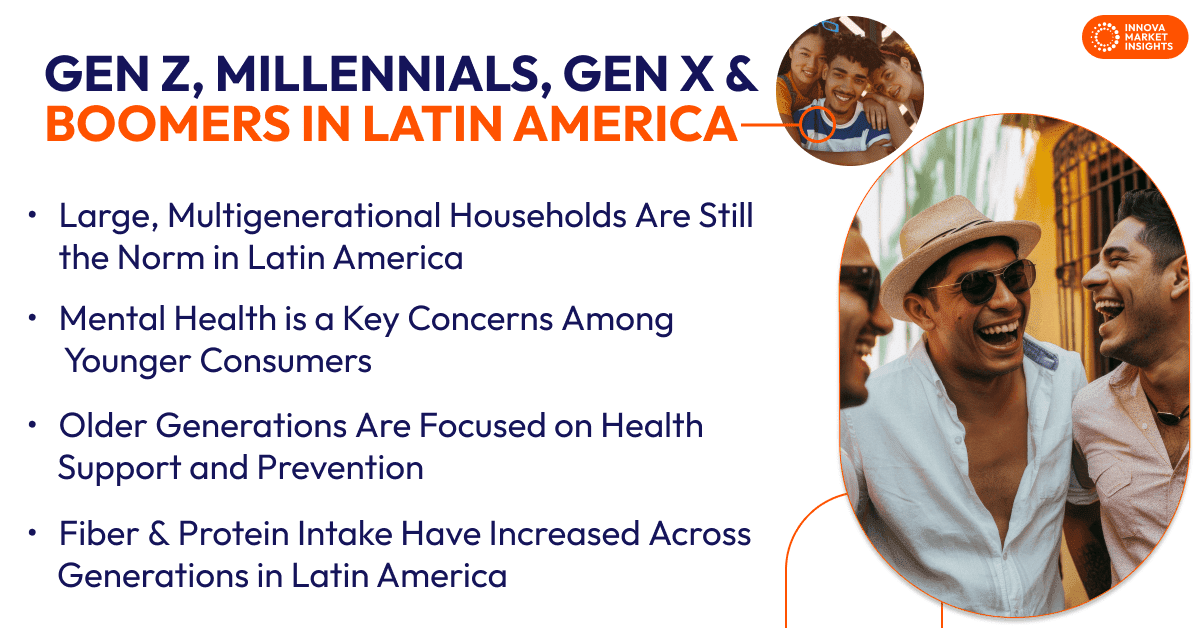
Large, multigenerational households are still the norm in Latin America, but rapid aging is shifting demographics and increasing demand for preventative health, healthy aging, and functional nutrition. As younger generations have fewer children, traditional multigenerational households will gradually shrink with consequent changes in consumption patterns. Younger consumers influence purchases by prioritizing affordability, tradition, pragmatism, and transparency.
How Do Health Concerns Differ Across Generations in Latin America?
Stress, anxiety, and emotional regulation are key concerns among younger consumers in Latin America, driving demand for foods that support mood, relaxation, and cognitive balance. Meanwhile, older generations are more likely to prioritize physical and cognitive health, driving demand for products that support healthy ageing, mobility, vision, and brain health. Physical activity naturally declines with age, with Boomers over-indexing in light or sedentary activity, while Gen Z and Millennials are more likely to describe themselves as active throughout the week.
Functional nutrition is important at all ages, yet needs differ. Consumer trends reveal that younger generations want products that improve energy and appearance, while older generations focus on health support and prevention. Brands must include ingredients and claims aimed at heart health, gut health, muscle and joint nutrition for older consumers, energy, sleep improvement, and skin health claims for younger consumers. For example, sugar-free cereal bars sweetened with stevia and containing prebiotics and fiber can appeal to consumers across generations in Latin America.
How Important is Affordability in Latin America?
Younger consumers in Latin America fall into lower income brackets, particularly Gen Z, yet they are also the most optimistic about improvements in their financial situation over the past year, likely due to early career progression or new job opportunities. As consumers age, though income levels increase, disposable income levels become constrained by growing financial obligations. Perceived value is important for building brand loyalty among young consumers, who are still engaged in experimentation and in shaping their lifestyle identity. Targeting older generations requires solutions that balance health and quality, with a focus on affordability. For example, larger pack sizes for some categories to leverage scale pricing, smaller pack sizes for smaller baskets and more frequent shopping trips, or formats that stretch across multiple occasions.
What Are Generational Attitudes to Private Label in Latin America?
As retailers invest in product development and brand strategy, store brands are increasingly perceived as high quality across generations in Latin America. This marks a shift in loyalty from manufacturer brands to retailers. Name brands must now justify their premium pricing through innovative, targeted new products, ingredients and quality, corporate transparency, and emotional connection. These brands will have to compete with products from store brands, catering to each generation’s specific needs.
What is the Impact of Urban Lifestyles and Technology on Food Trends in Latin America?
Widespread connectivity in a predominantly urban population is changing how consumers discover, compare prices, and purchase food and beverages in Latin America. Younger generations, especially Millennials, feel more comfortable using AI tools for product discovery and purchasing decisions, while older consumers may benefit from this digital engagement when they live in multigenerational households. AI is also increasingly adopted across the value chain and is seen as a tool to improve corporate transparency, sustainability practices, and ingredient sourcing. Food trends in Latin America show that Millennials are most likely to favor technology in food. Notably, almost half of Gen Z are also open to it, as are 4 in 10 boomers.
How Should Food Innovation Respond to Generational Differences in Latin America?
Population aging, economic pressures, and food regulations shape Latin America and exacerbate divergence between younger and older consumers in their expectations around price, health, sustainability, and innovation. While broad themes such as health, indulgence, technology, and family continue to resonate across generations, their meaning differs by cohort. This creates an opportunity for brands to balance innovation that resonates across generations, such as health messaging embedded in exciting new flavors and formats, while being intentional about corporate transparency and the use of new technologies. Innovation must balance excitement for younger consumers with reassurance for older ones. For example, Poppi Orange Cream Prebiotic Soda, recently launched in Peru, appeals to interests of younger consumers, with something exciting, while addressing healthier aging with prebiotic ingredients, which is beneficial to gut health.
What are the Ingredient Trends in Latin America?
Consumer trends show that fiber and protein intake have increased across generations in Latin America, confirming protein’s central role in modern diets. However, generational strategies diverge. Gen Z and Millennials are more likely to add protein and plant-based ingredients, reflecting performance and lifestyle goals, with Mun Alimentos’ recent launch of Orangic Soy Tempeh Burgers highlighting this trend. Generation X and Boomers more strongly reduce sugar, salt, fat, and artificial ingredients, focusing on prevention and long-term health management.
What’s Next in Generational Food Trends in Latin America?
Food trends reveal that flavor remains a key innovation in Latin America, focusing on local, familiar tastes. Use of functional ingredients will grow, alongside reducing unwanted ingredients to meet regulations and health needs across generations. Retailers will expand high-quality store brands at lower prices to attract all ages. Life-stage nutrition will combine appealing flavors with health benefits for youth and aging, such as gut, joint, vision, and cognitive health. Alternative proteins, particularly plant-based, with added benefits for longevity and gut health, will increase across generations. AI and digital tech will speed up innovation in manufacturing, marketing, packaging, and flavor creation, boosting efficiency and cutting costs. Additionally, demographic shifts from low fertility and aging populations will change household structures and traditions, further influencing food trends in Latin America.
This article is based on Innova’s Generational Differences in Latin America report. This report is available to purchase or with an Innova Reports subscription. Reach out to learn more.