


June 19, 2026 – Fiber is becoming an increasingly significant nutrient in the global food and beverage market, as the demand for functional nutrition and health benefits are gaining traction among consumers. This deficiency is often linked to the pervasiveness of hyper-processed, ready-to-eat food options. As a result, there is an opportunity for brands to innovate with new product development that addresses multiple aims, including enhancing texture and offering healthy or handy options for ready-made recipes. Innova’s ” Global Texture Insights: Healthy & Handy Hydrocolloids” report explores these deeper and specific hydrocolloids that brands are turning to for both functional and textural results.
How Can Methylcellulose Contribute To Innovation Opportunities?
Brands are leveraging new ingredients to showcase innovation opportunities around convenience and to add twists to classic foods. Hot ice cream, for one, is an innovation that is challenging texture expectations and poses challenges to brands to evoke traditional mouthfeel of existing products. Modern food innovators have been using methylcellulose, a multifunctional hydrocolloid derived from wood pulp, to execute innovations like hot ice cream for years. Certain subtypes can give ice cream bases more viscous or solid textures at room temperature. Unlike most other hydrocolloids, these kinds of methylcellulose suspensions can create a firmer gel when exposed to heat. For brands, this could be a solution to create products that don’t melt or lose the mouthfeel of frozen ice cream.
What Role Can Cellulose Play As A Hydrocolloid?
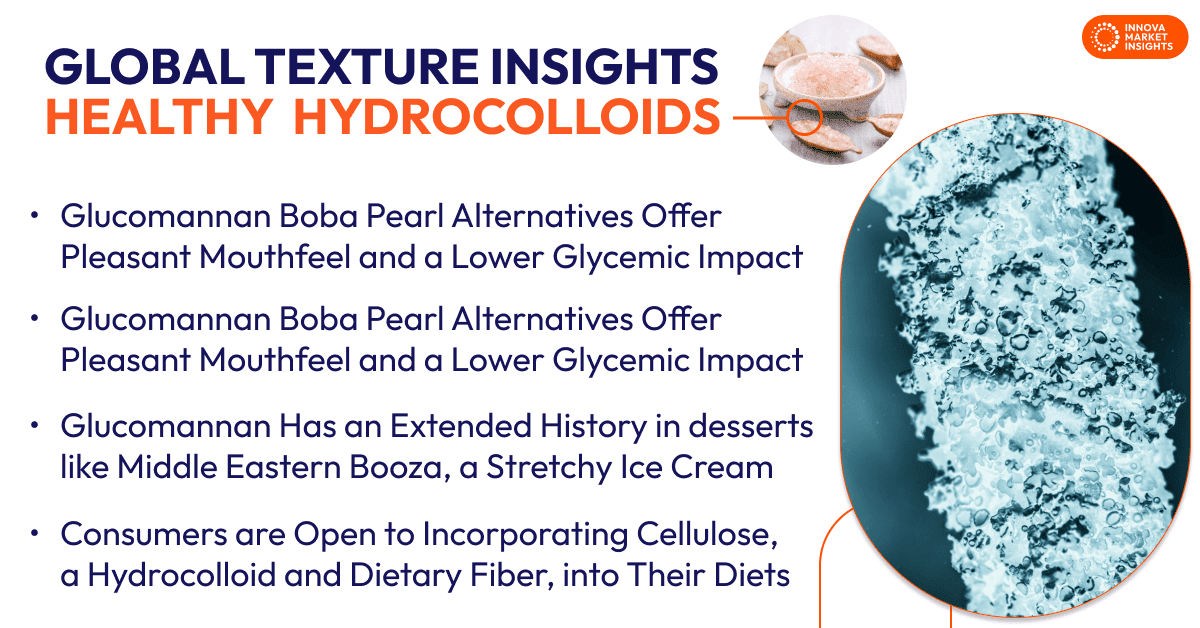
Consumers are open to the thought of incorporating cellulose, a hydrocolloid and dietary fiber, into their diets. This is demonstrated by the success of the US FDA approved weight management aid, Plenity, comprised of cellulose and citric acid. As human digestion cannot digest cellulose independently, it largely retains its structure. Thus, in the gut, cellulose can help by trapping food through emulsification. It can also encourage satiety when cellulose is used as a dietary supplement to expand in the gut. As a result, ready-made cellulose can have an impact greater than those found in powdered cellulose, that tend to take longer to dissolve and work.
How Can Brands Manipulate Glucomannan As A Hydrocolloid?
Glucomannan, commonly derived from Japanese konjac tuber, has many diversely developed use cases that rival cellulose in both diversity and number of uses. Similar to methylcellulose’s success in hot ice cream, glucomannan has an extended history in Middle Eastern booza, a stretchy ice cream. It can also be used to form both thermoreversible and irreversible gels. It also has gelatin-like textural properties, and for brands, it can be used to act as vegan friendly, fiber-rich gelatin dessert alternatives, such as mini konjac jelly cups.
Where Can Brands Leverage Or Learn From Boba?
Boba pearls have become a market standard, adding body and chew to the classic bubble tea beverage. Traditionally made from tapioca, they can make teas or even smoothies more filling for consumers on-the-go. However, this comes at the cost of additional carbs from sugar and starch. Additionally, standard boba pearls need to be served fresh and in syrup to retain their texture.
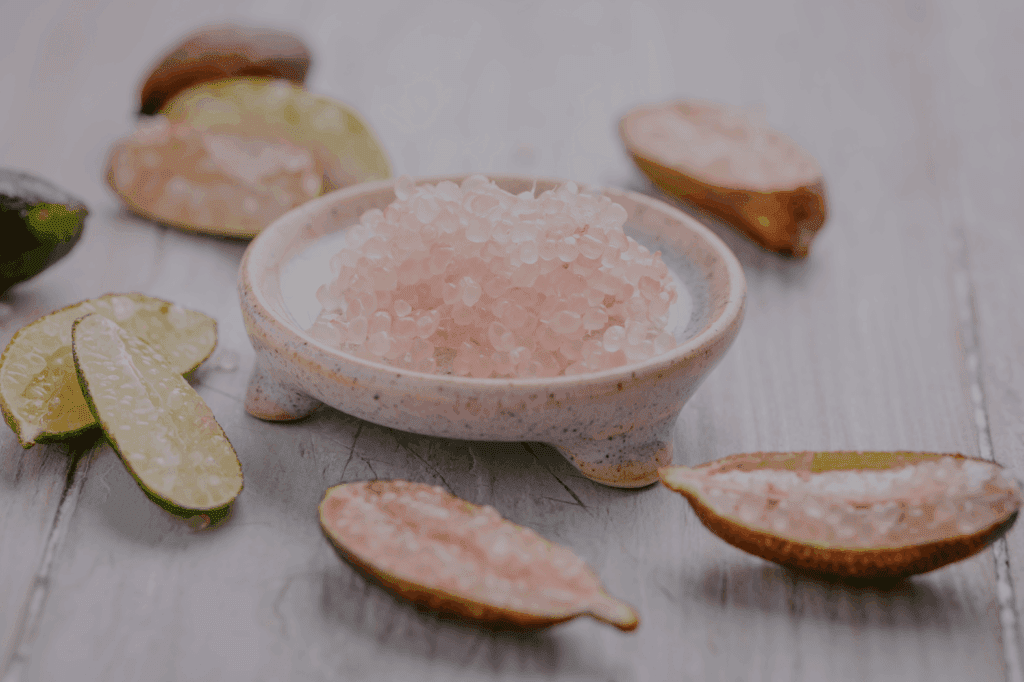
To combat these obstacles, glucomannan boba pearl alternatives offer an opportunity to retain a pleasant mouthfeel that consumers expect. They also have a lower glycemic impact, which may resonate with consumers looking to keep sugar consumption levels low.
What Can Glucomannan Contribute In The Ready Meals Market?
Glucomannan’s texture properties also have several health-promoting use cases in the ready meals market. For instance, its thick consistency and lipid emulsification make it a good choice for rich, creamy puddings, once again pitting glucomannan against tapioca in related categories. With less water content, glucomannan puddings are also less rigid, allowing greater incorporation of fiber without greatly affecting texture. Immersion blending can also yield an aerated, high fiber mousse that can hold up at room temperature without losing emulsification or aeration properties. This speaks to its practical properties that can be leveraged by ready meal brands.
What Can Gels Contribute To Hydrocolloid Trends?
Thermoirreversible gels, gels that resist melting at high temperatures, can be made from glucomannan and thus support diverse glucomannan uses. They are created when glucomannan is treated with alkali and form a firmer and more heat-resistant gel than gelatin. These thermoirreversible gels have long-standing uses in products like booza. In Japan, traditional alkaline konjac has been used as fish substitutes in sushi and also for chewy gelatinous noodles, known as shirataki.
These glucomannan products retain hydration and texture, in contrast to traditional starchy noodles that may dry out or get soggy when left in water. This makes glucomannan shirataki noodles a low-carb, high fiber option that does not necessitate lengthy boiling, which is a time-saver for consumers. For brands, the addition of protein can also mimic the creaminess and color of pasta without gluten, which can also resonate with a wider consumer base who may have food intolerances.
This article is based on Innova’s Global Texture Insights: Healthy & Handy Hydrocolloids report. This report is available to purchase or with an Innova Reports subscription. Reach out to learn more.