


July 1, 2026 – More Americans are consuming lower and no alcohol beverages in the US alcohol industry. This is not only to reduce alcohol intake, but also because of flavor, changing lifestyles, and how the well the beverages fit into consumers’ routines. Innova Market Insights looks at low and no alcohol market trends in the US, consumer and innovation trends, and opportunities for brands.
Who Is Consuming Low & No Alcohol Beverages In The US?
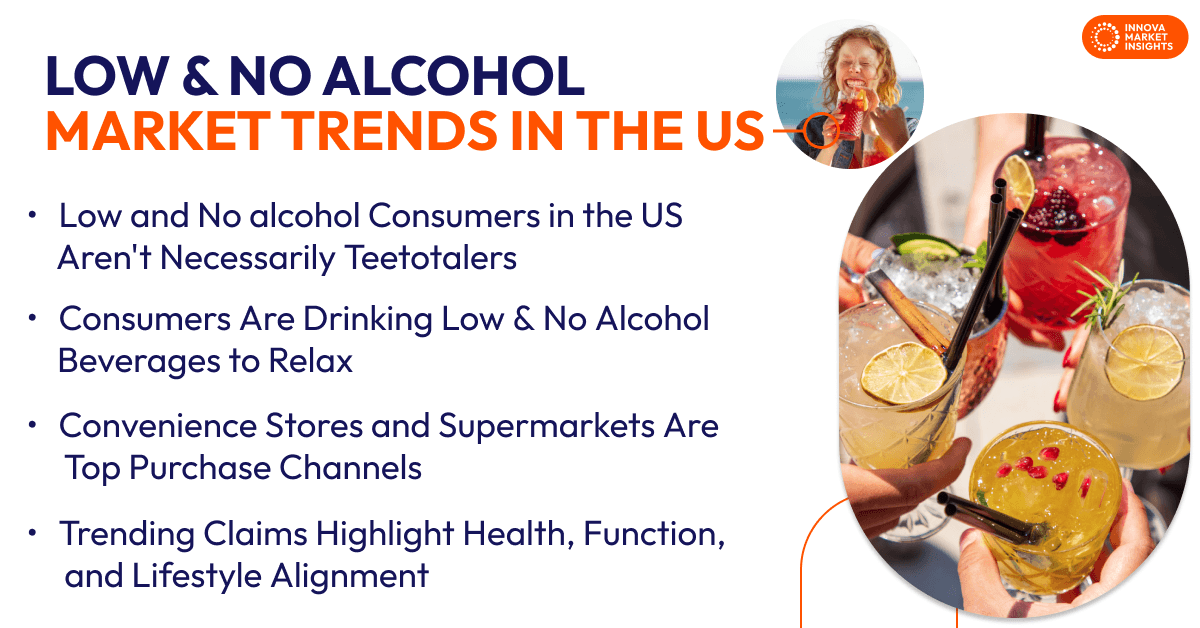
In the past year, 10% of Americans have consumed non-alcoholic beverages. 55% of these consumers are aged between 25 and 44, with more men than women purchasing the beverages. Low and no alcohol consumers in the US aren’t necessarily teetotalers but rather are moderating their intake of alcohol.
What Is Driving Low & No Alcohol Consumption In The US?
As well as moderating their intake, US consumers are also drinking low and no alcohol beverages to relax and explore new options, with consumers also highlighting the taste. Taste is key, with “it tastes good” being the leading reason for choosing non-alcoholic wine. While health and functional reasons add to the trend of increased low and no alcohol drink consumption, social as well as emotional factors are also important.
How Is The Consumption Of Low & No Alcohol Changing In The US?
About 1/3 of consumers have increased their low and no alcohol drinks consumption over the past year. These beverages are now part of their regular routines, rather than just a one-off choice. There is also more innovation in the low and alcohol market, doubling their share of new alcoholic launches in the US, and non-alcoholic spirits and cider are starting to grow. This will likely lead to increased consumption going forward.
When Are Americans Drinking Low & No Alcohol Drinks?
Americans who drink low and no alcohol beverages usually do so during meals and when they want to relax, often with others. The most common times of the day that these drinks are consumed are dinner, the afternoon, and the evening. Americans often consume these drinks with family and friends, at dinner, while watching TV, at parties, and on vacation.
Where Are Low & No Alcohol Drinks Purchased In The US?
The most common purchase channels in the US for low and no alcohol beverages are convenience stores and supermarkets. After that, Americans buy them at restaurants, liquor stores, natural or organic supermarkets, and bars or nightclubs. Other places include discount stores, online supermarkets, drug stores, farmers’ markets, and vending machines. This shows that US consumers buy these low and no alcohol beverages in a variety of locations, beyond specialty stores.
Which Claims Are Trending In The US Low & No Alcohol Market?
Trending claims for low and no alcohol drinks in the US highlight health, function, and lifestyle alignment. Brands also promote low-calorie, low or no sugar, and reduced or zero alcohol while encouraging mindful drinking. Additionally, functional benefits are increasingly common, with packaging highlighting relaxation, stress relief, focus, mental clarity, and sometimes gut health, in line with trends in other healthy beverages. Clean label claims, such as natural ingredients and no artificial flavors, colors, or preservatives, are also common. Ethical and dietary claims like sustainability, organic, non-GMO, gluten free, vegan, and keto-friendly, are also key.
What’s Next In The US Low & No Alcohol Market?
Looking ahead, the US market for low and no alcohol will change from general healthy messaging to focusing on evidence-based benefits. For example, improved sleep and metabolic support. To support this, we can expect increased use of ingredients like nootropics, adaptogens, and botanicals due to their functional benefits. Brands will also focus innovation on developing low and no alcohol beverages for specific occasions, such as aperitifs, late-night relaxation, and recovery after a night out. Furthermore, alcohol trends suggest that the distinction between non-alcoholic, functional, and energy drinks will likely blur. Also, as larger brands enter the US low and no alcohol market, it may split into higher-end craft options and more affordable choices. This will push brands to demonstrate their value claims with details on ingredients, benefits, and sustainability. Stricter rules on health and mood claims for beverages will also require clearer messaging and stronger evidence. Additionally, we expect purchase channels to expand into fast-food restaurants, workplaces, and entertainment venues, with a focus on inclusivity and community, promoting moderation and not drinking as positive lifestyle choices.
This article is based on Innova’s Low & No Alcohol in the US report. This report is available to purchase or with an Innova Reports subscription. Reach out to learn more.