



April 21, 2026 – The recently released 2025-2030 US Dietary Guidelines for Americans (DGAs) from the US Department of Agriculture (USDA) and Health and Human Services (HHS) declare that no added sugars or non-nutritive sweeteners should be part of a healthy diet. To many people, this seems extreme. Thom King, chief innovations officer at Icon Foods, notes that human neurobiology prefers sweetness, so sweet beverages are designed for people rather than for dietary guidelines. King thinks that sweetened beverages will continue to have a future because brands will adapt by making their products less sweet overall but still satisfying.
The Beverage Sector is Crowded
Concerns about sweetness and beverage formulation were present before the release of the latest version of the DGAs. Companies innovated around formulations with less sugar or zero sugar. Today, however, the beverage space is crowded. It may be that the new DGAs will push the sweetened beverage industry in a new direction.
Real Issues with Sweetness
King suggests that the DGAs are mispositioning their fight against sweetness and that the real issues are the amount of sugar, the glycemic load, how sugar is delivered, and the impact of sugar on metabolism. Moral purity is not a factor because what really matters is the amount of sugar, not whether it is present.
Non-Nutritive Sweeteners
King says that the DGA argument against non-nutritive sweeteners does not make sense. Non-nutritive sweeteners have been used for a long time and are regulated. They have been highly tested and deemed safe by a number of authorities, including the Joint WHO/FAO Expert Committee on Food Additives and the European Food Safety Authority. Internationally, non-nutritive sweeteners are viewed as safe and useful.
DGAs Validate Low- and No-Calorie Sweetened Drinks
The scientific advisory report from the USDA/HHS Dietary Guidelines Advisory Committee that concludes that use of low-calorie and no-calorie sweetened beverages is associated with slightly lower body weight and that swapping this type of beverage for drinks that are sugar-sweetened helps lower body weight and reduce likelihood of obesity. Also, that non-nutritive sweeteners are safe. Still, the DGAs recommended getting rid of all types of sweeteners. Decisions like these are worrisome because they could affect a lot of people, including children with diabetes, and they are not backed by science when consumed in reasonable amounts.
Training the Brain
King has some concerns about how alternative sweeteners train the brain over time. They expose the brain and body to sweetness but don’t deliver calories. This could adversely affect appetite regulations and trigger people to eat more. King reminds people that non-nutritive sweeteners are very good short-term but maybe not long-term.
New Types of Sweeteners
New types of sweeteners do not require the same considerations. These sweeteners include the glycosides stevia and monk fruit and the sweet proteins thaumatin and brazzein. These sweeteners do not require a different type of handling by the body. In contrast, synthetic high-intensity sweeteners that are not found in nature can affect insulin, neuroendocrine, and gut reactions in some people. So maybe zero sweetness is not the goal and the least sweetness to be effective is a better option.
The Need to Change Perception of Sweeteners
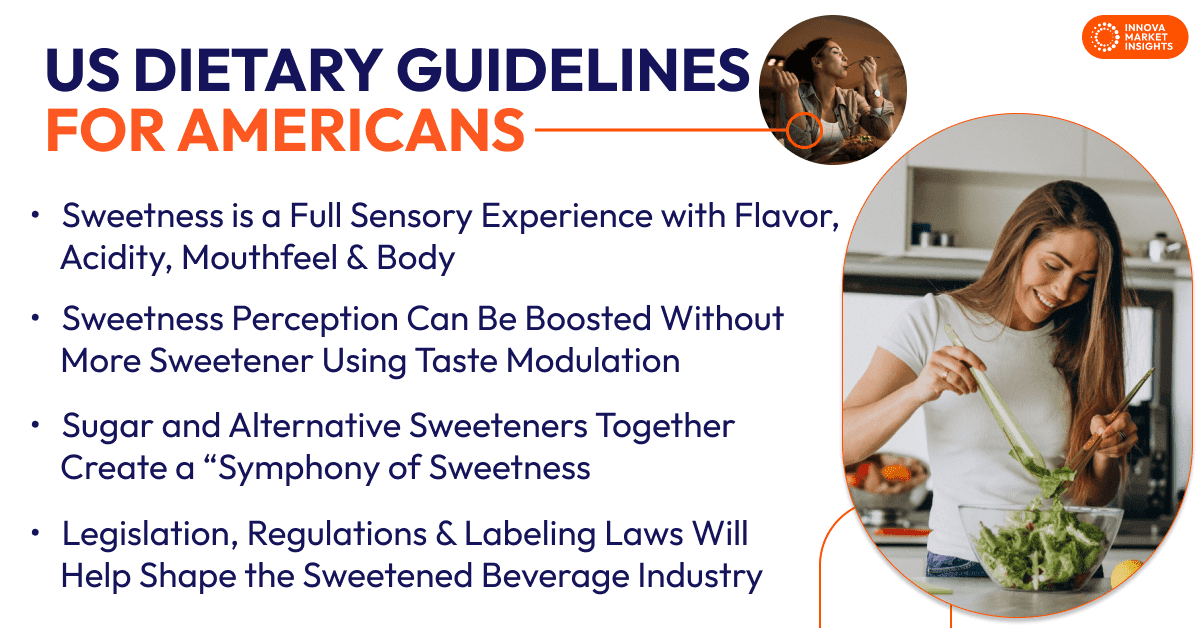
Industry experts suggest that beverage development needs to consider sugar content, sweetness, and consumer perception, including alignment with the US Dietary Guidelines. It is not enough to just reduce sugar content by a certain among. Brands also need to look at their full sensory experience. Factors contributing to the sensory experience include flavor, sweetness, acidity, mouthfeel, body, and functional ingredients. The resulting flavor needs to meet consumer expectations, including using taste modulation.
Modulating Molecules
The art and science of modulating taste use tools like laboratory analysis and sensory information to identify aroma molecules and flavors that pair best with the base notes in a beverage. Modulation helps cover flavor off-notes and deliver well-rounded flavors. It also helps beverages enhance the perception of sweetness without needing to add sweeteners. King notes that flavor modulators impact sweetness by adding softness, smoothing peaks in sweetness, changing the way sweeteners linger, lessens off-notes, and improves flavor systems that contain both sweet and acid.
Creating a Symphony of Sweetness
Sugar is here to stay and has a role in providing body and sensory features that are unique to sugar. Small amounts of added sugar can be functional and can be teamed up with other ingredients in a symphony of sweetness with bulk from fiber or rare added sugars and to help modulate metabolism, and high-intensity sweeteners to impact sensory perception.
Sweet is Less Sweet in Other Markets
Other markets prefer products that are not as sweet as American products. These markets, including parts of Asia Pacific, Latin America, and Europe, already are using different approaches to sweetness. Approaches that are working include policy, on-pack labeling, and taxes. In Europe, soft drinks brands support voluntary front-of-pack labeling, and consumers accept no- and low-sugar products.
Sweet Future in the US
King thinks change in the US is possible since beverages do not need to be overly sweetened. Consumers will adapt when flavor and sweetness are balanced. The US Dietary Guidelines for Americans set the tone around sweetness going forward.
This article is based on Innova’s Rethinking Sweetness: Sugar & Sweetener Risks in the US Dietary Guidelines report. This report is available to purchase or with an Innova Reports subscription. Reach out to find out more