


April 15, 2026 – In the US, functional beverages have shifted from niche products to essential routines for energy, focus, and wellness. Brands are now combining mood, gut health, hydration, and protein in familiar beverage formats. These functional beverages tend to be more lifestyle and emotional than clinical; meaning clear messaging is crucial in this value-driven functional beverages industry. Innova Market Insights explores how the US functional beverages market is evolving and what brands can do to succeed.
How Do US Consumers Perceive Functional Beverages?
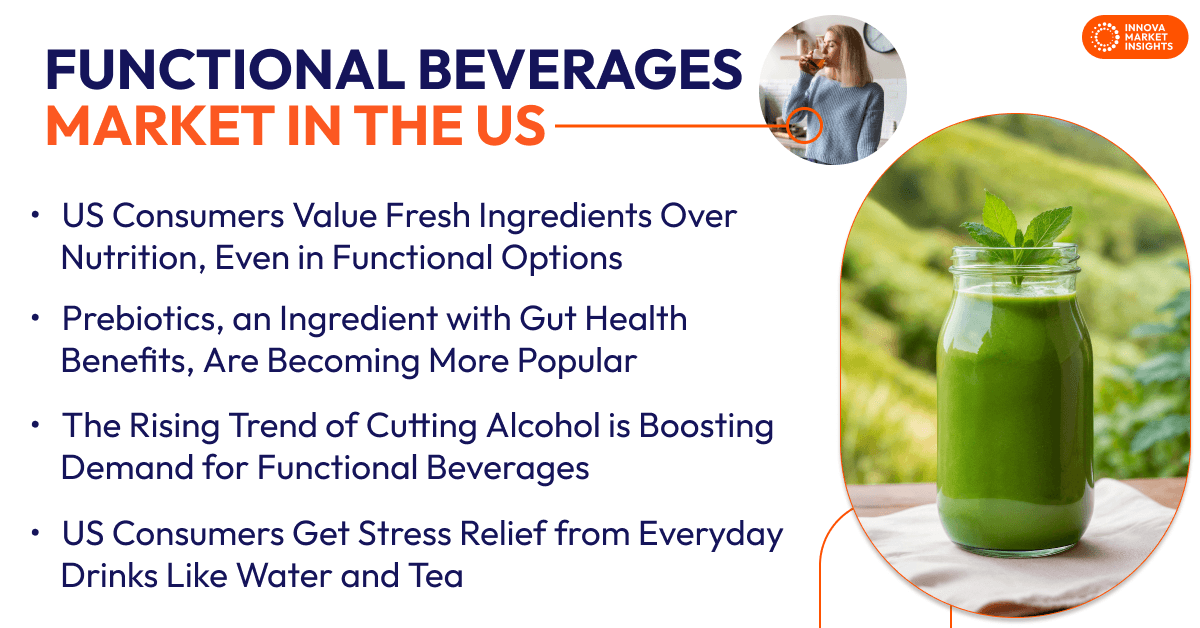
Functional beverages products can help US consumers improve health but face stigma. US consumers value fresh ingredients over nutrition, even in functional options. Brands in the beverages market should use visuals, sensory cues, and transparent sourcing to mimic freshness in shelf-stable formats. The perceived gap causes friction; over half of consumers judge food health by appearance, challenging functional beverages to prove their value and freshness. To stay competitive, the functional beverages category should adopt visual and sensory cues from categories like cold-pressed products, such as visible ingredients and transparency.
What Role Does the Gut Health Trend Play in the US Functional Beverages Market?
Prebiotics, an ingredient with gut health benefits, are becoming more popular across formats like powders and shelf-stable products, offering more innovative options in functional beverages. US consumers are flexible in how they consume prebiotics, unlike probiotics, which rely on fresh, cold-chain, and fermented formats. The long association of yogurt with gut health is shifting as water, tea, and juice gain credibility for digestive support, especially when benefits are implied. This shift allows gut health to be integrated into mainstream drinks, especially functional beverages. For example, Slice uses a soda archetype to introduce gut health benefits in a familiar, indulgent format, making digestive support more accessible beyond traditional health products.
Why Do US Consumers Drink Functional Beverages?
In the US beverages market, consumers value feelings like calm, confidence, and focus alongside hydration. These drinks can help meet physical and emotional needs formulated and packaged well. Function links to activity and influences choices, but core health cues are more important than novelty or complexity. New tastes and textures attract trial but must be paired with wellness signals for habit formation, especially for active consumers. Trust in ingredients, freshness, and clear nutrition matters more than unusual formats or flavors.
How Can US Functional Beverage Brands Appeal to Different Generations?
In the US functional beverages market, Gen Z values energy and balance, while Gen X focuses on prevention and maintenance. Successful products combine cultural understanding with clinical reassurance, often leveraging short-term benefits to build loyalty. Claims related to focus, mood, or appearance tend to be more effective than traditional ones like bone health or immune support. Older consumers seek clear benefits, routines, and evidence-backed claims, considering nutrition a long-term investment in health and resilience. Younger consumers use nutrients for self-regulation, energy, and aesthetic goals, emphasizing health based on current feelings and functions rather than just future well-being.
Sober-Curious Behavior is Fueling Demand for Alcohol Alternatives
The growing beverages trend of reducing alcohol, especially among Millennials and Gen Z, is stimulating demand for functional beverages that support social, mood, and evening rituals without intoxication. Consumers are looking for alternatives that deliver calming, euphoric or unwinding signals in a flavor-forward, adult-appropriate format. Functional beverage brands have an opportunity to serve these consumers with mood-regulating, adaptogenic or calming functional beverages, especially in sparkling, non-sweet formats that mimic alcohol’s emotional and sensory roles.
Mental Health is a Fragmented Space
Anxiety, sleep, energy, and focus are key for Americans, but no single need dominates. Younger consumers seek mood, focus, and emotional support linked to digital lives, while older consumers prioritize cognitive health, calm, and sleep. Functional beverages should have targeted messaging, as generic stress claims don’t resonate universally. US consumers generally view stress relief in everyday drinks like water and tea, valuing routine over explicit ingredients. Reframing calm as hydration with familiar flavors offers an opportunity for better positioning. Products with subtle functionality and emotional appeal may also outperform those without obvious stress signals. For example, Psilly Goose’s Silly Passionfruit Mango, which uses playful branding and fruit flavors to focus on mood and aesthetics for casual consumers desiring better options.
Sleep Support in US Functional Beverages
Sleep support is one of the few health territories where emotional comfort consistently outranks function. Consumers lean toward drinks that feel familiar, warm, and safe. In this space, functional beverage brands face limits on how far they can push science-forward language without breaking trust. Reframing sleep support through routine, taste, and gentle cues may be more effective than emphasizing ingredients like melatonin or magnesium.
Trending Ingredients in the US Functional Beverages Market
Ingredients like magnesium, chlorophyll, and ashwagandha have gone viral, rapidly shaping consumer expectations and retail demand before brands can validate claims or scale sourcing. These functional beverage ingredient trends surges can outpace regulatory, sensory or supply readiness, forcing brands to choose between speed and credibility. Functional beverage brands must build faster innovation loops, monitor social ingredient velocity, and stay disciplined about which trends to chase versus which to translate into durable formats.
Ingredients Facing Pressures in the US Functional Beverages Market
Key functional beverage ingredients like plant proteins, citrus-derived electrolytes, and specialty botanicals are facing cost and availability swings due to climate pressure, global supply instability, and demand surges. This is driving reformulation, blending simplification, and margin-sensitive decision-making across the category. Brands in the beverages market must balance functional integrity with commercial feasibility, either through more cost-stable formulations or transparently communicating value to justify price.
How is GLP-1 Affecting the US Functional Beverages Market?
Widespread GLP-1 use is reshaping consumption patterns, with many users reporting reduced interest in food, snacks and sugary or heavy beverages. Functional beverages tied to satiety, indulgence, or large volume intake may see declining usage among this group. Brands in the beverages market must reposition around lighter, benefit-dense, or emotionally functional use cases (e.g., hydration, focus, calm) to remain relevant as fewer consumption moments emerge in a GLP-1 world.
What’s Next in the US Functional Beverages Market?
In the US functional beverages market, future growth will be driven by stricter credibility standards, ecosystem partnerships, and interconnected benefits. Retailers and e‑commerce may introduce third-party scoring for on-pack claims based on dosage, evidence, and sourcing, compelling brands to prove claims and prioritize transparency as a competitive edge. Functional beverages will also integrate more with wellness ecosystems through collaborations with meditation apps, fitness communities, and other platforms, transforming functional beverages into daily rituals rather than standalone products. Beverages trends predict that gut health will expand from digestion to encompass overall wellness, like focus, mood, immunity, and skin, shifting from single-system claims to holistic narratives. Cannabis beverages will evolve from recreational to multi-functional formats with adaptogens, nootropics, and electrolytes, serving stress management, recovery, and focus. Retail shelves are expected to be reorganized around need states such as energy, calm, and immunity, favoring brands with clear primary benefits, risking less focused products becoming less visible.
This article is based on Innova’s Functional Beverages in the US & Canada report. This report is available to purchase or with an Innova Reports subscription. Reach out to find out more