



June 29, 2026 – Brands in the European sports nutrition market are pivoting, moving beyond traditional formats to new innovations that address consumers’ distinctive needs. New product development is increasingly addressing the active lifestyle goals of differing generations, as well as functional outcomes to support the body as a whole. Flavor is another driving force, with innovations balancing indulgence, comfort, and everyday consumption. Innova’s “Overview in Sports Nutrition in Europe” report explores the major trends shaping new product development and innovation in the category.
What Role Does Generational Lifestyle Demands Play In The European Sports Nutrition Category?
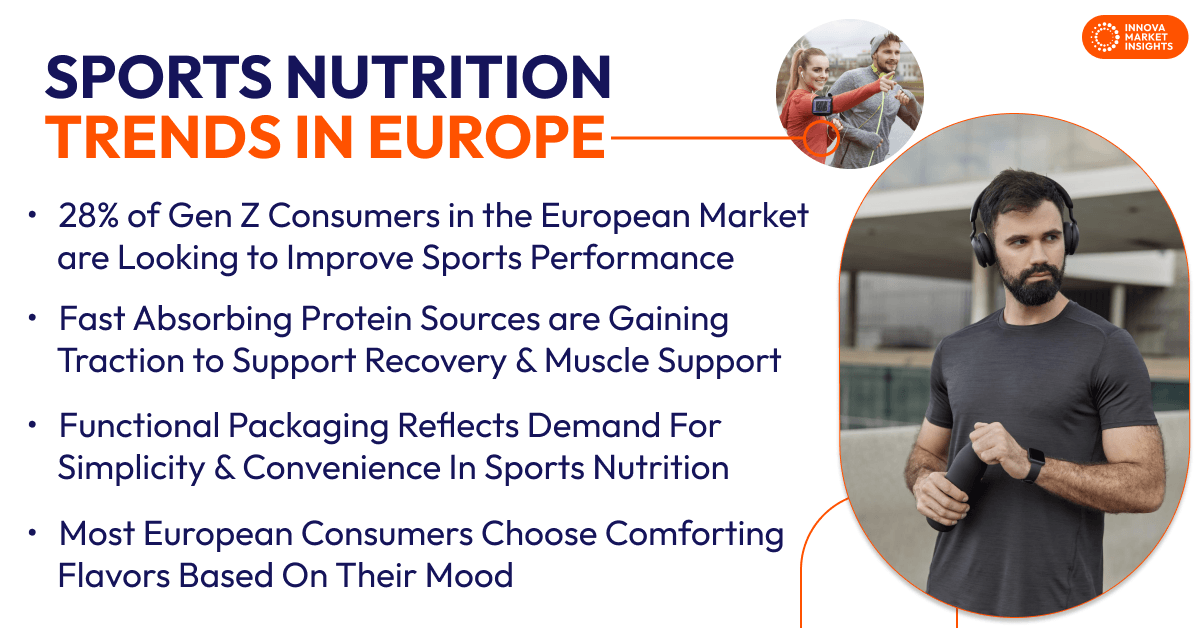
In the European sports nutrition market, brands that tailor to generational lifestyle demands and move beyond traditional formats will win over consumers. For instance, when asked about the top functional needs they want sports nutrition to target, 28% of Gen Z consumers are looking to improve sports performance. Over 30% of Millennials are focused on hydration.
How Are Brands Moving Beyond Traditional Formats To Innovative Solutions?
Formats such as strips, gel, or effervescent tablets highlight innovative solutions for quick and effortless consumption. They also integrate easily into consumers’ active routines. Expanding beyond traditional formats will also capture consumer attention. From spreads to rice pudding and chocolates, sports nutrition trends are entering everyday foods, enabling brands to connect with a broader audience and expand portfolios.
What Trend Is Driving The Next Wave Of Sports Nutrition Innovation?
Moving forward, functionality will be key, with everyday fitness needs driving the direction of sports nutrition trends. 25% of European consumers report that they consume sports nutrition for outdoor exercise occasions. Designing products for these moments will help consumers stay energized and maintain endurance on the move. Such innovations make it easy to refuel within active lifestyles and help position brands as leaders in performance-focused nutrition. In the sports nutrition market, consumers are also looking for specific functional ingredients, such as protein, vitamin D, and magnesium to enhance their performance and overall well-being. Incorporating these functional ingredients gives brands the chance to differentiate and build trust in a competitive market. Balancing these with plant-based ingredients can also boost appeal.
How Can Brands Diversify Their Sports Nutrition Products To Address Consumer Needs?
Consumers expect assorted sports nutrition products that address their specific needs, with a growing focus on gut health and mental well-being solutions. Fast absorbing protein sources are gaining traction among active consumers to support recovery and muscle support. That being said, gut health ingredients are also driving sports nutrition trends for weight management, digestive, and balanced lifestyle benefits. Moreover, advanced sports nutrition formulas are expanding into mental well-being, targeting areas like stress and anxiety that 38% and 29% of European consumers are looking to improve.
What Are Consumers’ Packaging Expectations?
Functional packaging in the European sports nutrition market reflects consumer preferences for simplicity and convenience. Pull-up caps, portable tubes, and tear-off sachets are just a few of the innovations that brands are using to simplify consumption. In addition, over 30% of consumers also say that they favor resealable and portion-controlled packs. This indicates that usability and precision are other packaging features that brands should can begin to implement, in order to meet consumer demand.
How Is Taste Shaping The Sports Nutrition Category In Europe?
Taste is another important driver of European sports nutrition trends, influencing consumption frequency and enjoyment. Light and comforting flavors encourage regular consumption. Moreover, subtle and refreshing flavors appeal to a broader consumer base, thus expanding reach and promoting repeat purchases as well.
In general, a majority of European consumers report choosing comforting flavors depending on their mood. Of these, 28% seek brown flavors when they want to feel comforted, indicating an innovation opportunity for brands. Caramel, chocolate, or coffee-inspired flavors address this trend. Dessert-inspired flavors can also deliver more indulgent moments to sports nutrition, while also maintaining functional and performance benefits.
What’s Next For Sports Nutrition Trends In Europe?
There are a few key areas that brands in the European sports nutrition market can turn to, in order to drive future innovation. Mealtime occasions, packaging, and a shift in focus to the youngest consumers are a place to start. Pasta, for example, can be positioned within sports nutrition as a convenient mealtime format. Beyond opening new consumption occasions, this move would promote nutrition solutions for mealtimes that support both satiety and more sustained forms of energy. For packaging, innovation will be more centered around compostable packaging materials that support circular packaging systems. This will strengthen perceived brand commitment to sustainability. Finally, developing kid-friendly sports nutrition products can tap into the growing number of young athletes. Targeting this segment can help brands expand their audience beyond adult consumers and build brand loyalty from a young age.
This article is based on Innova’s Overview in Sports Nutrition in Europe report. This report is available to purchase or with an Innova Reports subscription. Reach out to learn more.