



May 25, 2026 – Protein has fast become the number 1 nutritional trend of the decade, with Innova Market Insights placing Powerhouse Protein at the head of its Top 10 Trends for 2026. From its roots in sports nutrition and nutrient-packed powders, protein has branched out into all areas of food and beverage development in Europe, with nutrient-enriched products now found in some of the most unlikely categories, while food that is inherently protein-rich is also doing more to emphasize its benefits. Innova Market Insights reviews these protein market trends, discussing macro themes, consumer drivers, brand strategies, new product launch trends, and ingredient development. We also pinpoint potential opportunities for food and drinks.
Who’s Driving Protein Trends In Europe?
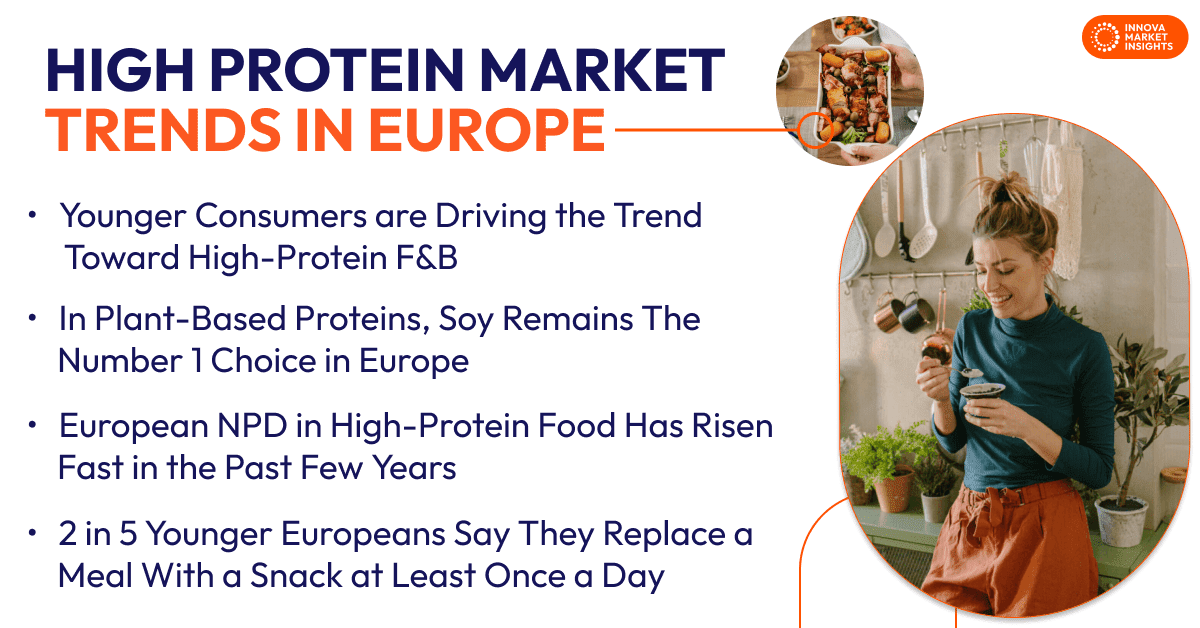
In Europe, younger consumers are driving the protein trend toward food and beverages. They have adopted more positive and proactive approaches to healthy eating, looking to include more of the good rather than simply reducing the bad. At the same time, their habit of replacing more of their main meals with snacks has increased demand for nutrient-rich snacking choices. The young also expect more from taste experiences, so the indulgence of high-nutrient food is becoming more important alongside its health benefits. It’s not only the younger generations. 7 in 10 Europeans across all age groups are paying attention to protein in their diet, with a net increase in protein intake. However, there are generational differences in the choice of nutrients, with older consumers often opting for meat and younger consumers choosing a wider selection of foods, like sports nutrition, yogurt, and snacks.
What Are The Benefits Of Protein?
High-protein diets have long been associated with fitness routines, where nutrient helps build muscle, enhance strength, and improve metabolic health. However, beyond sports and fitness, consumers associate many more benefits with nutrient and are also using it as part of their dietary approaches to weight management, immune health, healthy aging, bone/joint health, and heart health. Protein can also be used to support those on GLP-1 medications. Half of those using these drugs have also adjusted their diet alongside the medication, and one-third of these have upped their nutrient intake.
What Sources Of Protein Are Europeans Consuming?
Europeans consume a wide range of sources of nutrients. Dairy products are a particularly important focus, with yogurt and milk products with protein claims having been bought by between 1 in 3 and 2 in 5 consumers over the past year. Legumes are also popular, perhaps increasingly consumed as snacks as well as meal components. More than 1 in 4 European consumers name sensory aspects important factors in their purchasing decisions, and it is clearly important to consumers that they have ready access to a variety of protein treats alongside everyday protein staples. Plant-based protein trends show that soy remains the number 1 choice in Europe, with pea not far behind. Fava bean is an emerging choice, with its use in launches growing in recent years.
How Does NPD Look In The European Protein Market?
European NPD in food has risen fast in the past few years with protein claims becoming bolder and more prominent on the front of packs. For example, Irish porridge oats brand Flahavans now offers a selection of high-nutrient instant porridge products in sachets and pots where the words “high protein” are boldly stated on the packaging. Almost 1 in 10 new food and drink products launched in Europe now carry high in or source of protein claim. Diversification is the most significant trend in NPD: sports nutrition has evolved beyond powders, with higher activity in bars, ready-to-drinks, and other products, while protein is becoming increasingly mainstream, with increased NPD in major markets such as dairy and grain-based foods. Protein is also becoming more prominent in the private label market as supermarkets pick up on the trend. Marks & Spencers in the UK offers a diverse range of foods and drinks under its M&S Food private label, for example.
How Is Inflation Influencing Protein Consumption In Europe?
Continuing pressure from food inflation has made many consumers more value-conscious. Almost 1 in 3 Europeans are trying to buy less, while more than 2 in 3 say they always check prices, even on small items. Cost can be a deterrent to purchasing high-priced meat cuts and could push consumers toward alternative sources of protein. Nutrient-enhanced products can also be expensive, however, so ensuring value for money is key.
How Is Natural Living Influencing Protein Trends In Europe?
Many consumers still value the idea of going back to nature, with rising interest in socializing or exercising outdoors. At the same time, natural foods remain popular: around a quarter of Europeans say that eating naturally nutritious food is their number 1 strategy for a healthy diet. Plant-based proteins are already trending and benefit from their natural associations. Meanwhile, the demand for naturally nutrient-rich foods like nuts or meat snacks continues to be strong. Nuts and dried fruit brand Whitworths recognizes this and is drawing more attention to the inherent health benefits of its products, including protein.
Young Europeans Snacking More Often
2 in 5 younger Europeans say they replace a meal with a snack at least once a day. Where meals are replaced with snacks, there is greater emphasis on protein as an important nutrient component. For Gen Z and Millennials, high in protein is the number 1 claim they look for when choosing healthy snacks. This trend among younger consumers has led to demand for greater variety in the high-protein products on offer, from snack bars and bagged snacks, through to more indulgent sweet foods.
What’s Next In High Protein Market Trends In Europe?
The high-protein market in Europe is moving firmly into the mainstream, driven by younger consumers seeking convenient, functional, and enjoyable ways to support their health. As the lines between sports nutrition and everyday food continue to blur, opportunities are expanding across snacking, indulgent formats, and more diverse protein sources beyond traditional whey. Looking ahead, brands that can combine strong nutritional value with taste, convenience, and added benefits, such as fiber, low sugar, or functional ingredients, will be best placed to succeed in the high protein market in Europe.
This article is based on Innova’s High Protein Food & Beverage in Europe report. This report is available to purchase or with an Innova Reports subscription. Reach out to find out more