



July 9, 2026 – Protein makes up only a fraction of new product launches in the Japanese market. Nevertheless, momentum is building, as Japanese consumers are more and more interested in protein as a nutrient for its functional benefits. This aligns with Innova’s Powerhouse Protein Top 10 Trend, and convenience is a major driver. As a result, protein is increasingly spreading into categories like snacks, moving away from primarily sports nutrition and gym-specific formats. Social media also highlights these sentiments on protein integration into daily routines. Innova’s Trending in High-Protein F&B in Japan report explores the direction of protein trends, as well as how brands can best leverage the ingredient to cater to the specific expectations of Japanese consumers.
What Does Social Media Indicate About Protein Appetite in Japan?
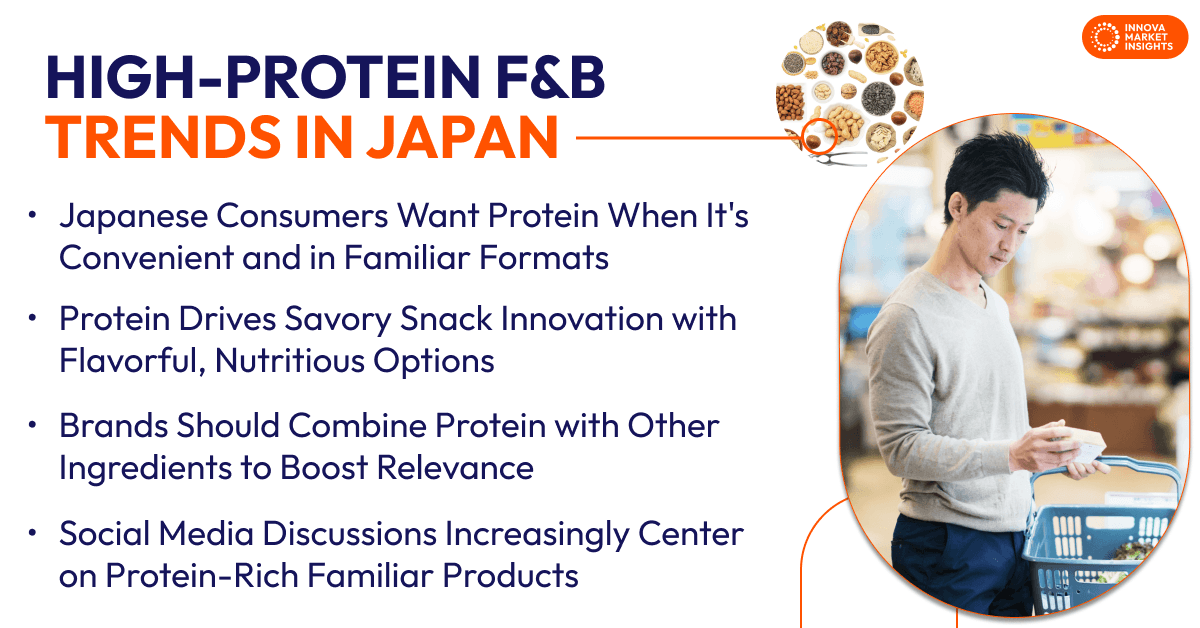
According to Innova’s social listening data, Japanese consumers have an appetite for protein when it’s easily accessible and found in familiar formats. This is reflected in consumer conversations indicating growing interest in high-protein options that can be incorporated into daily nutritional routines. These social media discussions are increasingly centered on protein-rich versions of familiar food and beverages. However, the focus is on offerings that can deliver on fitness goals, satiety, and balanced diets. There is also higher online engagement in categories like snacks that balance convenience with indulgence and nutrition. Young Millennials dominate these discussions, elevating high-protein food and beverage options into routine dietary choices.
Which Category is Feeling the Pressure for Protein Innovation?
High- protein trends are impacting the savory snacks aisle, as a response to consumer desire for flavorful options that support both nutrition and on-the-go lifestyles. For example, the Oyatsu Company’s Body Star Protein Snack series features delectable flavors, such as BBQ and consommé, that provide 20g of protein per bag. Their Crispy Texture Protein Snack also comes in sour cream and onion and curry flavors, highlighting how the snack category in Japan is evolving to balance functionality and enjoyment to a greater extent.
How Can Brands Overcome Protein Consumption Barriers?
To overcome the obstacles associated with protein supplements and shakes, brands are embedding protein into familiar, recognizable consumption moments, from meals and soups to hydration solutions. For example, Hikari Miso launched their Protein 10g Miso Soup Cup, an instant soup that consumers can turn to for convenient protein intake. F&B trends in Japan show how easy-to-sprinkle protein products are also enabling consumers to add protein to everyday meals, by sprinkling granulated soy proteins over any dish.
What Should Brands Consider to Maintain Consumer Relevance?
F&B trends in Japan indicate that protein alone will not be enough to drive the market. Even Gen Z, the most receptive generation, only cites protein as one of the most important claims 13% of the time. Thus, brands should look to combining protein with other ingredients, with combination offering the strongest answer to the question of maintaining consumer relevance. For example, Japanese brands are repositioning staple cereals as healthier or guilt-free options by featuring both high protein content and reduced sugar.
Which Other Categories Should Protein Innovation Target?
Beyond nutrition, high-protein trends are also moving into the beauty and wellness space. Combining ingredients like biotin and GABA along with protein, fiber, and fermentation within a single product can elevate value. SOY PROTEIN beauty’s protein blend promotes high-protein plus beauty support ingredients. Brands who are also to elevate both functional and cultural value will be the ones that win over consumers.
What’s Next for High-Protein Market Trends in Japan?
Protein growth in Japan will be impacted by deeper integration into familiar foods and beverages, rather than supplements. As consumers continue to prioritize taste, convenience, and routine, brands will be expected to new product development to fit naturally into daily occasions like snacks and hydration. Japanese consumers are also interested in multi-functional protein for holistic health and beauty, offering another pathway for new product development. There is also a growing opportunity to redefine indulgence and convenience, where high-protein, low-sugar, and clean-label formulations can offer guilt-free indulgence.
This article is based on Innova’s Trending in High-Protein F&B in Japan report. This report is available to purchase or with an Innova Reports subscription. Reach out to learn more.