



July 8, 2026 – Many European consumers snack regularly. Europeans consume snacks for reasons such as convenience, emotional support, and, increasingly, as a replacement for meals. On the other hand, some European consumers are reducing their snack consumption to improve health, with commonly used ingredients like fat and sugar being perceived as low- nutrient ingredients. However, brands are seeing healthy snack formulation as an important strategy, with nutrition boosts, such as higher protein and fiber, being sought by consumers across Europe in snacks. Innova Market Insights discusses these consumer snacking trends in Europe, analyzing consumer research and new product development.
What’s Driving Snack Consumption in Europe?
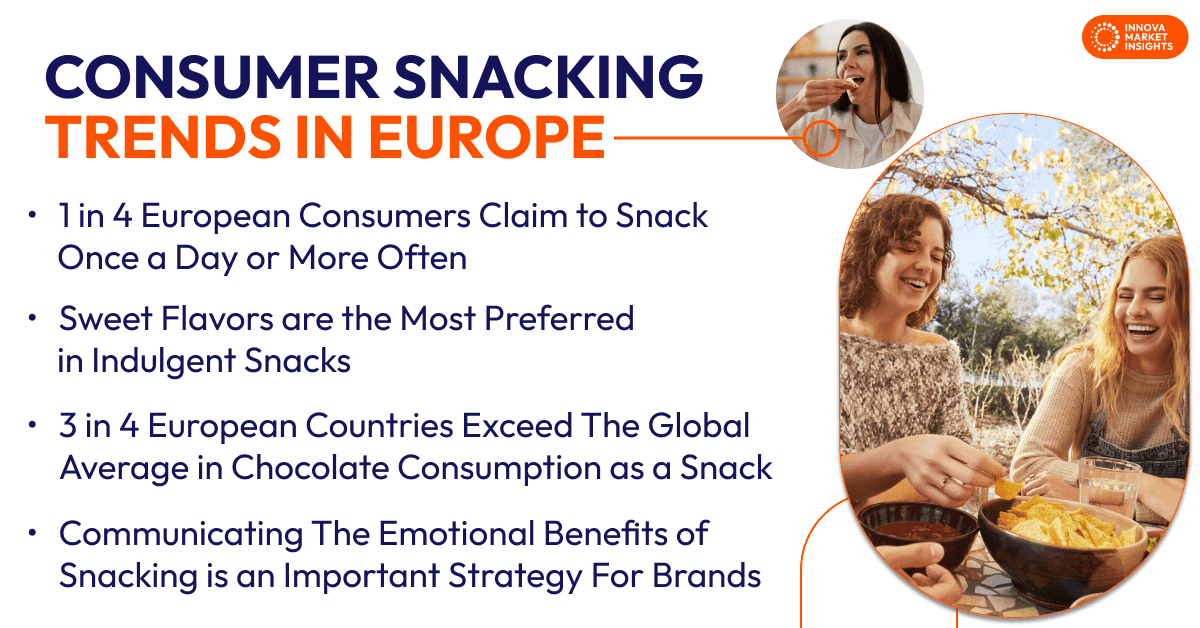
1 in 4 European consumers claim to snack once a day or more often, and many are replacing meals with snacks, notably among the younger generations, Gen Z and Millennials. Several factors are fueling this trend, such as changing lifestyles and a wide variety of portable snack formats. For consumers in Europe who are snacking more often, most are doing so to relax. How snacks make consumers feel is key for brands to communicate, with consumers across Europe wanting to know that snacking will bring happiness and comfort.
Why Are Some Europeans Snacking Less?
For European consumers who are snacking less often, health is the main deterrent. Therefore, healthy snacking formulations are an important strategy for brands, with Europeans being swayed not only by the reduced use of what are perceived as low nutrient ingredients, such as sugars and fats, but also nutrition boosts, like higher protein and fiber.
How Does Snacking Bridge the Gap Between Indulgence and Health?
Most Europeans enjoy indulgent snacks as a treat. Flavor profiles are key in indulgent snacks. Sweet flavors are the most preferred by consumers in Europe in indulgent snacks, ahead of salty tastes. In healthy snacking, consumers are most interested in products with fewer bad ingredients and nutritional boosts. However, it is the limiting of sugar and fat that most consumers think makes a snack food healthy.
Which Snacks Are Europeans Choosing?
Chocolate is the top choice of snack in both France and Germany, while Spanish consumers favor nuts, seeds, and legumes, which aren’t in the top 5 in other European countries. 3 in 4 European countries exceed the global average in chocolate consumption as a snack. Moreover, consumers in Europe are pulled between familiar and new snacking routines. This is reflected by 51% of European consumers saying that a flavor they know and love makes them interested in trying a new snack, while 36% say that a new flavor makes them interested in trying a new snack.
When and Where Are Europeans Consuming Snacks?
When asked about the location from which they most typically purchase their snacks, supermarkets and convenience stores were the dominant channels for Europeans, with 56% buying their snacks from supermarkets. As for when, between-meal occasions are key snacking times for consumers in the European market. The afternoon, between lunch and dinner, is the most popular occasion for Europeans to consume snacks. This is followed by the evening after dinner and in the morning between breakfast and lunch.
What Are Flavor Trends in European Consumer Snacking Trends?
Flavor remains the top attribute for European consumers in snacks. While sweet flavors win out in indulgent snacks, creating a multiflavored taste profile can add to the eating experience. For example, Rausch recently launched Raspberry in Ruby Chocolate in Germany, which combines the fruitness of sun-ripened raspberries with the sweet elegance of ruby chocolate. On the texture side, creamy is the most indulgent texture for consumers in the European market, but crispy is also important. While taste is important, European snackers are also mindful of price when buying snacks, meaning brands should look to balance flavor innovation with value for money in the European snacks market.
What Are Ingredient Trends in European Snacks?
Sustainable and local ingredients are the most important ingredient aspects of snacks for consumers in Europe. Non-GMO, unprocessed, and organic are also important considerations for European snack consumers. Protein and fiber are commonly sought in snacks by European consumers, reflecting a broader trend of seeking these ingredients in their everyday diets. For example, White Chocolate Protein Pops is a recent launch in Hungary, balancing the indulgence of white chocolate with the nutrition boost of protein in a snack. However, limiting bad ingredients is preferred over nutrition boosts, with 1 in 3 European consumers saying limiting ingredients that are bad for them is the best way to make an indulgent snack healthier. For example, limiting sugar, fat, and salt. Snack brands in Europe are recognizing this and incorporating messaging that highlights reduced bad ingredients in their marketing. For example, Ahead Low Sugar Gummies, recently launched in Germany, highlights having 97% less sugar and 58% fewer calories.
What Are Packaging Trends in the European Snack Market?
Communicating the emotional benefits of snacking is an important strategy for brands. Packaging is a way to do this. For example, a snack launch from brand KP in the UK states on its packaging: “The perfect evening treat: relax, unwind and grab a handful of happiness”. Packaging innovations are also an area of interest for 43% of European consumers, with increased interest in convenient, on-the-go snacking formats. One trend is making snacks mini to help consumers with portion control. For example, Quorn Protein Bites come in a handy mini bag that consumers can grab on-the-go.
What’s Next in European Consumer Snacking Trends?
Many European consumers snack daily and some consumers, particularly Gen Z and Millennials, are using snacks to replace meals. Therefore, we can expect more nutritionally complete snacks, with protein, fiber, and vitamins in convenient formats. Europeans also turn to snacks for emotional support, which will likely lead to more snacks that target specific emotions, such as calm, comfort, and relief. While consumers enjoy indulgent snacks, demand for healthier options is growing. Therefore, brands will likely focus on healthier formulations, reducing sugar and fat, as well as fortifying snacks with higher fiber and protein. To support convenience, innovation will also focus on new snack formats and packaging, with good value for money as a key consideration for innovation to cater to price-sensitive snack consumers. In snack flavors, emerging flavor profiles, like swicy, sweet and sour, will excite consumers and appeal to the demand for novelty, especially in the subcategory of confectionery. Brands that combine familiar tastes and new experiences while offering healthy benefits in a convenient format are likely to attract more consumers in the European snack market.
This article is based on Innova’s Snacking Behavior in Europe report. This report is available to purchase or with an Innova Reports subscription. Reach out to learn more.