



July 7, 2026 – Fiber can be examined through the lens of lifestyle, wellness, consumer needs, formulations, and sensory features.
How Is Fiber Innovation Expanding into Everyday Lifestyles?
Fiber innovation can be expanded into formats for lifestyles and functions. This positions fiber beyond wellness and into formats for snacking, active nutrition, and drinks. Fiber is functional and gut-friendly, and its everyday use can be easy, enjoyable, and compatible with today’s lifestyles. Innova consumer trends research shows that consumers want more fiber in snacks, creating opportunities for brands to include fiber in savory snacks, fun snacks, and indulgent snacks. This makes including fiber more convenient and enjoyable. Beverages like carbonated soft drinks and coffee are another target for fiber and the related prebiotics. These types of beverages are familiar to consumers, offer gut health support for wellness, and combine nutrition with daily routines and fun. Sports nutrition and active lifestyles seek products for holistic wellness, including those that contain fiber for digestion and gut health, that attract both fitness enthusiasts and everyday consumers.
How Is Fiber Supporting Holistic Health and Wellness?
More and more, consumers link fiber to wellbeing and health goals. Fiber fits into holistic wellness because of its association with digestive health, energy, immunity, mental health, and focus. When fiber innovation is combined with probiotics, prebiotics, postbiotics, and other functional ingredients in familiar food and beverage formats, it supports health and lifestyle in a comprehensive way that matches consumer lifestyles. Consumers view products with plant-based ingredients as more natural and less processed. This opens the door for more familiar plant-based fiber ingredients such as oat fiber, acacia, and cassava root. Consumers today also are looking to manage their stress, improve their focus, and have more energy. So brands with prebiotic fiber ingredients can emphasize mind-body benefits. This can be enhanced by adding caffeine, adaptogens, and botanical ingredients to fiber-containing products to support the gut-brain connection, as well as brain health, emotional health, and overall wellbeing.
How Are Advanced Fiber Systems Driving Sustainable Innovation?
Global consumers want personalized nutrition and health. Fiber-containing food and beverage products can be targeted to meet overall consumer wellness needs, as well as their needs for personalized nutrition, ways to manage their appetite, and functional nutrition. Technologies in processing and products with multiple functional benefits help food and beverage products to support wellness, be more useful, and be more specialized. To support personalized nutrition, fiber ingredients can be targeted toward life stages and consumer wellness goals. This goes beyond fiber’s traditional gut health relationship into functional nutrition for fullness, energy, comfort, and everyday wellbeing. Products that deliver fiber along with functional ingredients such as enzymes and -biotics offer purpose-driven, individualized nutrition solutions. Another opportunity for fiber innovation is to focus on benefits related to use of GLP-1 drugs, namely satiety, managing cravings, and nutrient density. Functional fiber ingredients can be added into smaller-portion beverages, meals, and snacks that are balanced, convenient, and easy to drink or eat. Technologies using enzymes and hydrolysis can make fiber more digestible, absorbable, and functional. Processing methods that are more precise enable brands to offer higher concentrations of fiber ingredients that are palatable, easy to consume, and rich in nutrients for consumers of all ages and lifestyles.
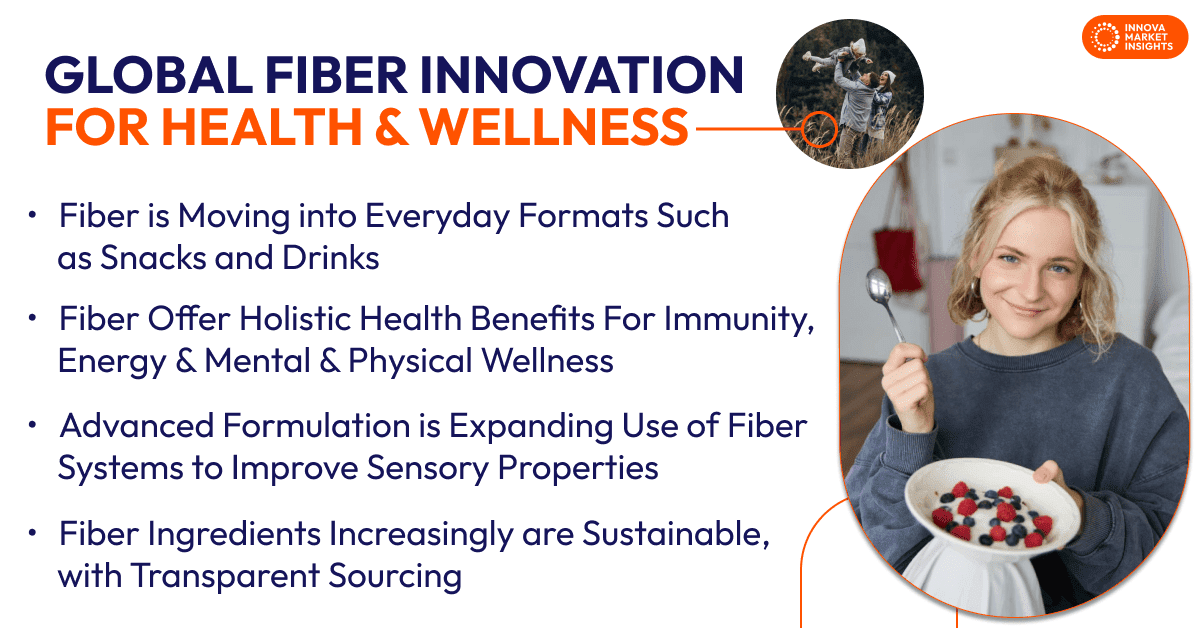
Fiber Formulation Becomes More Advanced and Sustainable
Fiber systems that are sustainable and advanced expand opportunities for formulation of multifunctional, sustainable fiber systems. Brands can innovate based on science and efficient use of resources to create different types of fiber ingredients, including HMOs and upcycled fiber ingredients. HMOs are linked to infant nutrition but can offer digestive and immunity support to consumers of all ages. Products that combine prebiotic fiber ingredients with HMOs strengthen support of the microbiome and offer additional benefits. The core principle is to expand from use of single fiber ingredients to creating fiber systems with multiple fiber components. One example is to combine insoluble fiber and soluble fiber to benefit nutrition, digestion, support of microbiome, and sensory properties such as texture. Benefits of using upcycled fiber ingredients for functionality and wellness positioning include reducing waste, supporting sustainability, and having opportunities to be transparent regarding ingredient sourcing.
How Is Fiber Improving Taste, Texture and Sensory Experience?
Formulation of plant-based and sugar-reduced food and beverage products can present sensory challenges. Fiber ingredients can be used to make food and beverage experiences more indulgent and enjoyable by improving mouthfeel and offsetting sweetness. Other sensory benefits can include more balanced sweetness and reduced bitterness. Some fiber ingredients can be gritty, so ingredients formulated to be less gritty help products to taste creamier and smoother. These fiber ingredients and next-gen fiber systems help support products that are functional, indulgent, and clean label. Fiber systems also can help reduce sensory challenges with off-notes and aftertaste. Global consumers are looking for natural sweetness and healthy indulgence, made possible with fiber ingredients such as FOS. Prebiotic and soluble fibers plus sweeteners can be formulated to deliver a sugar-like sensory experience while balancing sweetness and reducing bitterness.
What’s Next for Fiber Innovation?
Expect fiber innovation to expand into more categories, including snacks, beverages, and active nutrition, and to grow beyond traditional gut health benefits and categories. Watch for expanded holistic health positioning into energy, immunity, brain health, and overall wellbeing. Interest in plant-based could provide broader opportunities for fiber. Consumers globally are likely to seek more targeted fiber solutions for personalized wellness and to match their lifestyle and nutrition needs. Specialized fiber ingredients can support benefits such as satiety and functionality. Advances in ingredient technologies, including sustainable ingredient sourcing, fiber combinations, and microbiome support, will help manufacturers to formulate multifunctional fiber systems with boosted nutrition and sensory benefits. The sensory properties of healthy products will improve, with better palatability and mouthfeel. This will help satisfy consumer desire for products that are plant-based and have less sugar.
This article is based on Innova’s Innovation in Fiber – Global report. This report is available to purchase or with an Innova Reports subscription. Reach out to learn more.