



August 24, 2026 – Personalized nutrition reflects the trend where people are turning to nutrition as support for overall health. It refers to the use of diet, nutrition, and supplements that are customized for an individual’s specific health condition, genetics, lifestyle, or medical background. This approach is used to improve treatment and overall health. Clinical nutrition is also moving from broad approaches to personalized strategies. Innova’s Trending in Patents on Personalized & Precision Nutrition – Global report goes deeper into the trends influencing the global precision nutrition market and the future direction of innovation and patents.
What Do Patents Reveal About Global Healthcare Trends?
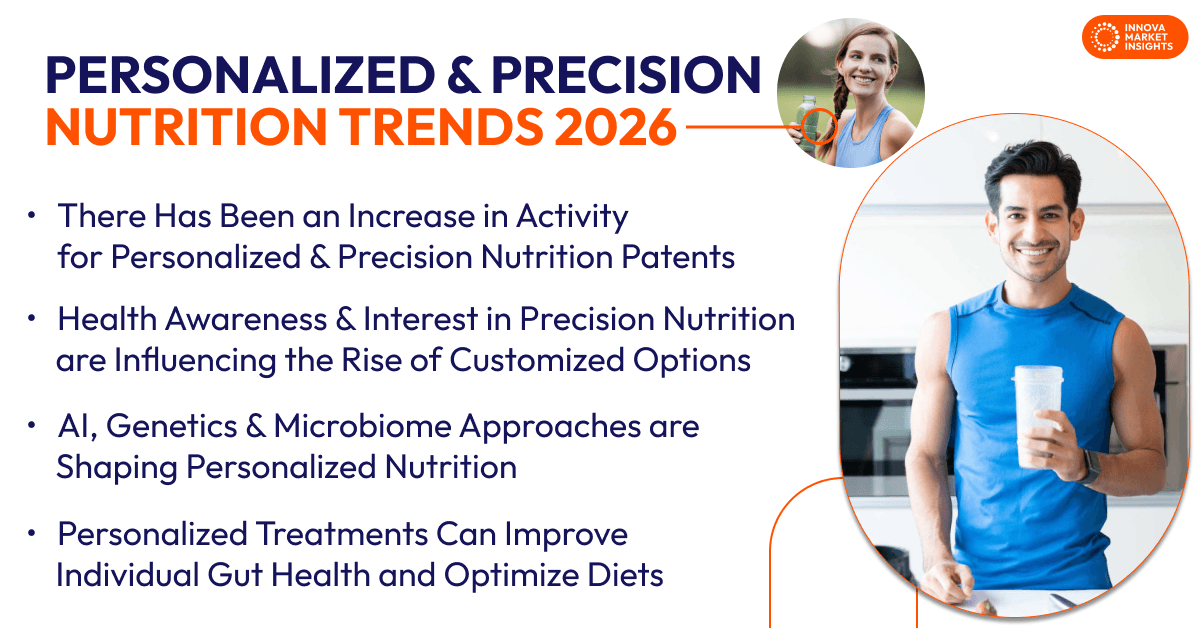
There has been an increase in activity for personalized and precision nutrition patents, highlighting how the precision nutrition market is moving away from generalized approaches to the expansion of personalized nutrition in mainstream healthcare. Growing health awareness and the interest in precision nutrition has influenced the rise of customized supplement options, personalized meal plans, and condition-specific products tailored to individual consumer needs. AI and wearable devices are also enabling greater personalization and contributing to customized approaches to medical nutrition. Population aging and the prevalence of chronic diseases also mean more and more consumers are looking for tailored formulations and active nutrition to meet their specific needs.
Which Trends are Shaping Personalized Clinical Nutrition?
Integrated AI, genetics, and microbiome approaches are among the strategies shaping personalized clinical nutrition. For example, Innova’s precision nutrition trends research highlights how AI and machine learning are able to contribute to real-time health tracking and personalized dietary recommendations. Microbiome analysis and intestinal microbiota profiling are also growing precision nutrition trends to improve the precision of targeted healthcare approaches. Nutrigenomics is another approach that uses genetic data and personalized, diet-based products to reduce disease risk, improve health, and address specific conditions.
How are Food and Nutrition Companies in Driving Innovation?
Innovation in personalized clinical nutrition is largely fueled by food and beverage leaders, nutrition companies, and research organizations. Nestlé S.A. for example is a major player in patent publications. Their activity highlights age-specific nutritional compositions for infants and young children. They also highlight the use of digital platforms to assess health conditions and personalized dietary recommendations.
How are Approaches Changing Clinical Nutrition?
Clinical nutrition reflects a shift from broad dietary guidelines to tailored, patient-centric nutrition approaches. Within the realm of personalized and precision nutrition, gut health, breast milk, nutritional composition, and real time monitoring are the key topics in patent publications. When it comes to the microbiome, designing personalized treatments can improve consumers’ individual gut health and optimize their diets. This is based on a gut food score that can be calculated from changes in the microbiome. Wearable devices and real-time monitoring with digital health analyses can also provide more effective forms of personalized nutrition, alongside dietary recommendations based on data interpretations.
Which Advancements are Driving the Global Personalized Nutrition Market?
Genetic profiling and AI-driven data are advancing precision in personalized nutrition. In genetic profiling, nutrigenomics patents are focused on combining genetic profiling with tailored dietary recommendations. The aim is to address genetic differences tied to responses consumers have to nutrients, which can impact health and lead to chronic health conditions. Therefore, these patents and innovations can help consumers manage diseases or even prevent them, while improving the efficacy of personalized nutrition approaches.
Patents are also demonstrating how analysis can be conducted to offer data-driven approaches to supplements. Compared to traditional supplements that are broader, AI can be used to support precise nutrient delivery systems that can lower the consumption of excess nutrients that may occur in generalized supplements on the market.
What’s Next for Innovation in the Personalized and Precision Nutrition Market in 2026?
Further advancements in AI are expected to impact the personalized and precision nutrition market in a few key areas. For example, it can enable easier integration of lifestyle data, clinical records, and microbiome profiles to output increasingly individualized dietary recommendations. However, brands must continue to keep in mind clear rules for data sharing to build confidence and expand these kinds of personalized nutrition programs. Innova’s research also shows that developing more unified platforms will allow for more adaptive and customizable systems.
This article is based on Innova’s Trending in Patents on Personalized & Precision Nutrition – Global report. This report is available to purchase or with an Innova Reports subscription. Reach out to learn more