



October 8, 2026 – With rising economic pressures, climate concerns, and global uncertainty, consumers are becoming increasingly intentional about their food and beverage choices, impacting their expectations across the global market. Health needs becoming more and more specific, perceptions of value are shifting, and new technologies are paving the way for new approaches to innovation. Drawing on global consumer research, new product launch tracking, and social listening data, Innova Market Insights has identified the 10 food and beverage trends set to shape innovation in 2027 and beyond.
Trend #1 – Nutrient Density Design
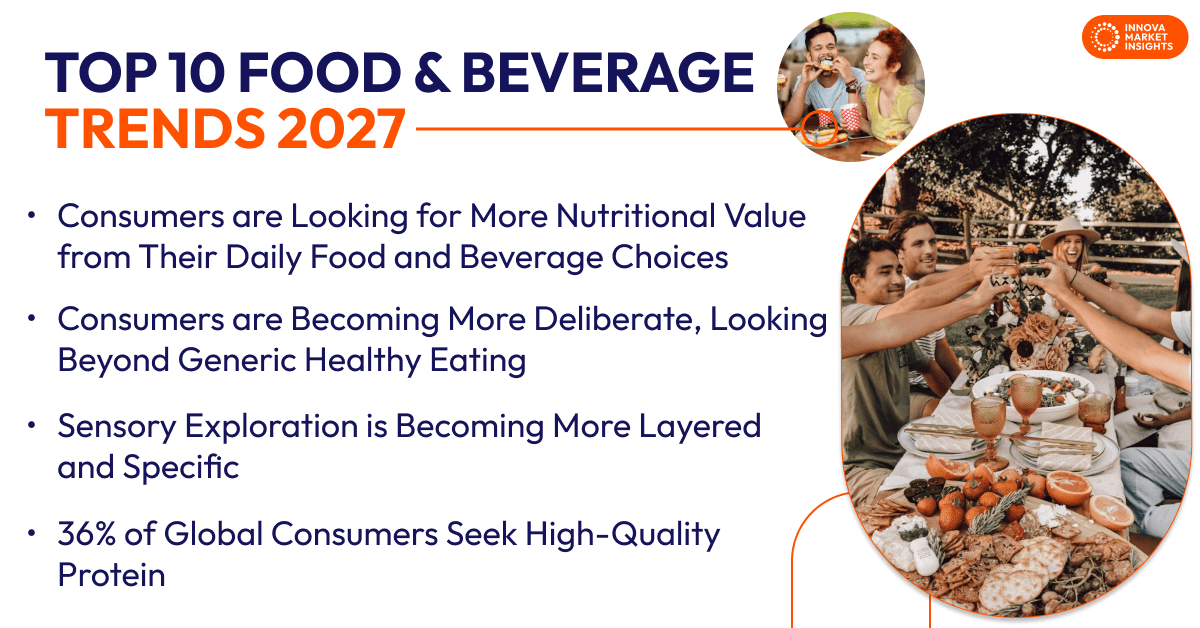
Consumers are looking for more nutritional value from their everyday food and beverage choices, putting greater focus on what products add, what they reduce, and how effectively those benefits are communicated. Nutrient density is therefore one of the top trends for 2027. 59% of consumers globally say that they read all or most of the nutritional information on packaging, paying close attention to sugar, protein, and fat. As a result, reformulation is accelerating and outpacing new innovations in new food and beverage product launches, with brands reducing negatives, removing scrutinized ingredients, and adding positive nutrition.
Trend #2 – Precision Protein
Protein is no longer about quantity, as consumers and brands are increasingly prioritizing quality, source, digestibility, and the right formats for specific needs and occasions. In fact, 36% of global consumers seek high-quality protein, and 29% seek complete proteins. Dairy-based protein remains a major space for innovation, and collagen is emerging as a smaller but faster growing segment. Protein trends also demonstrate how brands are also continuing to diversify plant-based alternatives.
Trend #3 – Sensory Playground
Sensory exploration is becoming more layered and specific. Consumers are looking for distinctive flavors, unexpected formats, and experiences that engage multiple senses, with 56% seeking interesting texture combinations. Texture continues to lead as a top sensory cue, but aroma and color add new dimensions to consumption experiences before the first bite. A majority of consumers are also interested in food and drink inspired by different cultures or regions. Thus, ingredients and flavors are moving from global curiosity to elements in everyday routines.
Trend #4 – Metabolic Edge
Innova’s research on food trends 2027 indicates how consumers are becoming more deliberate in their selections, looking beyond generic healthy eating. For instance, 39% of global consumers want food and drink products to maintain steady energy. Alongside energy, blood sugar balance is also becoming a driver of food choice, pointing to increasingly specific expectations around metabolic health. As GLP-1s expand, its impact on food is also becoming more complex. However, Innova’s trends research shows that reduced appetite is not eliminating the desire to treat.
Trend #5 – Longevity Engineering
Food and beverages are being reframed for the long game, as consumers think further ahead about healthy aging. Muscle, bone, and joint support are becoming core longevity benefits, with 35% of global consumers conveying they want help staying strong as they age. The ingredient toolkit for longevity is also expanding, with ingredients like creatine gaining momentum.
Trend #6 – Peace of Mind
Mental wellness benefits are moving into everyday food and beverage products, from calm to stress relief and emotional balance. Consumers want to remain sharp without overstimulation, so focus positioning and nootropic ingredients are moving into everyday formats. The definition of comfort also varies per region, from sweet to umami or soothing mouthfeel. Brands that understand these differences will be better equipped to support consumers.
Trend #7 – Ferment Forward
Fermentation is evolving from familiar flavors and a mode of preservation to a platform for gut health and ingredient technology. 38% of consumers globally are interested in fermentation for supporting gut health, and familiar ferments, such as kefir and kimchi, can serve as recognizable entry points as fermentation expands across categories and formats. Food trends 2027 also show how brands are using fermentation to build on flavor and texture to create depth across foods and beverage offerings.
Trend #8 – From Soil to Shelf
Sustainability continues to move upstream, as brands place greater focus on how ingredients are grown, where they are sourced from, and how farming can strengthen supply in the long-term. Regenerative farming is moving into the product story, and the strongest brands are connecting farming practices to taste, quality, and impact. In fact, 27% of global consumers say that information about farming practices would increase their trust in a food or drink product. However, proof will be key.
Trend #9 – Radiance Rituals
Beauty routines are becoming edible, with benefits moving beyond specialist supplements into daily food and beverage choices. This is reflected across social media, with global conversations about beauty-enhancing foods. Although collagen remains a familiar ingredient, biotics are offering another route to beauty through microbiome positioning. 63% of global consumers say they noticed benefits in areas like energy, skin, or immunity when improving their gut health.
Trend #10 – Prompt to Plate
AI, social media creators, and social signals are shaping how consumers choose and discover food trends in 2027. Consumers are increasingly using AI to simplify food choices, and 49% are interested in AI-generated food and drink recommendations tailored to their preferences. Social media feeds are also shortening the path from discovery to trial, prompting consumers to recreate, search for, and buy what they see.
This article is based on Innova’s Top 10 F&B Trends 2027 – Global report. This report is available to purchase or with an Innova Reports subscription. Reach out to learn more.