



September 2, 2026 – Texture in food and beverage plays a key role in the global market, influencing everything from functionality to consumer engagement. Consumers increasingly view texture as a link to indulgence, emotions, and health. Brands are taking advantage of fast-growing categories, and for consumers seeking novel food and beverage experiences, fusing category textures is an opportunity to drive trial and memorable experiences. Innova’s Innovation in Textures – Global report details the latest texture trends and how brands are adapting texture to align with evolving preferences.
How Are Texture Trends Driving Indulgence in Food and Beverage?
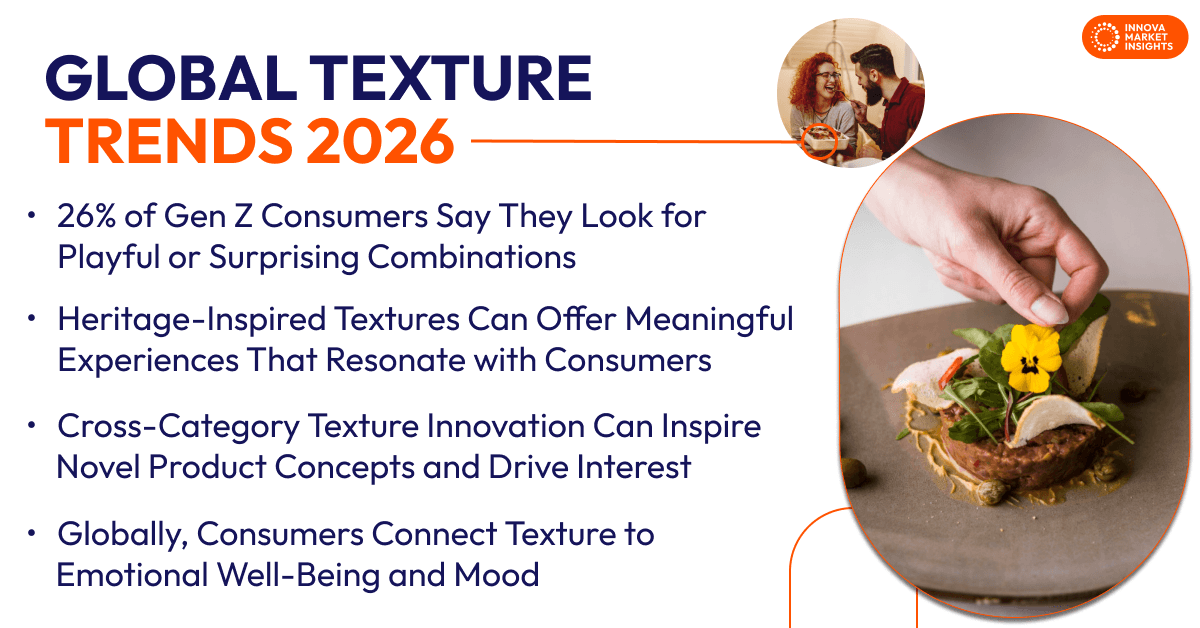
Global texture trends in 2026 reveal how brands are elevating indulgent experiences by designing surprising texture contrasts to elevate indulgent experiences. Contrasting textures create surprise, and 26% of Gen Z consumers say that playful or surprising combinations are one of the approaches to sensory enjoyment they are looking for in an indulgent food or beverage experience. A majority of consumers say they want to explore new things, but simultaneously, the role of familiarity remains an important factor for consumers. Thus, expanding texture ranges for both adventurous and familiarity-seeking consumers allows brands to capture broader occasions and appeal to different consumer preferences.
What is the Relationship Between Texture, Emotional Well-Being, and Mood?
Globally, consumers connect texture to emotional well-being and mood. 24% of consumers say that indulgent food and beverages improve their mood by providing a sensory escape or moments of self-care, by nourishing their emotional or mental well-being. New product development in the texture market around positive moods can therefore deepen consumers’ connections and the perceived value of products.
How Can Category and Texture Considerations Drive Consumer Interest?
Capitalizing on fast-growing categories with targeted texture innovations can capture consumer attention. For instance, enhancing soup with layered textures like creamy bases and crunchy inclusions can create a more satisfying or premium experience. In sports nutrition, expanding with indulgent formats like crispy chips can combine functional nutrition with both familiar and satisfying texture experiences. To create distinctive launches, fusing textures across different categories is another approach. 1 in 4 consumers globally say that they are interested in trying snacks with formats that are new to them. Therefore, cross-category texture innovation can inspire novel product concepts and drive interest. Boba mochi, for example, exemplifies this texture trend.
What Role Does Occasion Play in Delivering Texture Experiences?
According to Innova’s texture trends research, tailoring texture experiences for different occasions, both daily and celebratory, creates greater opportunity to differentiate products and enhance product relevance. From coffee breaks to on-the-go breakfasts or snacking, texture profiles are increasingly tailored to complement specific moments. At the same time, consumers also choose indulgence to celebrate special occasions. Multiple, complementary textures, such as creamy, crunchy, and soft can create premium experiences. Decorative inclusions can also enhance seasonality and value in texture innovation.
How Are Food Texture Trends Supporting Healthier Indulgence?
For brands, developing healthier indulgence without compromising texture is essential. 32% of consumers say that natural ingredients make an indulgent food or drink experience feel healthier to them. Beyond clean label positioning, natural texturizing solutions and processing technologies can be used to improve mouthfeel and deliver better-for-you products. Fermentation, for example, can improve taste and texture. Texture trends also indicate that cleaner ingredient formulations also help overcome concerns about processing and strengthen overall appeal. Weight management is another priority for consumers, and enhancing texture plays a role in improving the appeal of functional food and beverage products, such as high in protein or nutrient-dense formulations.
How Can Texture Be Used in Launches to Elevate Appeal Beyond Sensory Appeal?
Beyond sensory appeal, texture design is also expanding past sensory appeal to experiential and functional purposes. For example, familiar texture plays an important role in preserving authenticity of traditional foods. In fact, 34% of global consumers say that traditional food and beverages evoke a sense of nostalgia for them. Using heritage-inspired textures can therefore allow brands to offer meaningful experiences that resonate with consumers. From an interactive standpoint, combining playful shapes and formats with functional textures can help improve product performance.
What’s Next for Global Texture Trends?
In the global texture market, the demand for both familiar and adventurous textures to appeal to more diverse sensory and consumer preferences. Layered textures and occasion-led formats will continue to share product development. Emotional positioning can also be used to reinforce the role of texture as a means to enhance enjoyment, comfort, and indulgence beyond taste alone. Brands can also expect better-for-you innovations, advances in plant-based options, and weight management support will add extra relevance to texture in order to improve overall product acceptance. Finally, nostalgic and technology-enabled texture strategies are broadening the ways that manufacturers can differentiate products across food and beverage categories.
This article is based on Innova’s Innovation in Textures – Global report. This report is available to purchase or with an Innova Reports subscription. Reach out to learn more