


June 10, 2026 – Beer trends in Europe reflect an overall movement toward leveraging indulgence in F&B. From fruit-forward flavors to craftsmanship-driven brewing techniques and global flavor fusions, consumers in the European market expect premium, authentic offerings that address their cravings. Transparency and functionality are other approaches brands are using, in order to garner consumer trust and cater to multi-occasion beer experiences. Innova’s “Beer in Europe” report dives deeper into these trends and what is driving beer in Europe.
How can beer brands balance indulgence and function?
Beer consumers in Europe are seeking more than just refreshment, and as a result, beer brands are elevating the category into more layered and luxury experiences suited for a range of occasions. For European consumers, flavor is the top driver. Thus, introducing more complexity, ingredient storytelling, and defined taste structures can offer depth to beer offerings, as well as sensory refinement. Beer is also evolving into a multi-layered, indulgence experience. Ingredients like cocoa, caramel, and coffee are increasingly used to create unique taste journeys, while also appealing to consumers seeking comfort or premium moments.
Which strategies can European beer brands employ to enhance consumer confidence?
Brands can boost consumer confidence through transparency, provenance, and precision. More specifically, when it comes to brand trust, purity and quality assurance are key, as 37% of consumers in Europe say that food safety would help better understand a product’s quality. In general, reassurance claims like organic, pesticide-free, and microplastic-free formulations can act as anchors for consumer trust and strengthen brand credibility.
Provenance is another tool to enhance credibility and consumer confidence. Brands are therefore leveraging Europe-grown ingredient credentials to boost transparency and use regional sourcing as an indicator of quality and safety. Moreover, traditional brewing methods can be used as a strategy to reinforce authenticity.
Where does functionality fit into the beer category?
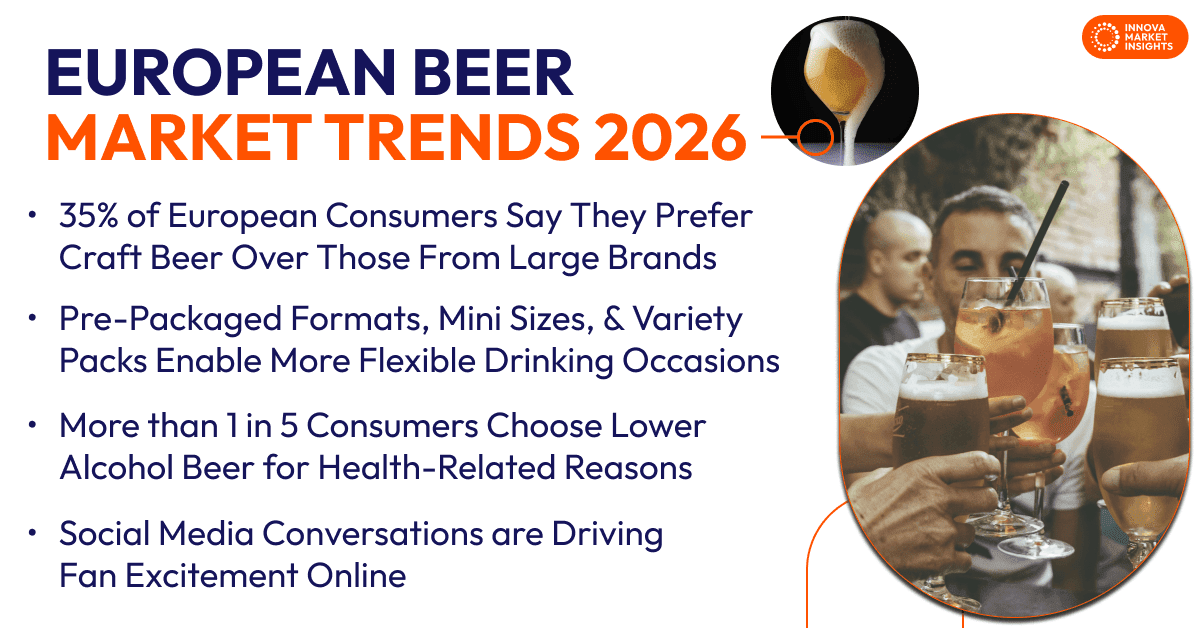
Beer innovation is evolving to include health and purpose driven consumption occasions. More than 1 in 5 consumers in Europe say that they choose beer with lower alcohol percentages for health-related reasons. Alcohol-free beers are evolving, combining low or no alcohol formulations with natural, low-calorie credentials to deliver better-for-you positionings, and craft experiences without compromise.
How can brands leverage craft beers and expertise to stand out?
Brands are also tapping into ingredient stories and advanced brewing techniques to demonstrate craft beer excellence, and 35% of consumers say they prefer craft beer over those from large brands. Hop variety and curated ingredients, for example, can elevate premium appeal, particularly region-specific hops and hand-selected ingredients that strengthen expertise and exclusivity. Brands can also leverage brewing processes as storytelling tools and a means to express quality and differentiation.
What role can packaging play in beer trends and the success of brands?
Beer trends indicate that manufacturers who are able to integrate convenience, collectable appeal, and sustainability into their packaging will succeed. More than one in four European consumers says that packaging that makes drinking alcoholic beverages easier is important to them, and beer packaging is evolving to address these desires. For instance, pre-packaged formats, mini sizes, and variety packs are a few approaches that enable more flexible drinking occasions.
Packaging is also increasingly utilized as a branding tool through limited-edition designs, collaborations, and bold artwork that boost shelf impact. Sustainability will remain a core driver of beer packaging innovation, with brands minimizing plastic components and replacing them with paper-based carriers for eco-conscious brand positionings.
Which approaches to flavor innovation are driving beer trends in Europe?
For flavor innovation, tropical twists and global fusions will drive beer trends in Europe. Tropical fruit inclusions enhance mouthfeel, while also delivering rich textures and an indulgent flavor profile that balances sweetness and tartness. Expanding hybrid beer styles, such as smoothie sours or fruity wheat beers can also promote authenticity and freshness, while also offer a mode of craft differentiation.
Cross-cultural flavor exploration is another opportunity for innovation, alongside region-specific inclusions. This fusion approach balances familiarity with novelty to unlock premium offerings for consumers and is further backed by the fact that 35% of European consumers enjoy trying alcoholic beverages from other countries.
What’s next for European beer trends?
In the European beer market, the opportunities lie in positioning, storytelling, and functionality. Beer is increasingly going beyond indulgence into the active wellness space, with added protein and vitamins. This positions beer as a post-activity recovery drink and enables brand to blur the line between sports nutrition and craft beers. Concept-driven flavors will also be significant to unlock novelty, emotional storytelling, and shareability for consumers. Blending beer with caffeinated energy drinks will be another trend that brands can anticipate, fueling demand for dual-purpose beverages that can appeal to both nightlife and social occasions.
This article is based on Innova’s Beer in Europe report. This report is available to purchase or with an Innova Reports subscription. Reach out to learn more.