


May 18, 2026
What Is Driving Wellness, Storytelling, And Heritage In The Global Alcoholic Beverages Market?
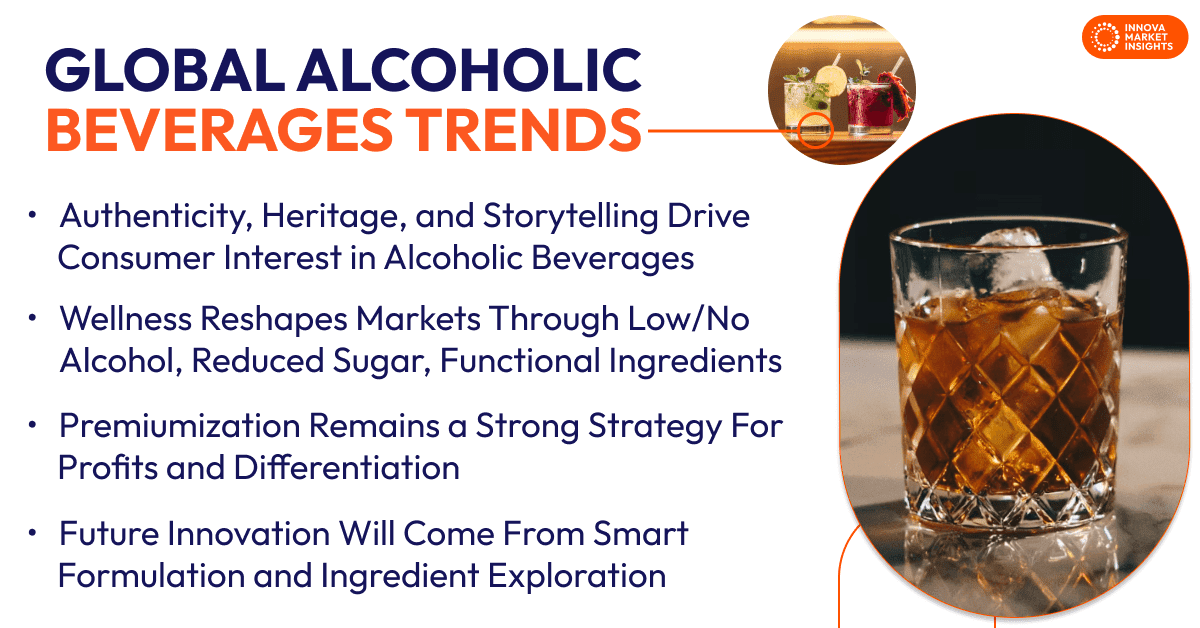
Consumers globally in the alcoholic beverages market want beverages that are real, reflect heritage and craftsmanship, and have stories behind them. Innovation around origin and regional heritage appeals to the globally curious who want to try beverages from countries around the world. Geographical anchoring, traditional methods of production, and storytelling around culture are growing alcoholic beverage trends that allow consumers to enjoy discovery experiences at home. In fact, storytelling, heritage, and quality craft production may matter more than a percentage of alcohol.
Premium, collectible, and limited-edition releases can appeal to consumers in the alcoholic beverages market, especially trend-setters who have niche alcohol preferences. Brands can achieve growth and higher margins too. Another strategy is to offer wellness-oriented low-alcohol and no alcohol launches that incorporate botanicals and adaptogens supporting relaxation. Although many consumers drink more alcohol when they are under stress, alcohol brands can diversify into innovations that relax without alcohol. This allows consumers to enjoy the taste, ritual, and social lubrication associated with alcohol in products that support wellness, promote relaxation, and reduce stress.
How Are Experiential Moments Elevating Alcoholic Beverages?
Experiential moments in the alcoholic beverages market include feelings of wellness and mindfulness, social atmosphere, and heritage. Consumers globally drink at celebrations and social gatherings, so brands need to go beyond flavor to consider format, partnerships, and special holiday product assortments that encourage social sharing. Alcoholic beverages can be elevated around social rituals to be innovative, creative, familiar, and innovative. Formulations with prebiotics, probiotics, botanicals, and other gut-positive ingredients, along with reduced sugar and less alcohol, support healthy lifestyles. Alcoholic beverage brands can utilize modern yet traditional fermentation processes and transparency around ingredients to communicate wellness without making specific health claims. Modernized tradition, creative ingredients, and premium positioning deliver contemporary authentic experiences that also attract younger generations of drinkers in the global alcoholic beverages market. Alcoholic beverages formulated for the moment support social gatherings. Another exciting approach is to update classic alcoholic beverages with contemporary flavors, innovative new ingredients, and different formats. Instead of standing alone, alcohol can be repositioned to support social occasions and experiences.
How Does Packaging Enable Brands To Differentiate And Go Premium In The Alcoholic Beverages Market?
Alcoholic beverage trends indicate that packaging can create a premium image. It also can communicate convenience and sustainability. Changes like lighter weight cans and packaging, eco-labeling, and graphic design communicate portability, a modern approach, and environmental responsibility. They also build trust and enable brands to increase prices to more premium levels. Consumers in the global alcoholic beverages market are moving away from glass toward lighter weight cans and other packaging that is portable and has less environmental impact. To boost environmental responsibility, brands can use sustainable packaging, on-pack credentials regarding sourcing and recyclability, and circularity. This builds trust and loyalty that lasts. Portion size, moderation, and eco-friendliness are supported by single-serve cans and resealable brick cartons. They signal that alcohol is convenient for everyday rather than only for rituals and social occasions. Innovations in packaging also elevate brands and allow them to differentiate.
What Are Formulation Strategies To Employ For Future-Proofing?
Smart formulation can future-proof alcoholic, low-alcohol, and no alcohol beverage choices. These can include innovations around flavor as well as formulations that are different structurally. Newer tools, such as precision fermentation, functional ingredients, hybrid bases, and alcohol reduction technologies, allow for competitive advantage in the alcoholic beverages market through storytelling and premiumization. Precision fermentation currently is a niche technology to boost hop aroma in low alcohol beer. However, it has a lot more potential as a resource in a time of climate change that impacts grain and hops supplies. Precision fermentation helps control the generation of alcohol, produce alternatives to ingredients, improve consistency in flavor, and produce alcoholic products more efficiently. Another area to consider is alcoholic beverages and lower alcohol drinks with purpose, drawing from bioactive ingredients like antioxidants, coconut water, and electrolytes. These products enhance lifestyle and support moderation in addition to being indulgent. Alcoholic beverage trends show that changing and combining alcoholic beverage bases also support differentiation, storytelling, premium pricing, and a competitive edge. Brands can combine different beverage systems and add savory ingredients for new occasions, plus sensory and textural stimulation.
Why Is Multi-Sensory Flavor The Next Wave In Alcohol Innovation?
Innovation in multi-sensory flavors that are bold and globally inspired, like botanicals, tropical fruits, and combinations from different cultures, will help differentiate alcoholic beverages through multisensory experiences and adventures. Heritage flavors combine with swicy and global to differentiate, improve quality, and enable premium positioning. Alcoholic beverages lag behind food and beverage innovation, so flavor excitement offers opportunities. Flavor inspiration can come from street-food classics incorporated into flavored spirits, hard seltzers, and other beverage formats. Consumers globally are looking for bold and layered flavor adventures, and these can be a part of alcohol brands. For example, heat, sweet and spicy, and culinary flavor combos offer adventure to consumers in the alcoholic beverage market.
What’s Next For The Global Alcoholic Beverage Market?
In the global alcoholic beverages market, demand may increase for on-demand drinks that can be personalized, customized, and made at home. Augmented reality may be a feature. For wellness, alcoholic beverages could support energy, relaxation, or cognitive performance. Alcoholic drinks are likely to continue blurring lines between premium positioning, social situations, and wellness. Specialty products could be packaged for one-off consumption. Expect greater use of QR codes, NFC-enabled packaging, and AR to enhance drinking engagement through games, storytelling, and recipes. Packaging design will help tell stories, strengthen connections with consumers, and boost loyalty. Health functionality will also be enhanced with ingredients for gut health, immunity, and cognition. Multiple drink bases can elevate the drinking experience in the alcoholic beverages market. Expect more adventure from new ingredients and multi-layered flavors.
This article is based on Innova’s Innovation in Alcoholic Beverages – Global report. This report is available to purchase or with an Innova Reports subscription. Reach out to find out more