


June 8, 2026 – Table sauces and dressings are designed to enhance the taste and texture of foods, so it comes as no surprise that these aspects are what the category is centered around. Although taste remains central, naturalness, convenience, and region all play important roles in what European consumers choose to purchase in the dressings and sauce market. Generational viewpoints are also impacting what consumers expect and how brands are approaching innovation. Innova’s “Table Sauces & Dressings in Europe” report explores these trends and the insights brands can leverage when approaching future innovation.
Who Is Buying Sauces In The European Food And Beverage Market?
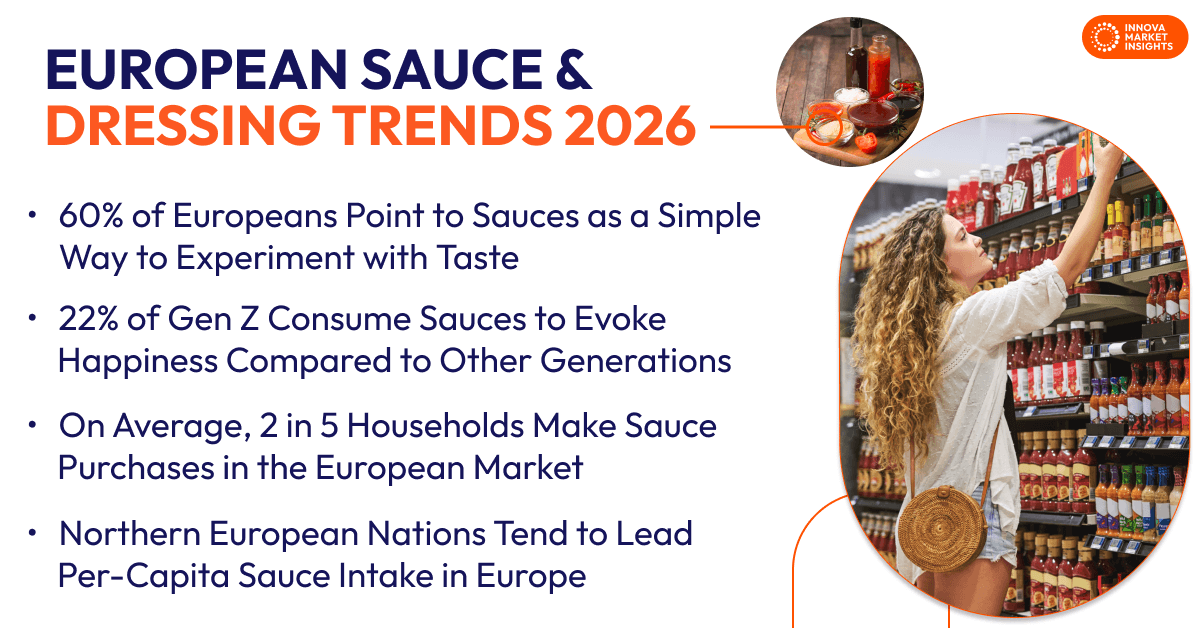
Sauces are a staple in the households of many European consumers. Within the global picture, Europe accounts for less than a quarter of global sauce sales. On average, 2 in 5 households make sauce purchases in the European market, yet penetration tends to skew higher in northern and western regions. Northern European nations also tend to lead in per-capita sauce intake.
What Is The Leading Attribute That European Table Sauce And Dressing?
For consumers in the European dressings and table sauces market, flavor is the single most important consideration in the market. Over half of consumers say they purchase products in this category because they taste good. However, beyond this, 60% of Europeans point to sauces as a simple way to experiment with taste, saying they like to try new food they have never tasted before.
In recent years, hot sauce trends in Europe demonstrate that spicy flavors have increasingly become the go-to choice for many European consumers, with hot and spicy tastes ranking in the top 10 added table sauce and dressing flavors despite being absent from the list in 2021. In particular, specific chili tastes are making a greater impact, suggesting an opportunity to diversify new product development with selective chili profiles.
How Important Is Naturalness To Consumers In The European Sauce And Dressings Market?
The most important positionings for consumers in the European dressings and table sauces market are those related to taste and ingredients. Older consumers are drawn to clean label sauces and natural ingredients, while younger consumers demonstrate interest in positive nutrition claims, with higher responses for protein and fiber. Ethical and natural claims are also relatively important, despite the fact that sauces and dressings tend to carry fewer claims than lots of other food and beverage product offerings on the market.
What Is Another Main Area Of Focus That European Sauce Brands Should Leverage?
Beyond flavor, convenience is another preferred focus for European consumers in the sauce market, as they prefer standard, everyday formulations or products with longer shelf lives. As a result, expanding and diversifying usage occasions will be key to innovation and brand promotion. Kraft Heinz, for example, targets novel applications through recipe advice and videos on its social media. Packaging is another way to target different convenience demands in the European sauce market, as there is almost equal desire for bulk packs and portable or single-serve formats.
Do Gen Z And Millennials Have Specific Preferences In The European Sauce And Dressing Market?
In the European dressings and sauce market, generation plays a key role in preferences and innovation strategy. Gen X and Boomers are more likely to purchase sauces than younger generations. Boomers are also likely to name taste as a reason to purchase, while Gen X tends to consider convenience. In contrast, younger generations, such as Gen Z, take a different approach. They see these products as a means for experimentation. They also lead their older counterparts when it comes to how sauces make them feel. For instance, 22% of Gen Z consume sauces to evoke happiness compared to 17% of consumers in other generations.
Younger generations are also driven by variety, due to their adventurous tastes, and as a result, are more likely to increase purchases in response to varied offerings. That being said, when asked the type of flavor they look for, consumers highlight a range of choices, signaling that while younger consumers favor variety on the shelves, it is also an important element to consumers as a whole.
How Does Region Play A Role In Sauce And Dressing Innovation?
The preferred tastes and applications of sauces and dressings vary from country to country within Europe. This is reflected by NPD and segmentation of new product development in the market. For example, in 2025, hot sauces demonstrated top launch numbers in the UK, while Germany over-indexes in varied table sauces and has a strong mustard presence.
Beyond regional preferences, brands should watch out for Asian inspirations among niche, on-trend flavors. For example, Japanese inspired profiles, such as roasted sesame, are growing in dressings for salads, marinades, and poke bowls. Korean BBQ and wasabi flavorings are all on the rise.
What’s Next For Table Sauces And Dressings Market Trends?
Brands looking to the future of innovation in the European table sauces and dressings market must keep a few key elements in mind. Taste innovation and novelty will continue to push new product development, as new flavor experiences will remain an important avenue for innovation. Understanding local flavor preferences will also be crucial moving forward. Thus, offering local portfolios with regional specific products will continue to drive the sauce market, but at the same time, suppliers can also expand innovation by extending local preferences to wider regions. Regardless of flavor, convenience is another important consideration that should be top of mind for innovators.
This article is based on Innova’s Table Sauces & Dressings in Europe report. This report is available to purchase or with an Innova Reports subscription. Reach out to learn more.