



June 24, 2026 – In the global beverage market, there are four emerging trends set to shape the future of innovation. From emerging citrus flavors to the growing popularity of root vegetables, consumers are looking to balance the familiar with the new. Non-alcoholic fermented beverages are also continuing their growth trajectory, driven by both flavor and sober curiosity. Clean label is also here to stay, with the push for brands across many beverage categories to pare down ingredients to the bare minimum. Innova’s “Beverage Flavor Trends – Global” report examines these trends and suggests where the opportunity lies for brands.
Which flavor is balancing the best of both familiarity and novelty for consumers?
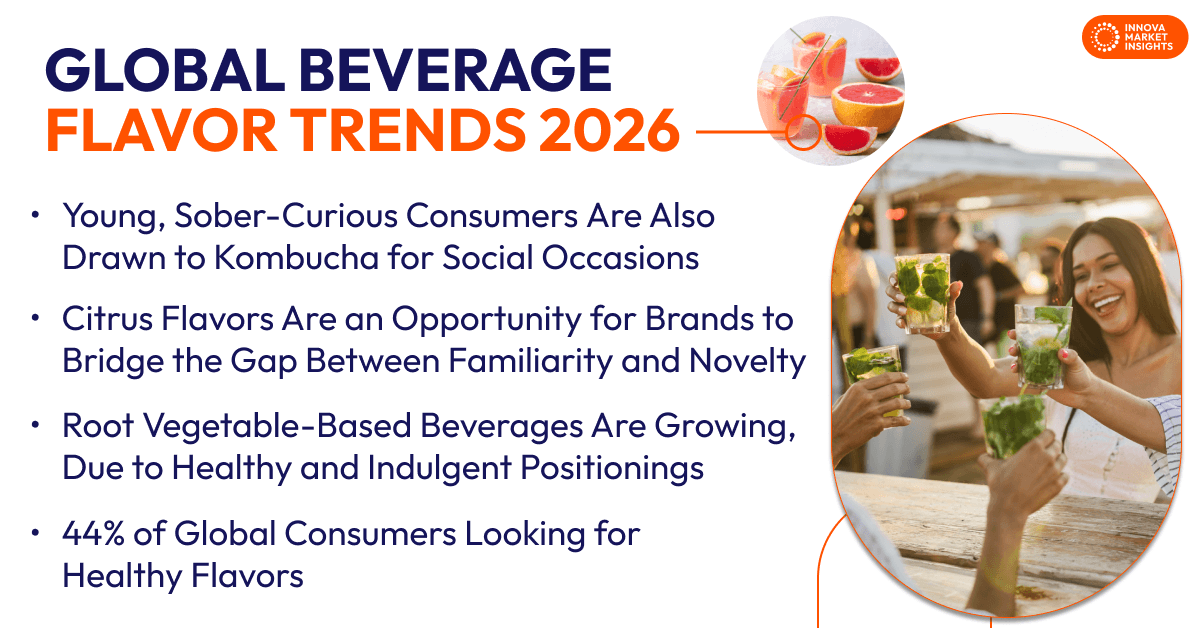
When consumers choose a beverage, the balance between familiarity and novelty is what is driving global beverage trends. Global beverage flavor trends demonstrate that nearly half are drawn to what they know, but 1 in 4 consumers is open to new experiences. Citrus flavors are an opportunity for brands to bridge this gap. The recent rise of yuzu highlights this trend in practice, demonstrating how consumers are looking for more nuance in the category that “exotic” types of citruses can provide. In particular, yuzu is starting to appear more and more in adult beverages.
Furthermore, the growing interest in authentic ethnic flavors could drive the popularity of Southeast Asian citrus flavors, such as kumquat, kalamansi, and kaffir lime leaves. Sumo citrus from Japan is another. Adding texture through yuzu flavored pearls or citrus jelly pieces can also enhance complexity and cater to consumers who desire unique sensory experiences.
How are hot drinks being reinvented in the global beverage market?
Hot drinks are also high on the list for experimentation, and they are being reinvigorated by the demand for healthier alternatives to coffee, tea, and hot chocolate. This is opening up opportunities for beverages, with root vegetable-based beverages growing as a hot beverage trend, due to their ability to be perceived as both healthy and indulgent. Jerusalem artichoke, for example, is a superfood with a delicate, sweet, and nutty flavor that is emerging in new product development, from teas to powders. Ube, a purple-colored yam native to the Philippines, is also lending itself to indulgent beverage innovation. Its vibrant color, creamy texture, and sweetness make it a suitable base for rich desserts. Taro, once popularized by bubble tea, is now expanding its reach further in the global beverage market. With a natural sweetness and nutty undertone, it combines well with other flavors, serving as a useful flavor compliment. Additionally, turmeric and beet are other ingredients being leveraged for their color.
How are fermented drinks conquering new flavor territories and drinking occasions?
Wellness-driven drinking habits are also continuing to expand, and fermentation is one way to further the healthiness of a beverage. Kombucha is the leading example, with complex flavors and adventurous profiles, and the kombucha trend tailors to the 44% of global consumers looking for healthy flavors. Botanicals, tea varieties, and fruit juices can easily be incorporated into the beverage as well, highlighting its modifiable properties and easy way to boost flavor. Young, sober-curious consumers are also drawn to kombucha for social occasions, pushing the boundaries of the beverage into cocktail and coffee-flavored offerings that can serve as alcohol-free alternatives.
Water kefir has recently entered the scene, providing an alternative to both dairy-based kefirs and kombucha. While kombucha is made with a sweet tea base, water kefir originates from a base of mineral water and natural fruit juices. Aligning with consumer preferences for functional beverages, water kefir offers consumers a lightly flavored refreshment with probiotic benefits.
What is the most important clean label element to beverage consumers?
More than recognizable ingredient labels, global consumers want short ingredient lists, where natural ingredients shine. For example, clean soft drinks provide the convenience consumers are looking for without compromising convenience. The Australian brand, Simple Organic Sodas, goes back to basics with its soda line that use as few ingredients as possible and reduce sugar. The Indian brand, Local Ferment Co is also on a mission to craft India’s cleanest beverages with zero preservatives. Beyond the soft drink category, the simplicity beverage trend is extending to functional beverages, such as hydration sports drinks. Alcoholic beverages and ready to drink coffees are also riding this wave.
What’s next for global beverage trends?
Hot drinks are likely to be reinvigorated by the rise of Instagrammable root-vegetable based matchas and lattes with vibrant shades, from purple to red, orange, and yellow that boast health claims. Brands can also anticipate the rise of minimalistic drinks, from name to product description. This will also be highlighted in the reinvention of classic beverages, where fake colors and excess colors are eliminated. Adding functional botanicals also has great potential for the carbonates category.
This article is based on Innova’s Beverage Flavor Trends – Global report. This report is available to purchase or with an Innova Reports subscription. Reach out to learn more.